HALFWAY APPEAL

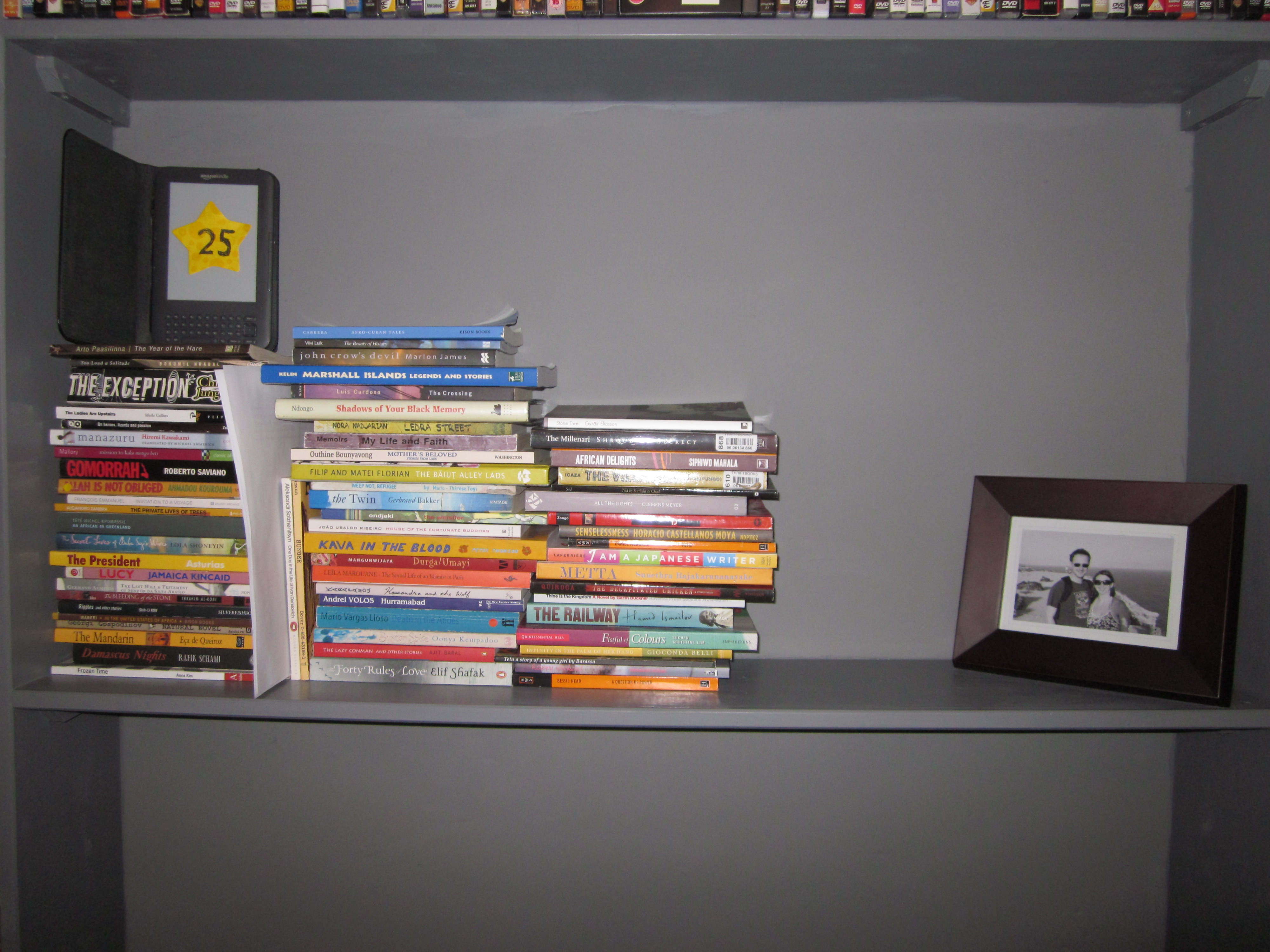
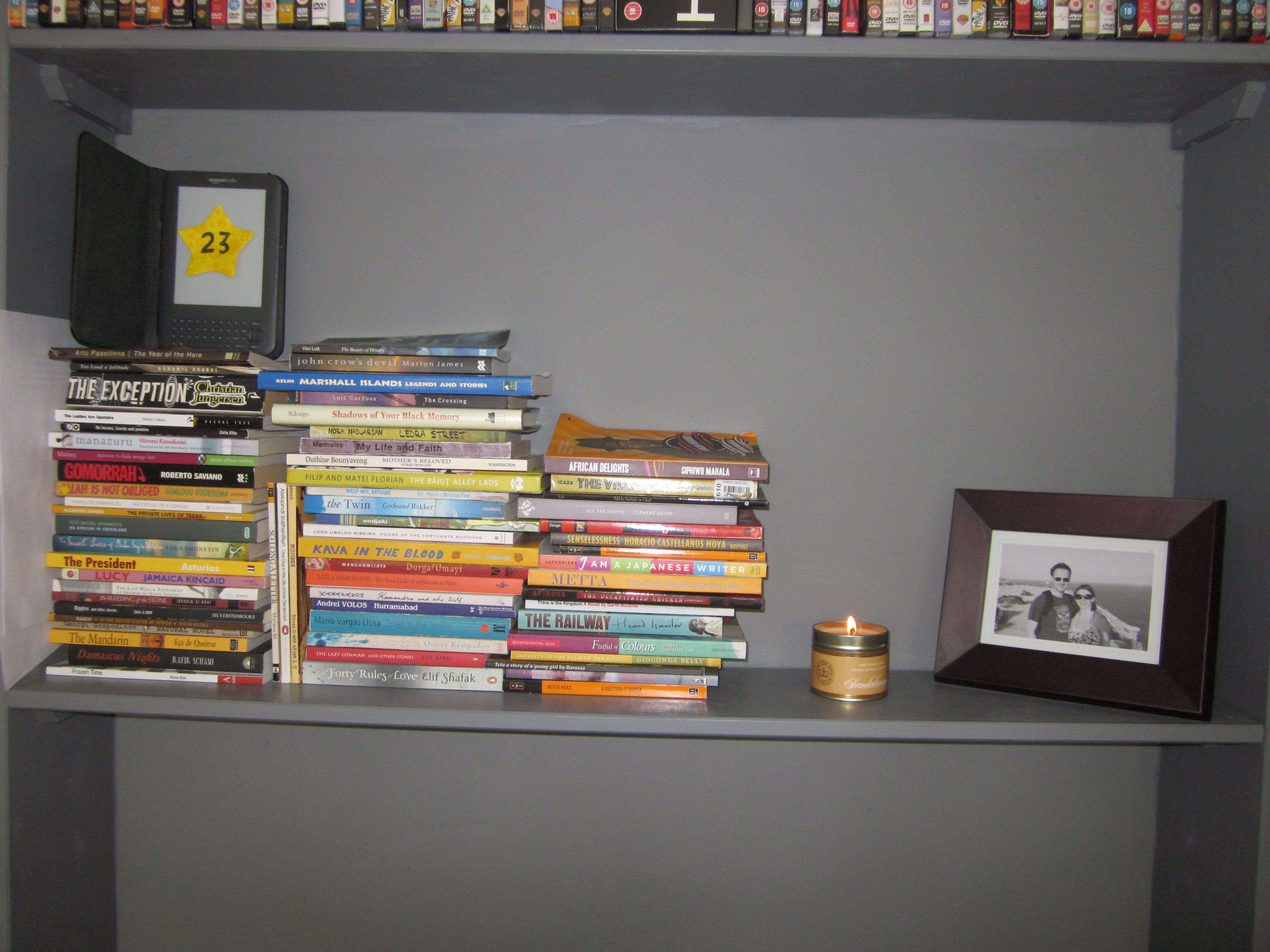
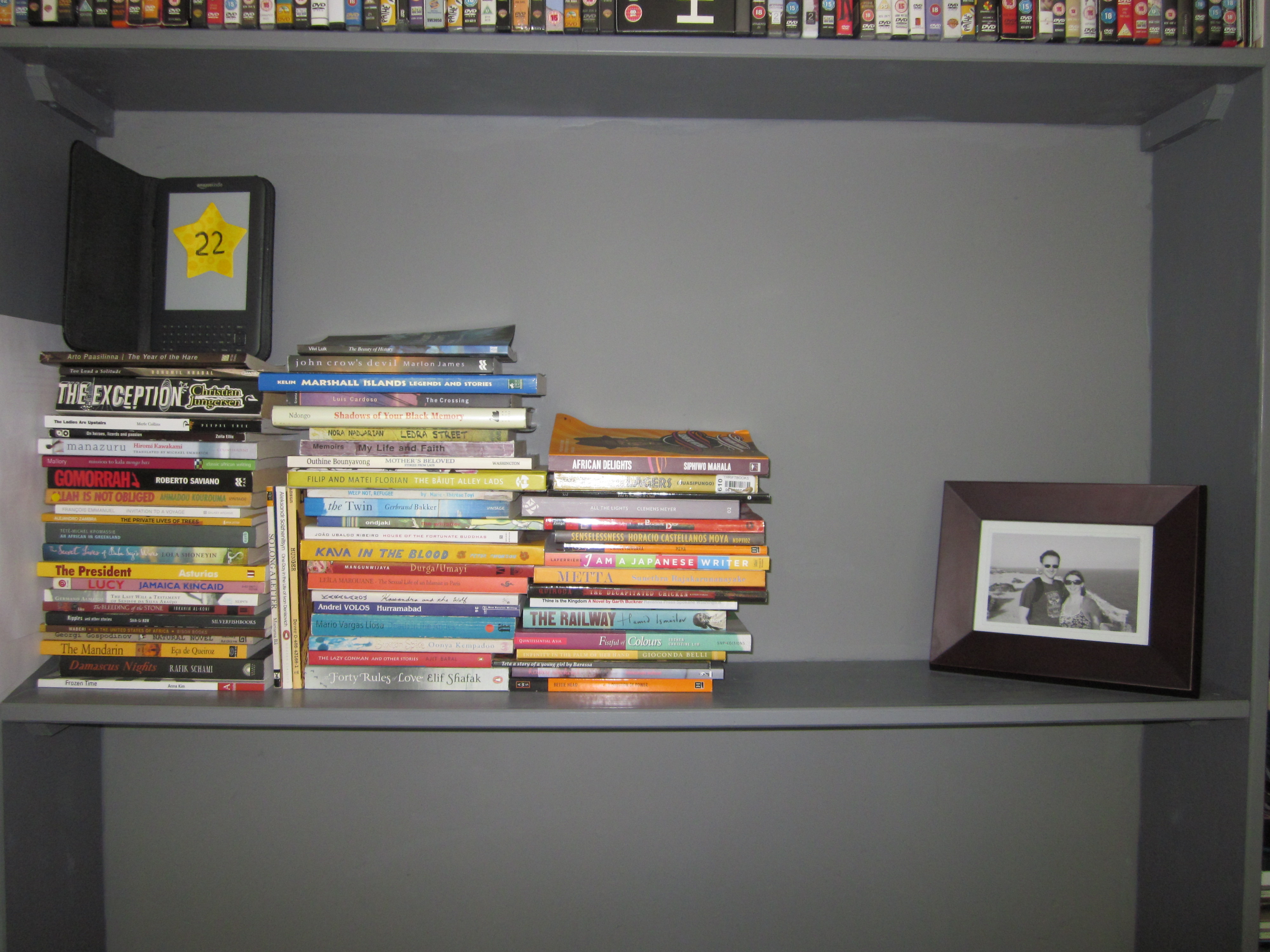
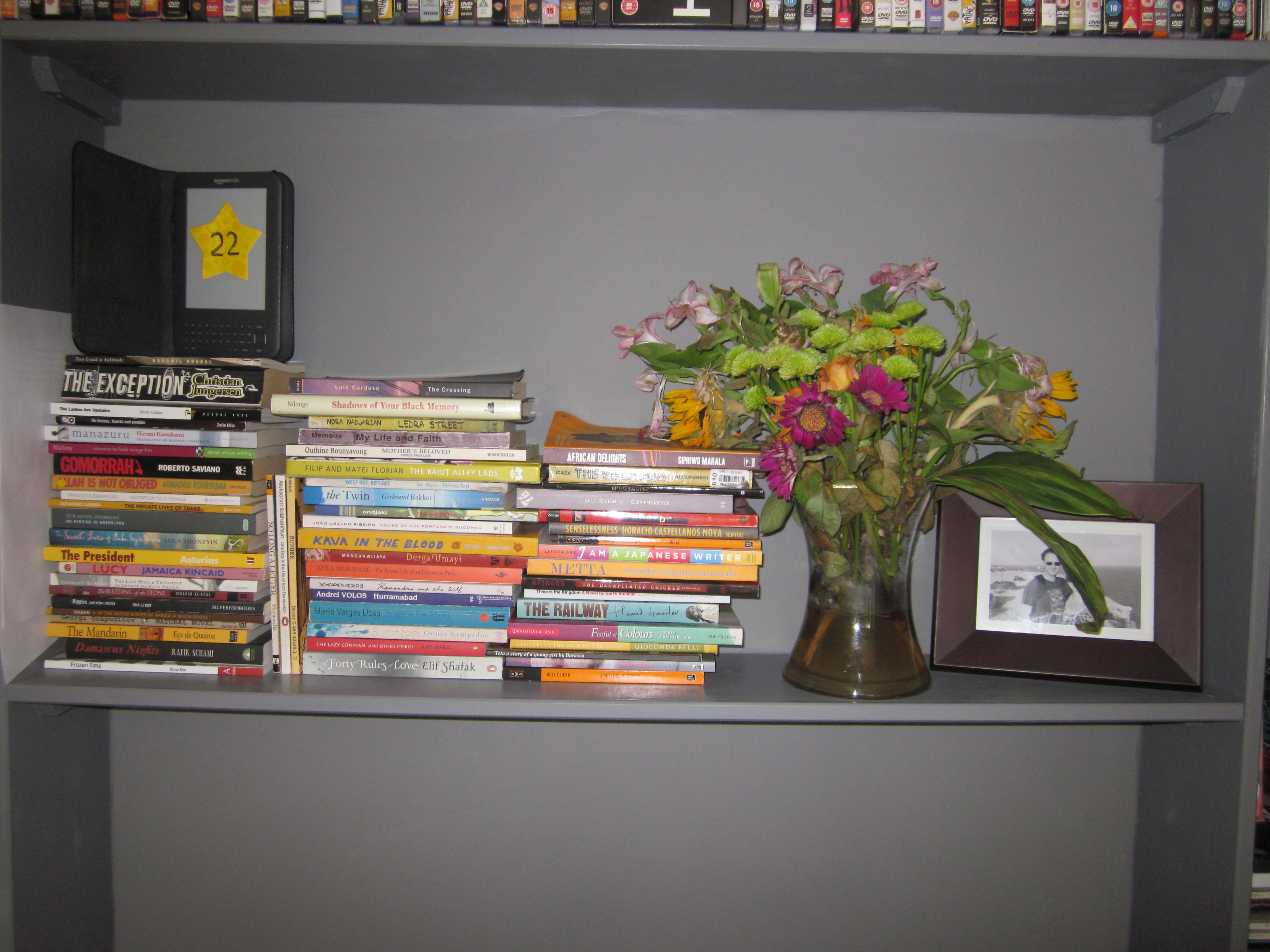
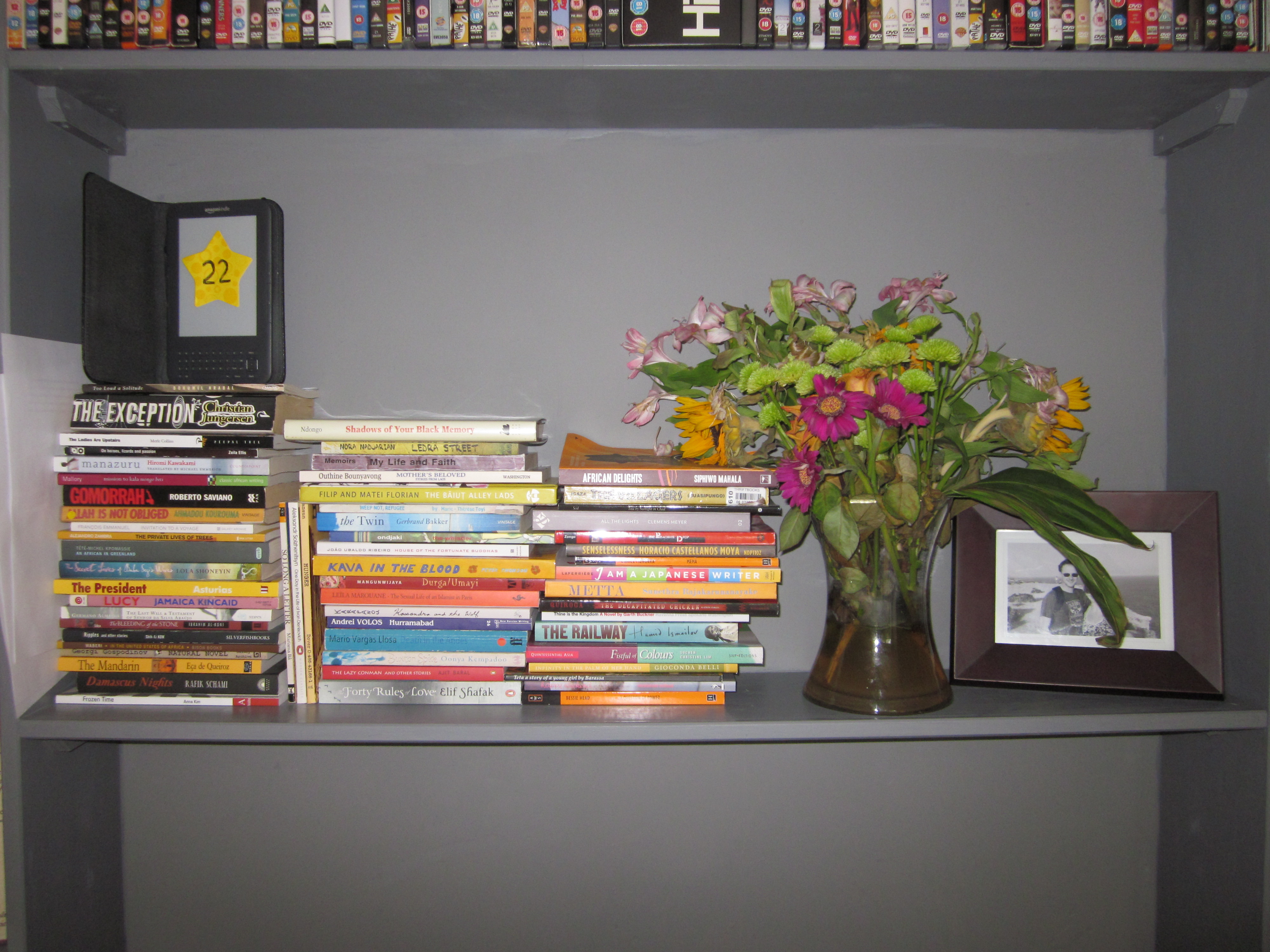
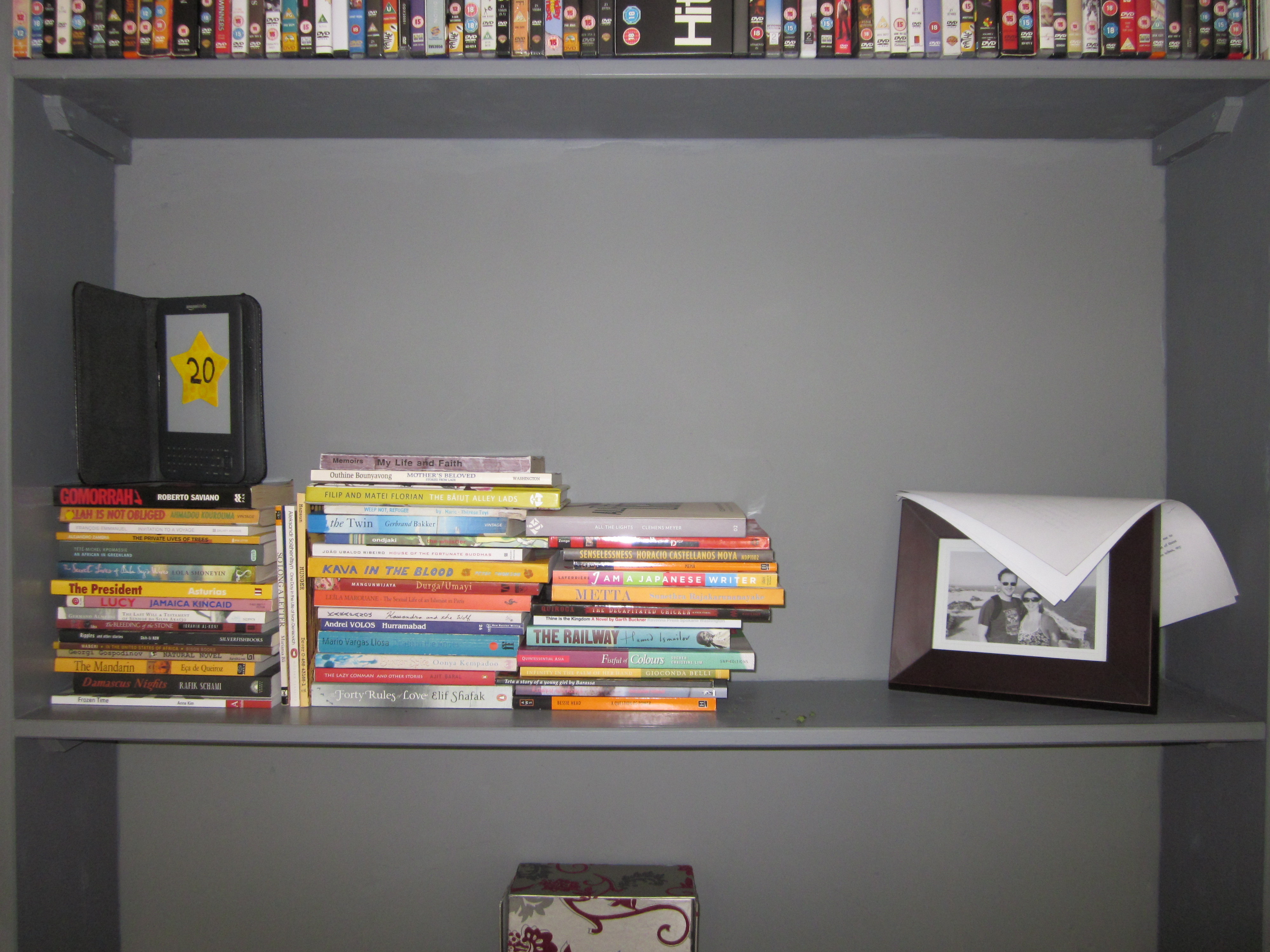
So here we are: 98 books in and 98 books to go. Halfway round the world, exactly halfway through the year.

And what a journey it’s been so far. We’ve heard the North Korean government’s official line on fiction, sourced a manuscript of a classic novel unavailable in English from Mozambique and listened to a story written specially for the project from the world’s newest country South Sudan.

We’ve seen a Burundian novel published to ebook because of enthusiasm from blog readers, discovered the Andorran Dan Brown and had help from a Luxembourgish pop star to find a book from the world’s only grand duchy. We’ve even seen the world change slightly, with Palestine replacing Kosovo on the list.

The project’s been featured in two national newspapers, on UNESCO’s list of World Book Day initiatives and on countless other blogs around the globe, from Romania to South Korea.

None of this would have been possible without you. From the many people who’ve suggested books, helped with research and even gone to bookshops in far-flung places on my behalf, to the kind folk who comment on, like, tweet and share posts, making all the early mornings and late nights worthwhile, you have kept me going. Thank you.

But it’s not over yet. Not by a long chalk. And some of the biggest challenges lie ahead.

There are 25 countries that I have yet to find any books for. These are:

  • Brunei
  • Central African Republic
  • Comoros
  • Guinea Bissau
  • Honduras
  • Kiribati
  • Liechtenstein
  • Madagascar
  • Mauritania
  • Micronesia, Federated States of
  • Monaco
  • Mongolia
  • Myanmar
  • Niger
  • Palau
  • Panama
  • Papua New Guinea
  • Qatar
  • Saint Vincent and the Grenadines
  • San Marino
  • Sao Tome and Principe
  • Seychelles
  • Slovakia
  • Tuvalu
  • Vanuatu

There are also plenty of other countries on the list that could do with some more recommendations.

So I’m asking you – yes, you, sitting there reading this now – to help me again. Please tweet/share/email/discuss/create expressive dance routines about this project. Please look at the list and see if there are any countries you might be able to help find novels, short story collections or memoirs from.

Maybe you have friends or relatives there? Maybe someone you work with does? Or someone whose restaurant you eat in? Or that nice man you sit next to sometimes on the bus*? Perhaps you’re going on holiday there this summer or you found a blog by someone from there recently?

However you do it and however tenuous the connections seem, I’d love to hear about them. Let’s see what we can find between us.

*Please be sure before you engage him in conversation that he really is a nice man.

Iceland: literary landscape

For so small a country, Iceland is an impressive player on the global literary stage. According to Iceland Pulse, there were 757 books published on the island in 2011, among them 55 new works of fiction by Icelandic authors. Not bad for a nation with a population of less than 320,000.

Many of these authors don’t make it into English, however there has been a recent drive to translate some of the island’s most celebrated and successful writers, with crime authors such as Arnaldur Indriðason doing well overseas. Gyrðir Elíasson caught my eye because he has scooped several of the big national literary prizes. I liked the sound of his work and wanted to take a closer look.

Often centring around people taking a break from normal life to read, write, think, paint or simply be, Elíasson’s very short stories trace the unseen connections that link us to the world around us and reveal how tiny shifts in perspective can change the course of a life. There is the bird painter from Boston who encounters a gull and decides to give up his career, the music college vice principal who ducks out of a meeting to run away to the States, and the holidaymaker who discovers the disintegration of his marriage courtesy of an automated phone service message in a language he does not understand.

Many of the stories are about people struggling with frustrations that they cannot fully articulate. There are writers who go away to write only to spend their days procrastinating and young chess players locked in tournaments they know they cannot win. Perhaps most memorable of all is ‘The Piano’, a story in which a boy is driven to a nighttime orgy of vandalism when his ambitious yet emotionally distant parents force him to learn an instrument he hates.

Other books stalk through the pages of this collection. Whether the pieces focus on two translators living side by side as they render their own versions of different books by John Steinbeck, as in ‘The House of Two Stories’, or on the obsessive bibliophile walled in from normal life by his dependency on books in ‘Book after Book’, reading and writing often form a large part of the action of these tales. Literature also informs Elíasson’s descriptions, with several of his depictions of landscape drawing on associations from the world of books: ‘Saksun […] would have been the perfect setting if Keats, Shelley and Byron had ever needed a retirement home,’ he writes in ‘Watershed’.

Though many of the stories feature characters grappling with the everyday problems of relationships, careers and meeting the expectations of others, they are by no means realist in style. Elíasson delights in delving into the uncanny, with many of the pieces set in eerie guesthouses and lonely holiday homes that owe more than a little to the Gothic tradition. Some, like ‘The Car Wreck’ and ‘The Silver Nose’, describe ghastly, otherworldly encounters, while others, such as ‘The Dream Glasses’, contain moments of profound beauty, all of which draw on the seductive pull of the mysterious and unexplained.

When it works, this creates extraordinarily powerful and wistful pieces. However, there are several stories that dissolve into nothingness, leaving a flat aftertaste. In addition, the large number of tales in the collection means that reading them back-to-back shows up a few tricks being played several times, necessarily blunting their effect second or third time round.

As a whole, though, this was a beautiful, eerie and evocative collection. The stories, like pieces of driftwood on a remote beach, seem to be fragments of other times and places, worn smooth by the action of Elíasson’s imagination. An intriguing and memorable work.

Stone Tree (Steintre) by Gyrðir Elíasson, translated from the Icelandic by Victoria Cribb (Comma Press, 2008)

Tunisia: maze of discovery

This was a recommendation from one of the newest book bloggers on the block. Based in Redeyef, Tunisia, English teacher Ali Znaidi set up Tunisian Literature (in English) in May 2012 to plug a gap in the blogosphere, which seemed to have nothing in English dedicated specifically to Tunisian writing.

Providing news, book reviews and other information, Znaidi aims to raise awareness about his country’s literature. It therefore seemed natural to turn to him for a recommendation for this project – particularly as, from what I could find out, Tunisian literature is relatively rarely translated, compared to literature from many other Arab countries.

Znaidi confirmed what I suspected about the scarcity of Tunisian texts in English, but he came back with several suggestions. Of these, I went with Talismano by French-language writer Abdelwahab Meddeb.

Told by a Tunisian writer living in Paris (much like Meddeb himself), the 1979 novel, which the author reworked in 1987, is built around an imagined return to Tunis, Fez and the other cities of the narrator’s youth. As he wanders for a period of roughly 24 hours through streets built half from memory and half from fantasy, the protagonist tests the boundaries of experience and writing itself, by turns engaging in the sensual, riotous and often shocking events he encounters and stepping back to comment on the world and his place in it.

Culture and identity are central threads. As the writer walks through his ‘maze of discovery’, he records the impact that colonialism and the different communities that migrated to the region have had on the places he sees, mingling aspects of Islamic and Judao-Christian culture with ancient myths and secularism to create a heady, bustling and often bewildering text.

A polymath par excellence, Meddeb reaches for cultural references the way an experienced chef works with rare herbs and spices, adding complex layers of flavour and piquancy to his creation. From Dante, Hesse and Joyce, to the Koran and ancient Egyptian theology, the text is broad and full in its scope – a book more of the world than of any particular time and place.

Some of the references are clearly deliberately obscure, however, the experience of reading the novel as a Brit with very little knowledge of Tunisian culture added another layer of disorientation: there were times when I was not sure whether my missing things was part of the author’s design or a function of my own cultural blind spots.

This becomes clearer as the narrative unfolds, carrying with it a series of knowing commentaries on writing and the author’s craft. Perhaps the most telling of these comes right at the end in the Epilogue:

‘We have confided through writing, but without giving you a foothold, have strained your eyes with our arabesque of words, have recommended the circuits of our journey, have warned you of the fissure in all that meets the eye, have unsettled you on high moral grounds, have ruined you among the most robust constitutions, have dusted myself off, vanished into thin air, have found my way inside you through the least perceptible slit’.

No wonder then that extracting coherent meaning from the narrative sometimes feels like trying to scale a glass wall.

This can make for a frustrating reading experience, particularly in the early stages. However if you allow yourself to surrender to the narrative, and let it flow over you, carrying with it its tide of impenetrable allusions, you may be surprised by the insights and recognitions that flash suddenly from it like gems buried in the shifting sand of the seabed.

Beautiful, maddening, disturbing and strange, this is a book for the intrepid armchair adventurers out there. It is not a comfortable ride, but when you reach the end and look back along the route you’ve travelled, you get one hell of a view.

Talismano by Abdelwahab Meddeb, translated from the French by Jane Kuntz (Dalkey Archive Press, 2011)

Estonia: the past is another country

The Estonian Literature Centre was one of the first national literature organisations on the web. It launched in 2001, back when Mark Zuckerberg was just starting out at Harvard and tweeting was something only birds did. Judging by my correspondence with it, the organisation is also one of the most efficient of its type: within a few days of my query email, I received a message from Kerti at the centre. She sent me a list of three recommendations and attached the manuscript of a crime novel set in medieval Tallinn, for which the centre is trying to find an English-language publisher.

Tempting though the crime novel was, I decided to go with The Beauty of History by Viivi Luik. This was largely because, from what I could find out, she is one of the country’s most highly acclaimed writers behind Jaan Kross, the Estonian writer most well-known to the rest of the world.

The novel follows a young woman who agrees to pose for a sculptor around the time of the Prague Spring in 1968. With change sweeping across Europe and shivering the Iron Curtain, the woman sees life around her tilting out of alignment as old certainties buckle and the authorities rush to clamp down on underground networks. The sculptor senses it too and is preparing to escape to the West in order to avoid military service, but for his model the events have less tangible and more emotional consequences that send her groping through the past, present and future, trying to locate herself in a world that will never be the same.

This is a book about the power of words – words that forbid, mask and betray, and ‘must be soaked in blood in order to be effective’. With the oppressive Soviet regime necessitating the adoption of a ‘secret language’ for communication about the sculptor’s plans, innocent, everyday terms take on sly, double meanings that mean the heroine ‘can never understand whether the talk is simply of buying butter and cream or of the arrival of fateful news’.

Luik further emphasises the infiltration of terror into daily life through her use of quaint and everyday objects in her imagery: fear ‘flashes like a silver ear-trumpet into which one cannot speak, but only whisper and wheeze’, and ‘glows in naked forty-watt bulbs like an egg’.

In addition, the author’s spiralling of her heroine and her reader through time underlines the interconnectedness of personal and national narratives, revealing how political upheavals change not only the present and the future, but also the way we look at the past. When ‘all ages are flung together’ and ‘years are linked to one another like human vertebrae’, a single shock affects the whole organism.

The blending of myth, memory, past and future has a disorientating effect, which makes the narrative seem to whirl wildly at certain points, flinging the reader into confusion. This was no doubt exacerbated by my ignorance of Estonian political history, which meant that several references that might have provided hand holds slipped through my grasp.

Taken as a whole, though, this was an absorbing and beautiful tribute to the desire for freedom of thought, movement and self-determination. It left me with a powerful impression of what living under occupation might mean and a strange, wistful sense of the secret lives of everyday things.

Thanks, Kerti, for the recommendation – if any English-language publisher is looking for a historical Tallinn crime novel for its list, the Estonian Literature Centre may have just the book.

The Beauty of History (Ajaloo ilu) by Viivi Luik, translated from the Estonian by Hildi Hawkins (Norvil Press, 2007)

East Timor: poetry in motion

This book was recommended by The Modern Novel, a blogger writing about the development of the literary novel worldwide. TMN kindly posted a comment on this site helping me out with a few of the harder to reach destinations (there are still quite a few gaps on that there list and plenty of countries with only one or two titles suggested – go on, have a look and let me know what I’m missing).

Several of the recommendations weren’t available in translation – much more linguistically gifted than I am, TMN reads in French, German, Italian, Portuguese and Spanish, as well as English – however there were some great additions to the list among them. The Crossing by Luis Cardoso was one of these.

In actual fact, The Crossing is not technically a novel, it’s a memoir. Like me, TMN holds the view that the boundaries between these two genres blur the more closely you look at them, which is why we’re both including memoirs in our projects.

Telling the story of Cardoso’s childhood and adolescence in East Timor, the book reveals the nation’s troubled recent history through a small and touchingly precise lens. As waves of Portuguese, Japanese and Indonesian colonialism wash over the country, the author records the tragic impact of these events on the ‘people lost in time’ who have to live through them, caught between the oppressive yet relatively stable patterns of the past and the fragile freedom ahead.

This is a book as much about forgetting as it is about remembering. While Cardoso’s traumatised and exiled father frames the narrative – bumbling about Lisbon where his son is studying trying ‘to recover the memory he had lost’, all his fire and bluster gone – Cardoso himself seeks to reconcile the partial versions of events he encounters with his own fragmentary memories of his homeland.

A nostalgia for Portuguese rule – warmer than any other attitudes to colonialism I’ve read about so far this year – permeates much of the book. For characters like Cardoso’s father the Portuguese administration, despite its enforcement of apartheid, and its rigid and sometimes brutal practices, is ‘the erstwhile mother country […] even though the umbilical cord had been cut in such a way as to make the child bleed and the mother grieve’.

As well  as blending novel and memoir, Cardoso brings in elements of poetry too through his descriptions that conjure places and people as deftly as the briefest of stanzas. Time and again, he captures complex situations in a net woven only of a single sentence, as when he sets out his father’s deluded hopes for his son’s future:

‘He dreamed that, one day, I would take up a post in [an] administration [made up of people educated in Portugal] – the dreams of someone who has built a boat and wants to go on sailing through time, along the lost route of the colonizing caravels’.

The huge cast of walk-on characters and vast catalogue of events mentioned in this relatively slim book mean that occasionally the narrative can jump like a scratched record from one scene to the next. Several times, I found myself having to turn back a page or two, trying to work out how I had been thrust into a storm that seemed to have gusted up out of nowhere. Sometimes, there wasn’t really an explanation.

Taken as a whole, though, this is a touching, lyrical and sometimes playful account of the search for identity in a land you can only fleetingly call your own (East Timor only managed a few months of independence in 1975 before it was conquered by the Indonesians and at last gained its sovereignty in 2002). It makes a compelling artwork out of a shifting kaleidoscope of personal and political allegiances. A great suggestion.

The Crossing: A Story of East Timor (Cronica de uma travessia: A epoca do Ai-Dik-Funam) by Luis Cardoso, translated from the Portuguese by Margaret Jull Costa (Granta, 2000)

Czech Republic: out of bounds

This book breaks the rules. So far, everything I’ve read for this project has been written and published since the country in question existed in its modern-day form (hence the fancy footwork getting a story from South Sudan). However Too Loud a Solitude by Bohumil Hrabal first appeared in 1976 in what was then Czechoslovakia — in the days when the Czech Republic was nothing more than a figment of Communist leader Gustáv Husák’s nightmares.

I say ‘appeared’, but that’s not quite right. In fact, because of the repressive mechanisms of the state at the time, the book was self-published secretly. It wasn’t until 1989, around the time of the Velvet Revolution – when the country moved from Communism to liberal democracy paving the way for the split from Slovakia in 1993 – that it came out officially.

This made it the last novel that Hrabal, dubbed ‘the sad king of Czech literature’ by one biographer, published before his death. Clearly, this was an important literary milestone on the road to the new republic. I was going to have to take a diversion and have a look.

As antiheroes go, they don’t come much more dubious than Hanta, an eccentric loner who has spent 35 years crushing outlawed books and waste paper in a sinister police state. Working alone with his hydraulic press turning rare book collections into bales of compacted paper, he is an agent of forces that all freethinking readers must abhor.

Yet, as we enter into Hanta’s ‘heavily populated solitude’, we come to discover the love of books that he has developed through his work and the inadvertent education it gives him. As we read about the care he takes over the thousand of volumes he processes – and often rescues for his private collection – we encounter one of the most moving, passionate and devastating testaments to the power of literature the world has ever seen.

Hrabal’s descriptions of a book lover’s interactions with texts on every level are extraordinary. From Hanta’s accounts of his reading fuelling ‘an eternal flame I feed daily with the oil of my thoughts, which come from what I unwittingly read during work’, to the thought he puts into the construction of bales – frequently placing a favourite text in the heart of them or a picture that might catch someone’s eye from the side of the truck that transports them for pulping – we inhabit his obsession with books as objects and as windows on other worlds.

Perhaps the most powerful example of this is Hanta’s violent reaction to the ‘inhuman’ modern press he goes to visit at Bubny. Processing books at breakneck speed, the machine reduces the workers who feed it to thoughtless minions:

‘pulling covers off books and tossing the bristling, horrified pages on the conveyor belt with the utmost calm and indifference, with no feeling for what the book might mean, no thought that somebody had to write the book, somebody had to edit it, somebody had to design it, somebody had to set it, somebody had to proofread it, somebody had to make corrections, somebody had to read the galley proofs, and somebody had to check the page proofs, print the book, and somebody had to bind the book, and somebody had to pack the books into boxes, and somebody had to do the accounts, and somebody had to decide that the book was unfit to read, and somebody had to order it pulped […] and somebody had to drive the truck here, where workers wearing orange and baby-blue gloves tore out the books’ innards and tossed them onto the conveyor belt, which silently, inexorably jerked the bristling pages off to the gigantic press to turn them into bales, which went on to the paper mill to become innocent, white, immaculately letter-free paper, which would eventually be made into other, new books’.

This understanding of destruction as part of the life-cycle of beautiful things is threaded through the text on every level. The same phrase starts each chapter before buckling under the pressure of the final section, while the plot itself, led through a spiral of literary references that are devoid of pretension and grounded in Hanta’s engagement with the beating heart of the texts he reads, folds in on a conclusion that is every bit as inevitable and necessary as it is heartrending. An astonishing piece of work. I’m not sure I’ll ever quite get over it.

Too Loud a Solitude (Příliš hlučná samota) by Bohumil Hrabal, translated from the Czech by Michael Henry Heim (Abacus, 2011)

Germany: now and then

The question of who decides which of the many millions of books in other languages make it into English has fascinated me since I started to plan this project to read a book from every country in the world in 2012. As confirmed by a recent seminar on ‘Gatekeepers’ at the London Book Fair’s Literary Translation Centre, it’s a complex chicken-and-egg sort of issue that depends on who you think drives trends in publishing – publishers, readers, critics, translators or someone else entirely?

One person who was also at the Gatekeepers seminar was translator Katy Derbyshire (although I didn’t know this until a former colleague, translator Cathy Kerkhoff-Saxon, introduced us a few weeks later and we made the connection). Based in Berlin, Derbyshire has recently set up a book group for publisher And Other Stories, a small indie house that prides itself on sourcing great literature from some way off the beaten track.

The purpose behind the group, as she explained to me, is to use German literature fans to assess titles and recommend which ones the company should sign up for English translation. And Other Stories is, as far as she knows, the first publisher to work in this way and since the company was founded in 2010 it has built a reputation for putting out high-quality and innovative titles. Now Derbyshire hopes that her group of around 13 exchange students, translators and writers (most of them not native German speakers) will contribute to the growth of the company’s list by picking out works different to the clichéd German ‘Nazi novels’ that many UK publishers lean towards.

The connection with Derbyshire was doubly surprising because And Other Stories had sent me one of the first books she translated for them only a few weeks prior to the London Book Fair. With the powers that be seemingly conspiring to steer me towards this particular title, it seemed perverse to choose anything else.

Peopled with outsiders and underdogs, Clemens Meyer’s Leipzig Book Fair Prize-winning short story collection All the Lights puts society’s misfits centre stage. From the boxer on a losing streak to the unemployed loner whose world has shrunk to the letters he receives describing a long-lost friend’s adventures in South America, the characters in Meyer’s universe are all diminished, saddened versions of their younger selves, often set against the unforgiving backdrop of post-unification East Germany.

Many have retreated into paranoia, as in ‘The Shotgun , the Street Lamp and Mary Monroe’, in which a mentally ill addict mutters to himself in the living room up the hall from the bedroom where his girlfriend lies, ominously still:

‘I need a strong heart so I don’t go back to my shoes. In my shoes, out in the hall. I’ve hidden something in there under the orthopaedic insole, it’s a sort of emergency supply, but I don’t need it anymore, I’ll chuck it down the toilet later and flush it away, but actually an emergency supply’s only for a real emergency, and I’m sure that won’t happen now, and if it does I’ll stick it out, so I might as well just leave the stuff in my shoe.’

Meyer’s minimalist style (rendered through Derbyshire’s deft translation) enables him to cram words with significance, changing the mood in a clause and sketching a backstory in a sentence. This means that he can evoke extremely powerful and often surprising responses in the reader. ‘Of Dogs and Horses’, for example, in which we spend the story anticipating one kind of disaster only for the rug to be pulled from under us in quite another way in the final ten words, is devastating. Similarly, in ‘Fatty Loves’, we find ourselves in the unusual position of pitying a middle-aged teacher dismissed for an inappropriate relationship with a young girl.

This minimalism combines with a jagged chronology in which time jumps like a scratched record, hurling the characters back and forth between the present and the years gone by. With hints of missed connections between the stories – the same description of a girl’s teeth cropping up twice leading us to wonder whether the adult in one story is the same as the girl in ‘Fatty Loves’, familiar hints of the school sports field, and the humming of fridges in several lonely flats – this creates a powerful sense of wistfulness, as though other, better possibilities are forever unfolding slightly out of reach.

Once or twice the structure becomes a tad baggy as a result, as in ‘Riding the Rails’, the least successful story in the collection, in which a pair of ex-cons lose themselves in a rent-boy scam. For the most part though, it is incredibly skilfully handled.

Stuart Evers writes in his introduction that the stories reveal ‘the terrifying possibility of now’, but there is a sepia tint to Meyer’s lens that undercuts this statement. These tales take place in a world where people are woken by digital clocks rather than mobile phone alarms, where they make calls from phone boxes, write letters, and think in Deutschmarks, and where the tentacles of the internet have yet to penetrate. Seen in this light, the works are more about the tragic properties of ‘then’ than the possibilities of now. But Meyer’s achievement is to make that ‘then’ belong to all of us, whether we lived through it or not. Outstanding.

All the Lights by Clemens Meyer, translated from the German by Katy Derbyshire (And Other Stories, 2011)
Rwanda: the meaning of fate

If British writers had to translate their work into another language in order to get a publisher to consider it, I doubt many would make it into print. But that was the situation 25-year-old Rwandan author Barassa faced when she submitted the French manuscript of the first of her three novels to Real Africa Books. They responded that they didn’t publish books in languages other than English. Nothing daunted, as she and Swedish-born publisher Bjorn Lunden explained in an interview on Burundian blog Ikirundi, Barassa took just a week to convert the narrative into English so that Lunden could launch her work through his new firm.

All the same, despite Barassa’s efforts, the book is still  not very easy for English-language readers to find. In fact if it weren’t for friend and fellow journalist Antonia Windsor picking it up in a Kigali bookshop while she was on assignment in Rwanda last year, I doubt I would ever have heard of Teta:a story of a young girl.

As the title suggests, the novel follows the fortunes of a young Rwandan woman, Teta. Prevented from marrying the man she loves by poverty, she becomes the envy of her friends when one of the region’s richest men, Boniface, asks her father for her hand. But the loveless marriage quickly becomes a hollow sham and, as genocide and AIDS sweep the country, Teta is forced to rely on her own resourcefulness to survive.

The book is at its best when it discusses fate or ‘the law of the stronger and the richer’ as it is more commonly described. At odds with the romantic Western perception of destiny, the driving forces in this novel are stripped back to their components: want, sickness and fear.

In a society where there are no welfare departments, insurance companies, emergency services or safety nets to soften the blows of chance, people are left with no option but enduring the hardships meted out to them. ‘Life itself had decided on my behalf, no one could change the decision,’ shrugs Teta when her father’s cattle die and it is left to her to save the family through her prospective suitor’s wealth.

As in several other African women’s novels I’ve read this year, the skewed power dynamics of relations between the sexes and traditional marriage form the subject of much of the book. Obliged to leave her family and forgo the rituals that give her a sense of identity, Teta finds herself helpless in the face of Boniface’s infidelity. And when the tension between the Hutus and the Tutsis flares up and neighbour turns against neighbour she finds the predatory attitudes of the men around her create an additional threat:

‘Faustin[…] was participating in preparations of the genocide. He was also one of the men that in vain had asked me to become his mistress. The last time I saw him he had told me that I would regret my decision. He might already then have known the power he would gain within some days.’

The language is rough round the edges, with several malapropisms creeping in. Now and then the narrative veers between registers like a van on a potholed road and there is a perfunctory feel to the scene-setting that sees minor characters created and killed off sometimes within the space of two full stops.

However, given the DIY job Barassa had to do on the translation, most of these bumps are hardly surprising. Every jolt is a reminder of the lengths the author was prepared to go to to tell her urgent, angry and touching stories in a country where few writers manage to publish their works even today. Surely reading them is the least we can do?

Teta: a story of a young girl by Barassa (Real Africa Books, 2010)

Lebanon: the greatest story ever told?

I will always be grateful to Cairo-based book blogger M Lynx Qualey. Shortly after I launched this project to try to read a book from every country in the world, she wrote a post giving me her tips on the top Arab books available in English from the last five years. It was the first of many instances of kindness from people all over the world whose support and interest are making it possible for me to access literature from every sovereign state.

It will probably take me several years to try everything on Qualey’s list. However when I revisited the post recently and saw Hanan al-Shaykh’s retelling of the classic One Thousand and One Nights among the suggestions for Lebanon, I knew I would have to give it a go. After all, its heroine Shahrazad (or Scheherazade as she is more commonly known) is the most referenced figure in all the world literature I’ve read so far this year.

The premise is audacious: when cuckolded King Shahrayar vows to marry a different virgin every night and have her killed the following morning, the vizier’s daughter Shahrazad takes it upon herself to protect her countrywomen by wedding the king and then distracting him from his murderous plans by telling stories so engrossing that he is forced to keep her alive to hear the next instalments.

Facing a level of pressure to perform that not even JK Rowling can have experienced in the run up to the publication of the last Harry Potter novel, Shahrazad has no option but to deliver. Ingenious and playful, she weaves a web of tales bristling with intrigue, erotica and inventiveness. Lovers turn into birds, decapitated heads talk, people are buried alive, and curses and sorcery abound. And as each story draws to a close, it spawns another calculated to keep the King and the reader hooked.

As in Ajit Baral’s The Lazy Conman and Other Stories and Rafik Schami’s Damascus Nights, cunning is prized above honesty, with many of the characters rewarded for using their guile to achieve their ambitions, often at great cost to their slower counterparts.

Shahrazad seems to enjoy sailing close to the wind herself, with many of her stories featuring people who need to save their lives by spinning yarns. ‘I must use my cunning to defeat his demonic wiles and barbarism,’ she has the fisherman say of the jinni in her very first story, as though winking at the reader over the listening king’s head.

The tales become a platform for Shahrazad to air other themes close to her heart too, chief among them the role of women. Her stories feature many strong female characters, among them Zumurrud who cross-dresses to become the wisest king her nation has ever seen, and five sisters who ‘regard men as a deadly disease’ and present a compelling defence of their lives as single women.

Not being familiar with other versions, I can’t tell how much of this comes from the original work and how much Al-Shaykh has reimagined (any insights from other readers would be much appreciated). There’s no doubt however that her narrative (written in English) is lively and approachable, as well as brimming with descriptive delights. The poet Abu Nuwas’s description of women as being ‘capable of sewing knickers for a flea’, for example, is just one of a myriad of memorable images that leap off the page. The only sticking point is the repeated misuse of ‘mortified’ to mean ‘horrified’ – a small niggle, but an irritating one in a novel in which the choice of words has the power to kill or cure.

All in all, though, this book is a delight. Featuring criticism at its most raw, it lays bare the mechanics of great storytelling and throws down the gauntlet for all would-be wordsmiths in the millennia to come. No wonder everyone’s still writing about it.

One Thousand and One Nights by Hanan Al-Shaykh (Bloomsbury, 2011)

Malta: a mixed bag

I was concerned when Happy Weekend arrived. The cover looked uninspiring with its stock image of a coffee-shop cappuccino and the write-up on the back from one Stanley Borg seemed to have lost something in translation: ‘To act or not to act. That is the question. But anyway, what was the question?’

The signs weren’t good. Luckily – perhaps because of the lack of other books in translation from Maltese on my radar – they weren’t bad enough to stop me giving it a try.

Focusing on characters who deviate in one way or another from the paths society expects them to follow, Immanuel Mifsud’s collection of short stories puts everyday life under the microscope and shows up the bugs and gremlins squirming out of sight. From divorcees and dropouts to runaways and even psychopaths, it unfolds the lonely paranoias that form the background noise to much of daily existence and traces the threads that bind us.

Often, the writing has a wistful quality. ‘I see someone I knew who has become today what he was destined to be and I have remained what I was and have become nothing,’ laments the protagonist in ‘Violins’, one of the most haunting stories in the book, in which a young man eventually gives up drifting around Europe with his busker girlfriend only to find himself mired in hollow respectability.

Characterisation is Mifsud’s biggest strength, along with an ability to show how preoccupations thread themselves into mundane activities. Reflections on an aunt’s chastity and the desire to kill someone jostle with observations on the flavour of margarine and radio announcements. Sometimes Mifsud deliberately exploits the poignancy and comedy of apparently random juxtapositions, as in ‘I’d Thought the Flowers had All Died’, which follows a character trying to make a connection with someone amid the bluster of an internet chatroom.

This sharp contrast between surface meaning and deeper significance can have a powerful effect. In ‘Zerafa’, for example, a story that depicts the adolescence of a sadistic rapist, the gulf between the abuse the protagonist suffers and will later mete out, and the well-meaning but bumbling attempts of outsiders to help him is painfully clear – even if the heaping of atrocity upon atrocity veers towards the gratuitous at the end.

Mifsud is fond of weaving time into his stories and uses some form of deadline or time passing to focus each of the opening three stories. As you get deeper into the collection, the reasons for this become clear: while the author may shine at characterisation, his sense of structure and pacing is less secure. Several of the stories ramble on longer than they should or peter out apologetically. The result is that the work in the latter half of the book cannot compete with the opening pieces, and readers may find their fingers itching to flick.

Nevertheless, there’s no doubt Mifsud has talent. I’d be interested to see how this collection compares to his other work, particularly his 2011 European Prize for Literature-winning book Fl-Isem tal-Missier (u tal-Iben).

If you know of other Maltese literature that deserves a mention, it would be great to hear about it. Leave a comment and let me know.

Happy Weekend by Immanuel Mifsud, translated from the Maltese by Rose Marie Caruana, Mary Darmanin, Albert Gatt and Maria Grech Ganado (Midsea Books, 2006)