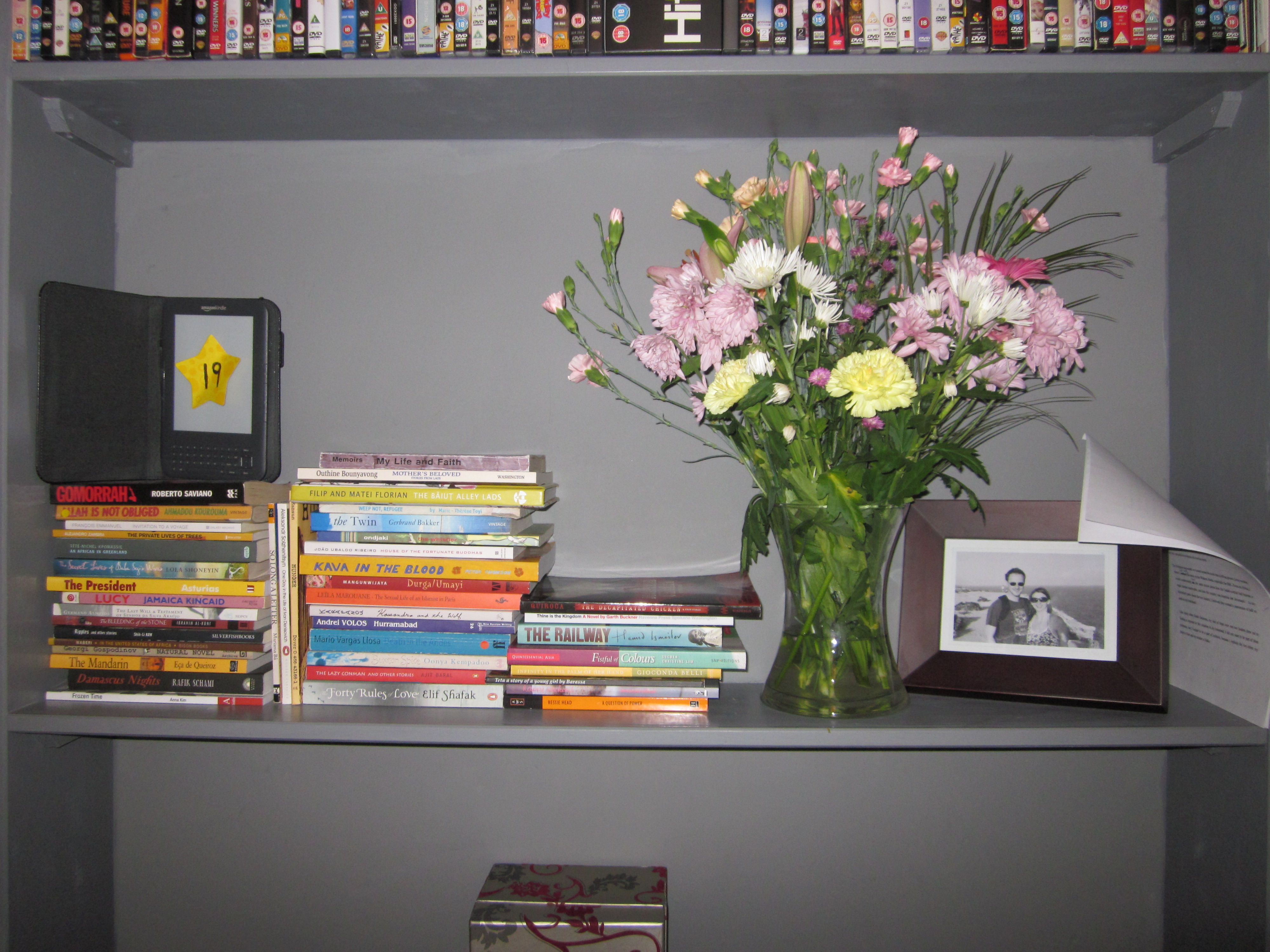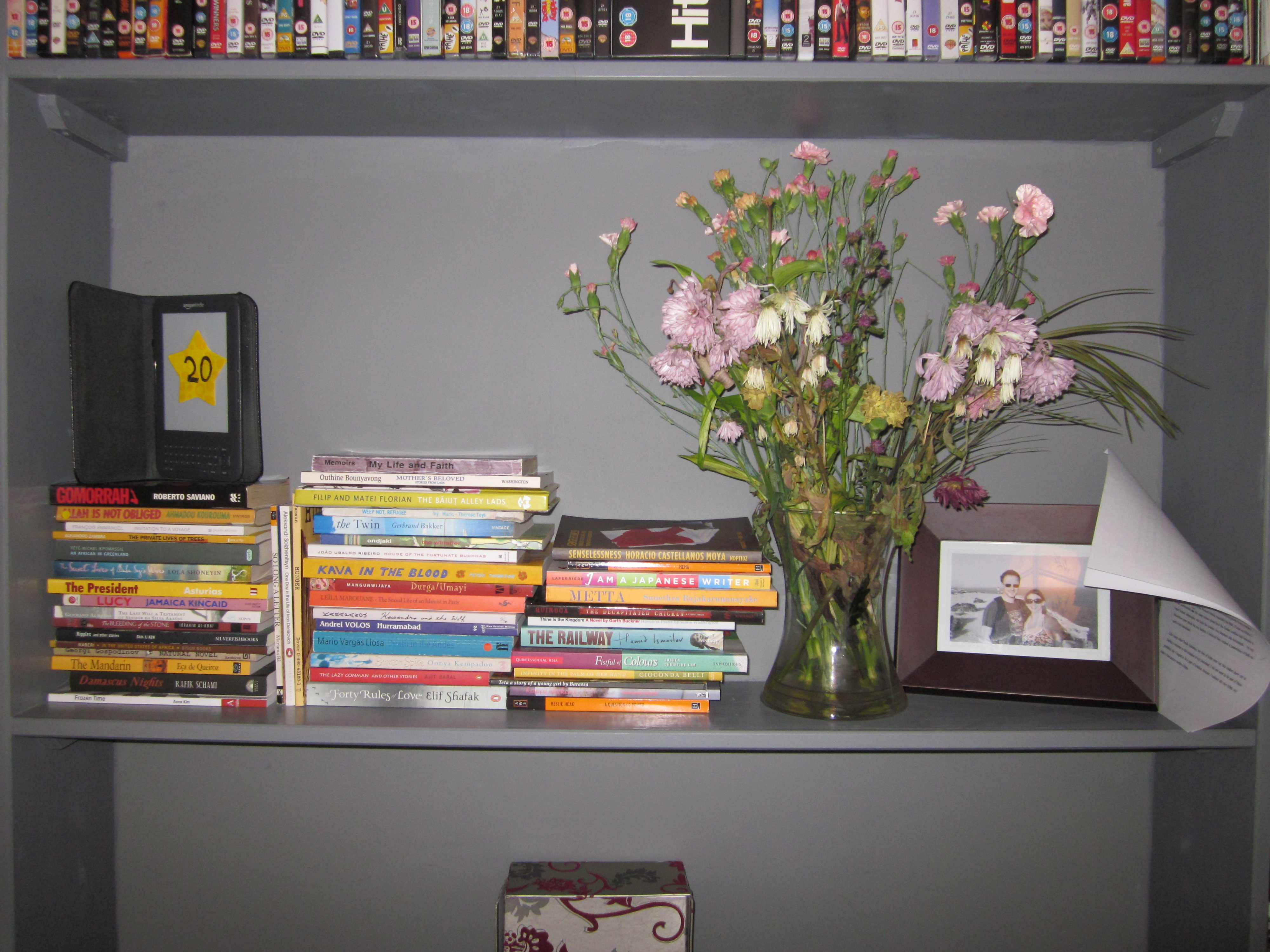
Germany: now and then

The question of who decides which of the many millions of books in other languages make it into English has fascinated me since I started to plan this project to read a book from every country in the world in 2012. As confirmed by a recent seminar on ‘Gatekeepers’ at the London Book Fair’s Literary Translation Centre, it’s a complex chicken-and-egg sort of issue that depends on who you think drives trends in publishing – publishers, readers, critics, translators or someone else entirely?

One person who was also at the Gatekeepers seminar was translator Katy Derbyshire (although I didn’t know this until a former colleague, translator Cathy Kerkhoff-Saxon, introduced us a few weeks later and we made the connection). Based in Berlin, Derbyshire has recently set up a book group for publisher And Other Stories, a small indie house that prides itself on sourcing great literature from some way off the beaten track.

The purpose behind the group, as she explained to me, is to use German literature fans to assess titles and recommend which ones the company should sign up for English translation. And Other Stories is, as far as she knows, the first publisher to work in this way and since the company was founded in 2010 it has built a reputation for putting out high-quality and innovative titles. Now Derbyshire hopes that her group of around 13 exchange students, translators and writers (most of them not native German speakers) will contribute to the growth of the company’s list by picking out works different to the clichéd German ‘Nazi novels’ that many UK publishers lean towards.

The connection with Derbyshire was doubly surprising because And Other Stories had sent me one of the first books she translated for them only a few weeks prior to the London Book Fair. With the powers that be seemingly conspiring to steer me towards this particular title, it seemed perverse to choose anything else.

Peopled with outsiders and underdogs, Clemens Meyer’s Leipzig Book Fair Prize-winning short story collection All the Lights puts society’s misfits centre stage. From the boxer on a losing streak to the unemployed loner whose world has shrunk to the letters he receives describing a long-lost friend’s adventures in South America, the characters in Meyer’s universe are all diminished, saddened versions of their younger selves, often set against the unforgiving backdrop of post-unification East Germany.

Many have retreated into paranoia, as in ‘The Shotgun , the Street Lamp and Mary Monroe’, in which a mentally ill addict mutters to himself in the living room up the hall from the bedroom where his girlfriend lies, ominously still:

‘I need a strong heart so I don’t go back to my shoes. In my shoes, out in the hall. I’ve hidden something in there under the orthopaedic insole, it’s a sort of emergency supply, but I don’t need it anymore, I’ll chuck it down the toilet later and flush it away, but actually an emergency supply’s only for a real emergency, and I’m sure that won’t happen now, and if it does I’ll stick it out, so I might as well just leave the stuff in my shoe.’

Meyer’s minimalist style (rendered through Derbyshire’s deft translation) enables him to cram words with significance, changing the mood in a clause and sketching a backstory in a sentence. This means that he can evoke extremely powerful and often surprising responses in the reader. ‘Of Dogs and Horses’, for example, in which we spend the story anticipating one kind of disaster only for the rug to be pulled from under us in quite another way in the final ten words, is devastating. Similarly, in ‘Fatty Loves’, we find ourselves in the unusual position of pitying a middle-aged teacher dismissed for an inappropriate relationship with a young girl.

This minimalism combines with a jagged chronology in which time jumps like a scratched record, hurling the characters back and forth between the present and the years gone by. With hints of missed connections between the stories – the same description of a girl’s teeth cropping up twice leading us to wonder whether the adult in one story is the same as the girl in ‘Fatty Loves’, familiar hints of the school sports field, and the humming of fridges in several lonely flats – this creates a powerful sense of wistfulness, as though other, better possibilities are forever unfolding slightly out of reach.

Once or twice the structure becomes a tad baggy as a result, as in ‘Riding the Rails’, the least successful story in the collection, in which a pair of ex-cons lose themselves in a rent-boy scam. For the most part though, it is incredibly skilfully handled.

Stuart Evers writes in his introduction that the stories reveal ‘the terrifying possibility of now’, but there is a sepia tint to Meyer’s lens that undercuts this statement. These tales take place in a world where people are woken by digital clocks rather than mobile phone alarms, where they make calls from phone boxes, write letters, and think in Deutschmarks, and where the tentacles of the internet have yet to penetrate. Seen in this light, the works are more about the tragic properties of ‘then’ than the possibilities of now. But Meyer’s achievement is to make that ‘then’ belong to all of us, whether we lived through it or not. Outstanding.

All the Lights by Clemens Meyer, translated from the German by Katy Derbyshire (And Other Stories, 2011)
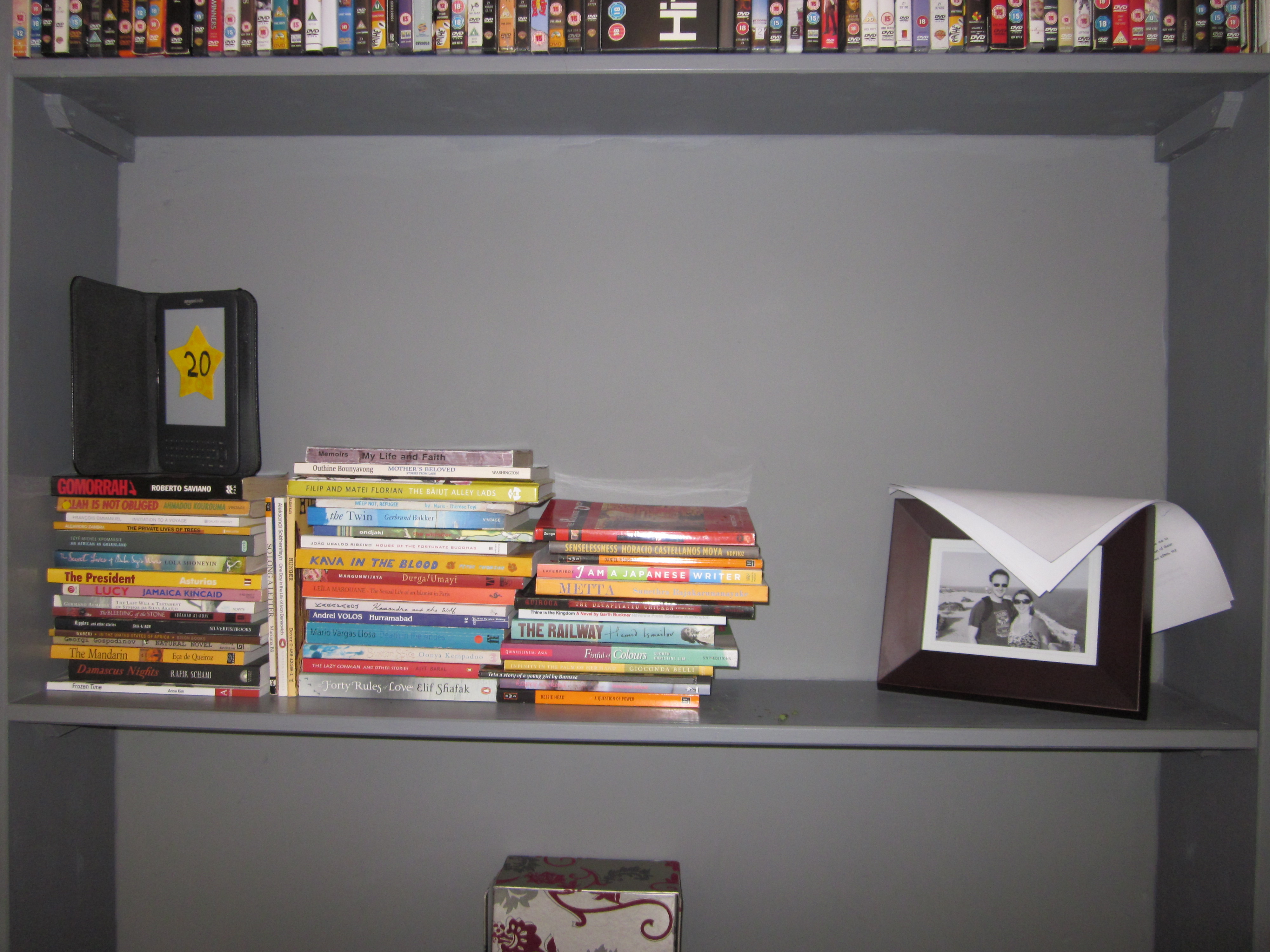
Burkina Faso: true lies

The line between truth and fiction is often blurry. And, as Norbert Zongo discovered in 1981, the distinction can be a matter of life and death.

In what is probably one of the most gripping prefaces ever written, the journalist and novelist describes his interrogation by the Burkinabé special police about his novel The Parachute Drop. The ordeal, which marked the start of three months of solitary confinement and a career of persecution and assassination attempts, was, he says, ‘like the beginning of time for me, the day my life began to melt like butter on a hot skillet’.

Zongo’s maltreatment was testament to the incendiary power of his work. Set in the fictional African state of Watinbow (which has striking parallels with Blaise Compaoré’s Burkina Faso), the novel draws a complex portrait of a tyrannous dictator as he scrabbles to retain his power in the face of growing unrest. Paranoid, fickle and vain, ‘Founding President and Clairvoyant Guide’ Gouama is prepared to sanction anything from the assassination of his most loyal followers to barbaric witchcraft rituals involving the severed body parts of his subjects if he can be persuaded it will keep him in control.

His advisers take full advantage of this, manipulating the president into actions that bring about his downfall and send him into hiding in the rural extremities of his land where he is helped by many of the activists he treated most harshly when in power. Chastened and challenged, the deposed president resolves to mend his ways, but as he attempts to begin assembling forces to mount a counter-coup, it becomes clear that his fleeting remorse is far too little too late.

The novel’s comments on the mechanics of establishing and maintaining a dictatorship are fascinating. From the ‘politics of drinking’, whereby subjects are distracted from their dissatisfaction with Bacchanalian festivals timed to coincide with the feast days of the old calendar, to Gouama’s cynical instruction to his speech writer to ‘pay lip-service to liberation movements throughout the world’ and include ‘whatever will help our image on the outside’ in his address to an international convention, Zongo’s portrait is terrifying and damning.

However, far more extraordinary than this is the humanity that the writer is able to reveal in his protagonist, despite the anger he feels at this representative of ‘Africa’s moral cripples’ and the ‘world of intolerable paradox’ and cruelty that he and his peers perpetuate. This comes to the fore when Gouama is thrown on the mercy of the farmers, fishermen and dissidents in the bush, but it matures into something approaching dignity towards the end. As Gouama faces his demise, we are in the extraordinary position of pitying and even occasionally admiring him.

This capacity to evoke empathy and celebrate the humanity of his enemies demonstrates Norbert Zongo’s outstanding qualities as a writer, journalist and human being. It makes his death in a car bombing (one of the Compaoré regime’s favoured methods of silencing its critics) in 1998 all the more tragic. I am ashamed not to have heard of him before.

The Parachute Drop by Norbert Zongo, translated from the French by Christopher Wise (Africa World Press, Inc, 2004)

El Salvador: true dedication


I’m a sucker for a good dedication – which is great because the 67 books I’ve blogged about so far this year have provided loads of them. From succinct statements such as Roberto Saviano’s ‘To S., damn it’, which hints at the massive toll taken by his investigation into the Neapolitan mafia, to Dany Laferrière’s playful ‘For everyone who would like to be someone else’, 2012 has given me a feast of dedicatory delights.

Even so, I’ve rarely come across a more intriguing – or even backhanded – inscription than the one that appears after the title page of Horacio Castellanos Moya’s Senselessness: ‘To S.D., who made me promise I would never dedicate this book to her’. Perverse, playful and wilful, it piqued my interest and, as I was to discover, it sets the tone for the cat’s cradle of contradictions and contrariness of which the novel consists.

Let’s face it, the premise of a ‘depraved atheist’ accepting a contract to edit a lengthy report on massacres in local Indian villages for the Roman Catholic Church, was always going to generate a degree of narrative friction. However, the sparks that fly as the protagonists sinks into paranoia and an unhealthy obsession with the graphic accounts he is working on are something else. Retreating further and further inside his own mind and the visions of the atrocities he is reading about, the editor finds himself wandering the naves of a vast cathedral of craziness in which he is the author of both heaven and hell.

Breathless, furious and funny, the writing reflects the mental unravelling of its subject. Moya sets out his stall on the very first page with a labyrinthine sentence that reels the reader from the editor’s desk through into the heart of one of the massacres about which he is reading. This is complemented by various startling metaphors that reflect the breakdown of the protagonist’s inhibitions as the narrative proceeds – at one point, he tells an acquaintance that Erick, the friend who found him the work, ‘had stuck it in me crooked and without lubrication’ because the manuscript is longer than he expected – and a series of hysterical rants against topics ranging from the media to vegetarianism.

The narrator’s capacity for self-scrutiny keeps him three-dimensional and he lays bare the workings of his mind with disarming frankness. At first his confessions about his tendency to get hysterical and his descriptions of the ludicrous frenzies that leave him standing in the middle of his private office acting out stabbing his mild-mannered colleagues have an endearing quality. However, as the book progresses it becomes clear that they are part of the problem themselves.

Much as the editor’s habit of reading out quotes from massacre survivors to everybody he meets to demonstrate the ‘poetic quality’ of the report begins to unsettle his acquaintances, so the unflinching descriptions of his responses to the world around him begin to take on an unsettling quality. The description of his impatience when a woman he is dating breaks down – ‘for there is nothing more repulsive to me than a woman who cries as a result of her own stupidity and who in addition asks for my commiseration’ – for example, displays a cold, almost psychopathic edge. Strangely devoid of the social filtering processes that most people sift their thoughts through, this unedited stream of confessions becomes every bit as disturbing as the manuscript with which the protagonist is working.

The result is a masterful and engrossing portrait of a mind unmaking itself. I want to say I loved it, but it doesn’t quite feel comfortable to put it that way. Something gapes beneath the narrative’s surface and makes you wary, as though you might tumble through into its labyrinth and be lost if you allow yourself to get too close.

Maybe senselessness is only one unedited manuscript away from each of us. And maybe the reasons for S.D.’s reluctance to be mentioned in the dedication aren’t such a mystery after all.

Senselessness by Horacio Castellanos Moya, translated from the Spanish by Katherine Silver (New Directions, 2008)

Gabon: mother courage

I wasn’t sure what to expect from Gabon. It’s not a country that we in the UK hear much about. In fact, a quick search of the BBC website shows that only a handful of stories have mentioned the place in the last 12 months – and most of them were to do with the African football Cup of Nations.

With nothing to go on, it seemed to make sense to return to a trusted source for a steer on what to read. And so I picked out Daniel Mengara’s Mema from Heinemann’s African Writers Series, a collection which introduced me to the excellent Bessie Head a month or so ago.

I was in for a surprise. Told by a son in memory and praise of his ostracized mother, this is one of the most unusual books I’ve read.

The novel records the downfall of Mema (mother) as she runs up against the strict codes and mores of rural Gabonese society. Left to fend for herself in her in-laws’ village after her meek husband dies, the fearless and even fearsome woman, who has a habit of settling disputes with a machete, finds the whispers and suspicions that have dogged her throughout her marriage swell to fever pitch until she is separated from her children and must watch her son go off alone ‘into the new world that the white man was slowly creating for us’ because it is ‘the only way out’.

Mema’s world is a world of storytelling and rhetoric. When problems crop up, they are dealt with through a medzo or village meeting, during which the most persuasive speakers – usually the old women – carry the day. ‘Tales were what made people wise’ in this milieu of ‘psychological games and scare tactics’, the narrator explains, adding that ‘it was up to the youngsters to show cleverness by getting out of the tale the wisdom that they needed’.

The impact of growing up in a world where everyone is expected to be a literary critic and stories are the way of getting things done, is clear from the narrator’s doubts about what he is doing with his own act of telling:

‘Is it because I have travelled across the seas to the white man’s land that I have decided to desecrate my mother’s memories by telling them to strangers who will not even care to read her story to the end? Strangers who may not like what I have to say or may hate me for daring to say it? And how could strangers understand what I have to say? What will they do when the story of my mother proves too much for them and starts to haunt them, eating them from the inside?’

The novel’s portrayal of the power of women is equally intriguing. While making clear that the society he describes is ostensibly patriarchal, the narrator shows how women maintain control behind closed doors. ‘The lion had to be kept roaring for the sake of appearance’, he explains, but ‘when a woman was angry, nothing in the village worked’. The most striking demonstration of this is played out in the description of the rituals surrounding deserting wives in the region. Form dictates that the husband, who has usually been deserted on the grounds of cruelty, must go to apologise and beg his spouse back from his in-laws,. However if a husband is slow to do this the village women will launch a campaign of non-cooperation with their partners to force his hand.

For all the power women wield collectively, though, the radical Mema finds that individuals who don’t conform face a lonely road. Shunned for displaying masculine traits and daring to use mimbiri (witchcraft) to try to heal her dying husband, she is forced out of society and must carve out her own road for herself and her child.

In the wake of her death, only her son’s fierce admiration remains, fuelling this passionate elegy, which cannot fail to resonate with readers. Angry, abrupt, strange and moving, Mema’s tale is as haunting as its narrator describes. I was consumed and challenged by it. In its turn it will give me food for thought for a long time to come.

Mema by Daniel Mengara (Heinemann Educational Publishers, 2003)

Zimbabwe: cut and dried

I first heard about this novel when I stopped by the African Books Collective’s stall at the London Book Fair last month. Acting as a non-profit distribution outlet for 124 independent African publishers from 21 countries, the organisation has its finger on the pulse of much of the continent’s best contemporary work. So when they tipped me off about Weaver Press in Zimbabwe and recommended The Hairdresser of Harare by new talent Tendai Huchu, I knew I had to give it a go.

The novel follows single mother and hairdresser extraordinaire Vimbai as she struggles to keep her head above water in the swirling currents and rip tides of contemporary Zimbabwe. Challenged by the arrival in the salon of gifted male colleague Dumisani, Vimbai feels her reputation as the city’s best hairdresser slipping and battles to retain her position as ‘Queen Bee’. However, enmity quickly turns to love when Dumisani moves in as her lodger and life would be all-but perfect, were it not for the swelling tide of political unrest and Dumisani’s secret that must eventually tear Vimbai’s dreams apart.

The witty, conversational tone is what makes the book. Reading Vimbai’s comments about the one-upmanship between Harare’s salons, where ‘destroying a competitor’s reputation was all part of the game’, and her top tips on pleasing customers, feels like being an apprentice standing beside her as she initiates you into her art snip by snip. There is a deliciously bitchy, back-room-gossip flavour to some of the observations too, as when Vimbai describes the salon owner and her daughter: ‘neither mother nor daughter had necks. Shame’.

The liveliness of the voice and the strength of the characters mean that Huchu succeeds in foregrounding them against the extraordinary societal collapse that normally dominates the stories we in the West hear about Zimbabwe. While details – such as the bricks of money needed to buy the simplest things, the street children who make a living from selling their places in interminable queues, the corpses disinterred for their clothes, and the packs of tampons regarded as precious gifts – provide stark reminders of the sinister politics at work, the novel is about people who, far from being faceless victims, are determined to live to the full.

When national events do come crashing into the narrative, as in the case of the salon’s supplier and long-term friend Trina who is hounded out of the shop and told ‘Go back to Britain, you white pig’ by a VIP customer, they do so through personal encounters and become all the more powerful for it.

The cultural differences between Britain and Zimbabwe mean that the revelation of Dumisani’s secret (which I’ll try not to ruin for you) will probably have contrasting effects on many readers from the two countries. The book itself corroborates this, with several often very funny comments about the difference in attitudes the two countries have towards the issue.

While this may mean many British readers struggle to empathise with all Vimbai’s thought processes (and may realise the truth long before she does), it does nothing to lessen the fascination of watching her grapple with a social taboo. Huchu handles this nicely with the help of  Vimbai’s ex-philosophy student brother, who enables him to rehearse several involved arguments without them sounding too forced in this otherwise light narrative. Nevertheless, I did find Vimbai’s shift in stance towards the end a little abrupt.

I could also have done with fewer cliffhanger ends to chapters. As it stands, every section ends with a titillating sentence where Huchu leans out of the book, thrusting the next chapter at readers as though he is anxious they will wander off and try something different if he doesn’t keep up the hard sell.

He should trust the strength, wit and engaging power of his work more. The novel is addictive, funny, thought-provoking and brave. If you’re looking for engrossing, funny summer reading with more depth than the average bear, the answer’s right here.

The Hairdresser of Harare by Tendai Huchu (Weaver Press, 2010)

Haiti: am I being stupid?

The question of what counts as ‘national literature’ is a tricky one. As I’ve found during the first four months of this project, lots of people have very different ideas about what it means.

Some people say it’s all about books by people from particular countries. Others think it has to be set in a certain place. The real hardliners claim it’s both, while another contingent argues that it’s more about what stories countries consider to be part of their national literature.

As the months have gone on, I’ve found myself leaning towards a definition involving books written by people with strong connections to particular nations. Usually these will be people with citizenship, but at the very least they’ll be writers who have lived in a country long enough for it to be woven into the story of who they are.

However, the protagonist of Dany Laferrière’s novel I am a Japanese Writer, which is on the shortlist for the 2012 Best Translated Book Award, would probably disagree. Having bagged an advance for his next novel on the strength of the title alone – it’s also called I am a Japanese Writer – the Haitian-Canadian struggles to get started on the manuscript. Claiming to be ‘tired of cultural nationalism’ and wanting to ‘show that borders have disappeared’, he attempts to immerse himself in whatever Japanese culture he can find in his home town of Montreal in the hope that a story will emerge from it. But when news of the book sparks a cultural movement in Japan and the Japanese embassy wants to involve him in all sorts of literary ventures and events, the writer finds he may have bitten off more than he can chew.

As the subject matter suggests, the book unpicks what makes up works of art. For my purposes, the meditations on cultural identity – from comments highlighting the oddness of concepts such as the ‘French kiss’, which ‘exists everywhere but France’, to full-blown discussions of nationality – were particularly fascinating. I couldn’t help but be challenged by one particular passage early in the narrative:

‘I don’t understand all the attention paid to a writer’s origins. […] Very naturally, I repatriated the writers I read at the time. All of them: Flaubert, Goethe, Whitman, Shakespeare, Lope de Vega, Cervantes, Kipling, Senghor, Césaire, Roumain, Amado, Diderot – they all lived in my village. Otherwise, what were they doing in my room? Years later, when I became a writer and people asked me, “Are you a Haitian writer, a Caribbean writer or a French-language writer?” I answered without hesitation: I take on my reader’s nationality. Which means that when a Japanese person reads me, I immediately become a Japanese writer.’

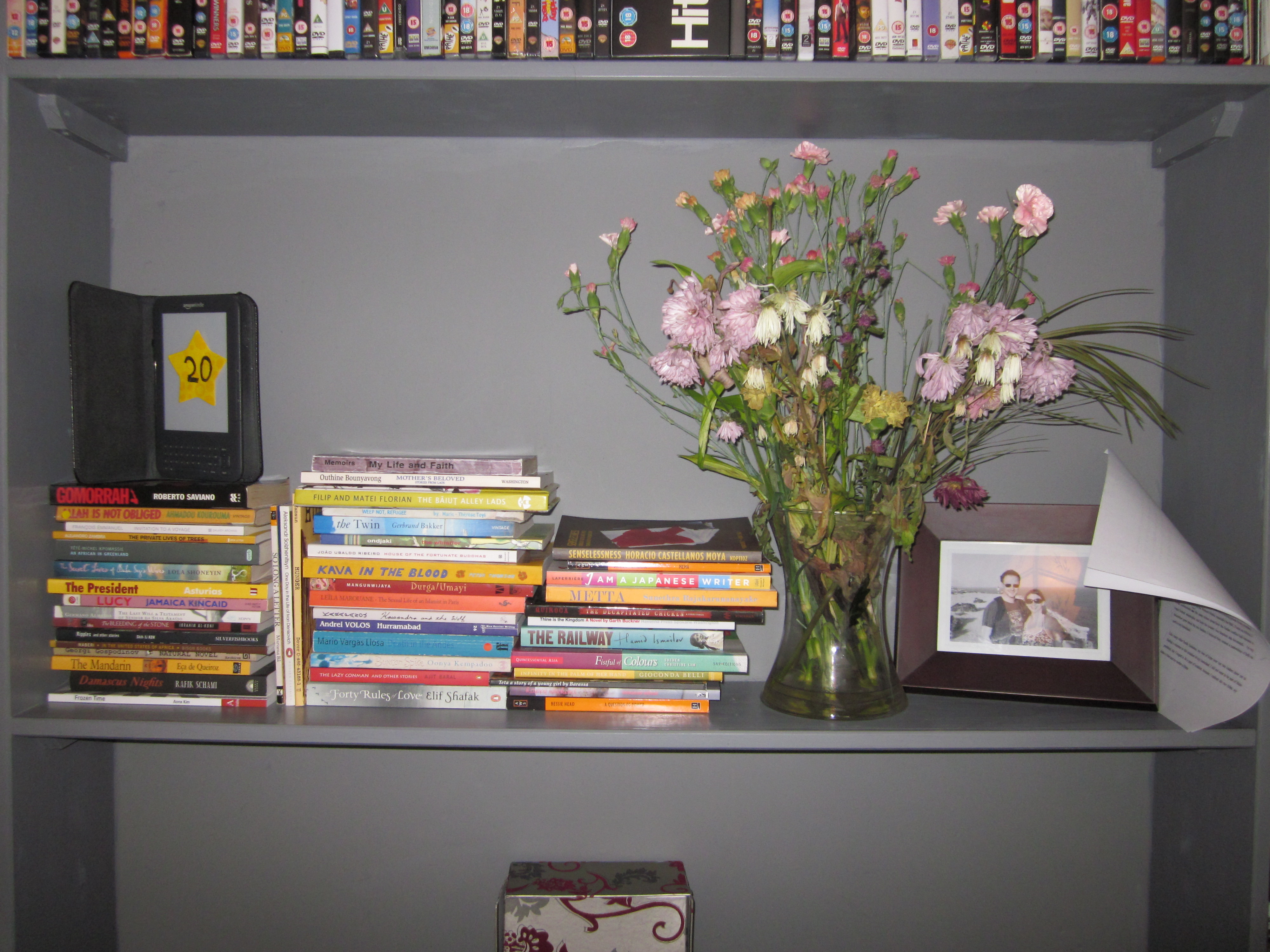
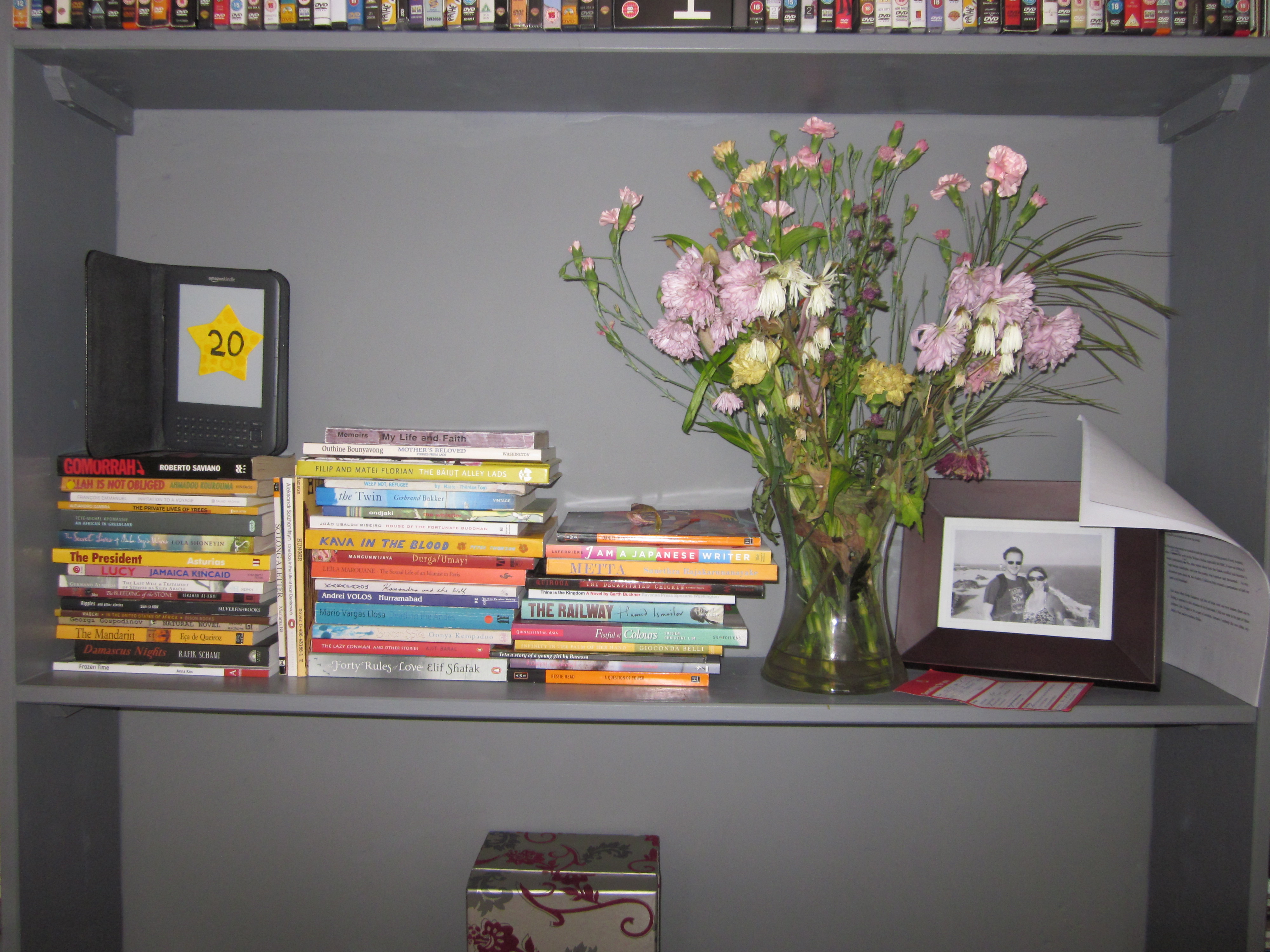
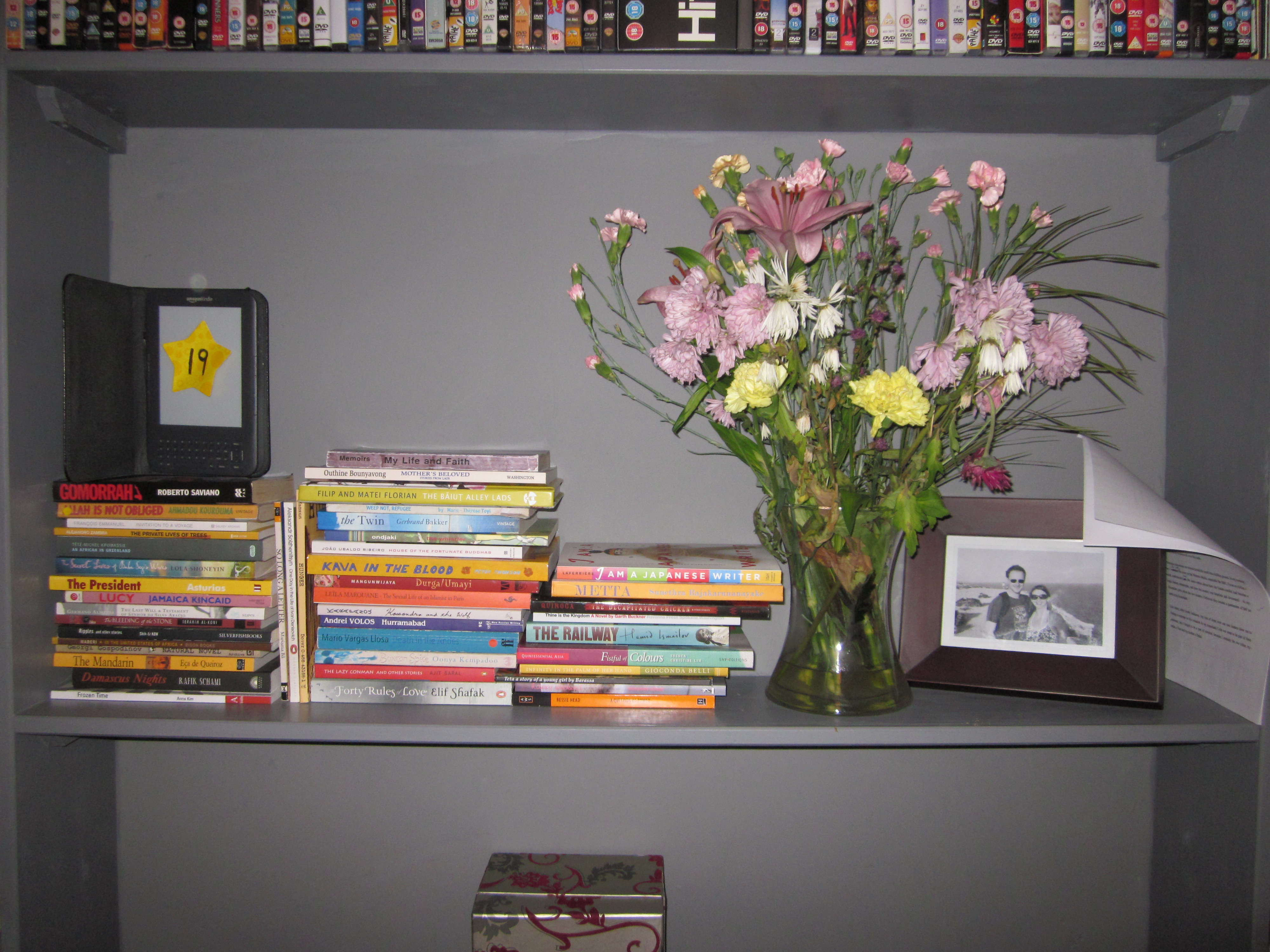
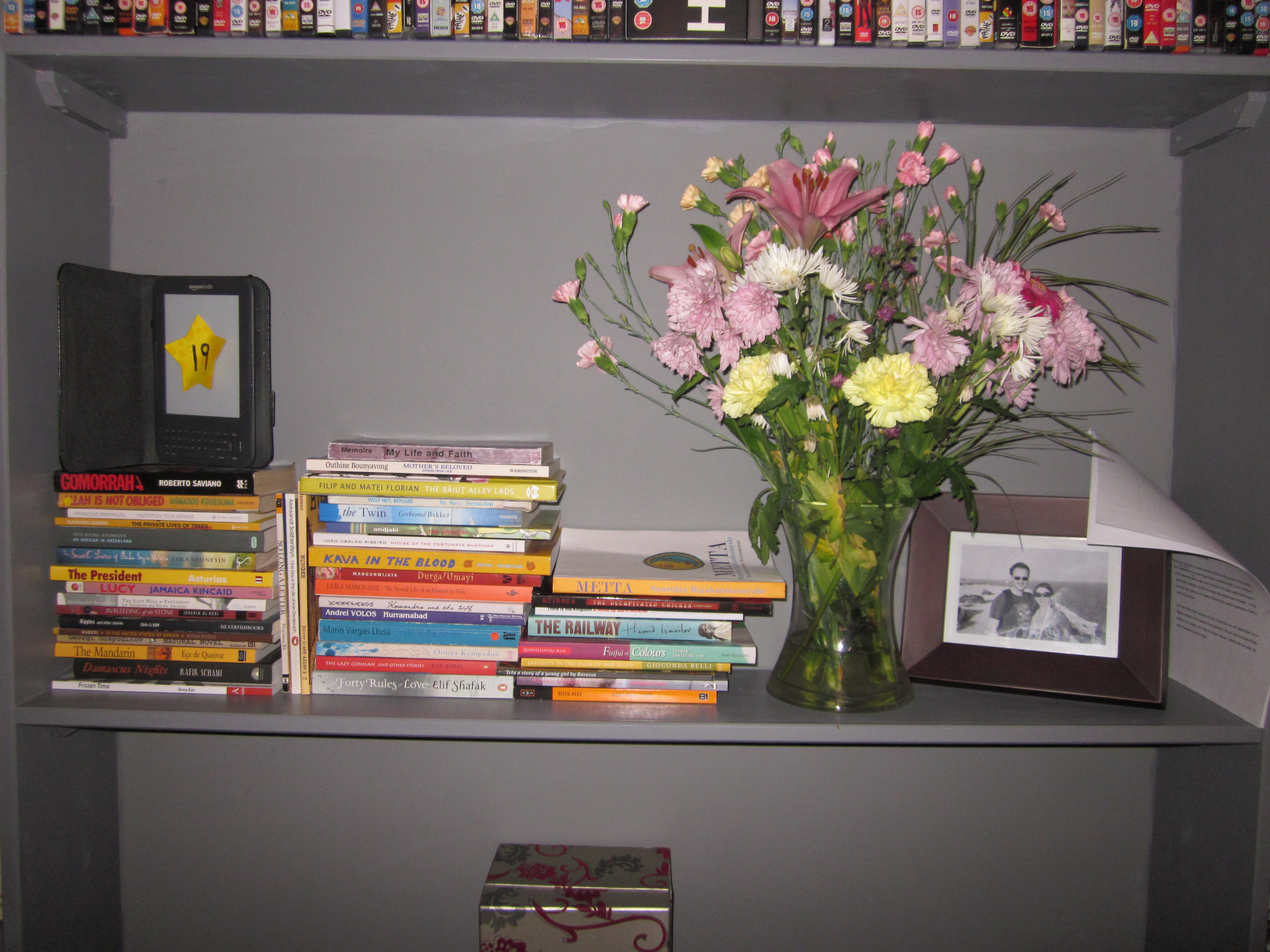
Where did this leave A Year of Reading the World then? Was I being foolish to even contemplate something so reductionist as trying to read a book from every country? Was I one of the ‘space police’ the protagonist describes, grimly shoehorning writers into boxes they would never choose? What if, as Laferrière’s protagonist would have it, I was simply assembling piles of British books on the shelf in my living room because, being British, I was unable to read books on any other terms?

These weighty discussions are offset by the narrator’s self-deprecating humour as he repeatedly dismantles his soap boxes and shifts ground. The witty portrayal of writer’s block and the protagonist’s ham-fisted attempts to immerse himself in Japanese culture – at one stage he bombards a bewildered Korean with questions on the assumption that the two countries are ‘the same thing’ – are great fun.

In addition, the arguments are undercut by the way Laferrière circles his readers, Sumo-wrestler-style, daring us to make the false move of conflating his protagonist with him. The writer may be a Haitian-Canadian living in Montreal and working on a novel with the same title as his creator’s, but he is of course not Laferrière. Or is he? And would it add any more authenticity and credibility to his arguments if the two were one and the same?

Ultimately, of course, the protagonist’s self-deterministic approach to his own work is blown apart by the wild reaction of the Japanese. Whether he likes it or not, the work he produces (or, in this case, has yet to produce) can not be controlled. As this fiendishly clever and enjoyable book demonstrates, the act of publishing is about setting a work free for others to criticise, categorise and cannibalise as they chose. Cultural nationalism may be a construct, but it is a construct to which the vast majority of the world subscribes.

Does that make it true? I don’t know. But hey, if all I’m doing here is assembling a library of British books, novels like this mean it’s definitely my most interesting and diverse collection to date.

I am a Japanese Writer by Dany Laferrière, translated from the French by David Homel (Douglas & McIntyre, 2011)

Sri Lanka: seismic shifts

There was an obvious choice for Sri Lanka. Having won the prestigious DSC Prize for South Asian Literature this January, Shehan Karunatilaka’s cricket novel Chinaman seemed a shoo-in. I’d even bought a copy and added it to the pile of books waiting for me in the corner of my living room before I began to have doubts. After all, shouldn’t I try and get something a little more off the beaten track? Something written in one of Sri Lanka’s official languages rather than the English of the nation’s colonial past?

I went back to the drawing board and fired off an email to DK Agencies, an Indian bookseller that specialises in literature from South Asian countries. It wasn’t long before I was looking at an impressive list of Sri Lankan titles in translation from Tamil and Sinhala. Choosing felt a bit like trying to order a dish from a menu in a language you don’t understand — particularly as, unlike titles released by Western publishers, the books on the list had very little information about them available on the web. Crossing my fingers, I plumped for Sunethra Rajakarunanayake’s Best Sinhala Novel State Literary Award-winning novel Metta.

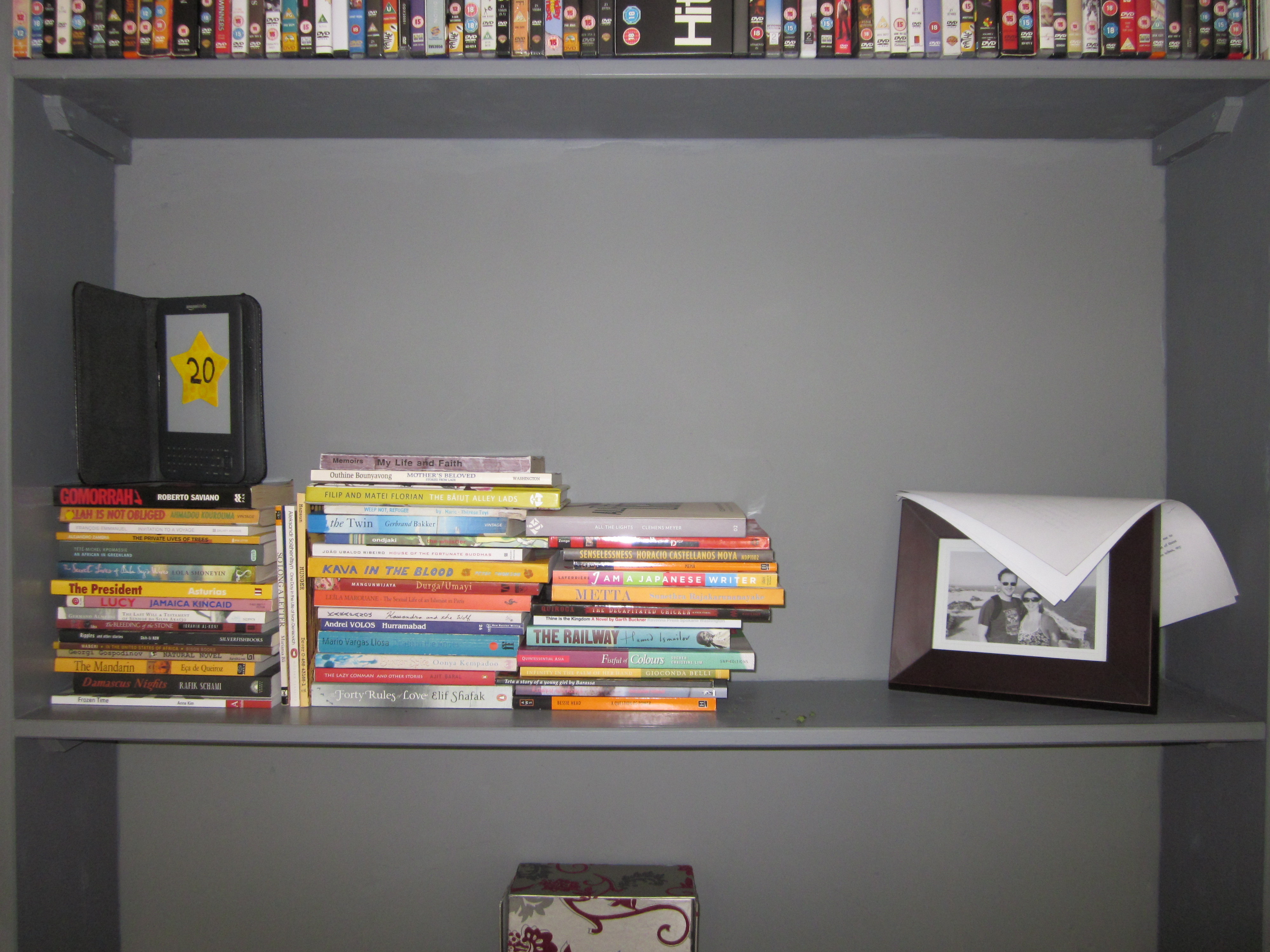
Three weeks later, the book arrived, wrapped in a makeshift envelope constructed of two A4 sheets of paper. Regular AYORTW visitor @alualuna informs me that this is quite normal, but for me it simply seemed to add to the intrigue of the whole thing – especially as the package had partially ripped open in transit. This novel really did seem to have taken a tortuous route to get to me.

The book tells the story of Varnasi, her mother Manoramya and Sasha, the man who has set them against each other, as an earthquake hits Sri Lanka during a ceasefire in the recent civil war. While normal life crumbles around them, Sasha and the two women are forced to assess the barriers they have put up against each other, unearthing truths and secrets that have kept them apart and seeking a resolution that, for Varnasi at least, draws on the Buddhist concept of Metta – which, as translator Carmen Wickramagamage explains in her Afterword, is commonly inadequately explained as ‘loving compassion’.

The prejudice that separates people is a key theme in the novel. One of its most compelling parts – the opening section which portrays Sasha’s uneasy position as a consultant-cum-liaison officer for international NGOs – reveals the suspicions that divide the community. Viewed as a ‘peacewallah vulture’ by the warring local factions, Sasha is held at arm’s length by the Western workers and is perpetually wary of getting caught up in some cultural misunderstanding that might lead him to be dismissed, had up for sexual harassment, or worse.

Similarly, the foreigners themselves seem trapped in their own bubble, numbed by flitting from one conflict to the next. ‘They don’t feel the pain of our injuries because they have already seen too much pain in the places they have been’, muses Sasha before urging one of the young woman not to remain in her job too long because she’ll ‘never be able to return to a normal life’.

This insight into human fears and insecurities, gives Rajakarunanayake the tools to unfold the subtle shifts in emotion between Varnasi and her mother as they cower beneath a table through the night. It also enables her to reveal some powerful insights into what it is like living through a natural disaster when all the rules about property and propriety are shivered into dust (the references to the prevalence of rapes and sexual assaults in the aftermath of the 2004 tsunami, for example, were particularly disturbing).

The earthquake does more than rearrange the three main characters’ lives: it disrupts the narrative structure too. No doubt a lot of this is intentional. Rajakarunanayake makes much of the metaphorical potential of the earthquake – it even changes the shape of the island – so it’s hardly surprising that the text itself undergoes an abrupt transformation.

That said, the book needs some closer editing. Several ideas are restated too often, particularly as the narrative shifts between the three characters. Some of the practical details of the resolution Rajakarunanayake reaches for are also a little questionable and would probably not stand up to medical scrutiny.

I was also tripped up by the strange Postscript, in which Varnasi claims half the story never happened. I’d be interested to know from Sri Lankan literature buffs whether this and the ‘In a Nutshell’ summary at the start of the book are part of a wider tradition in Sinhala literature or innovations of Rajakarunanayake’s own making.

Nevertheless, I was fascinated by what Rajakarunanayake has achieved here. While creating something very specific and personal, and unlike anything I’ve read before, she expresses broad truths. These reach beyond the Sri Lankan coastline to show people to themselves the world over. The printed copy might have struggled to reach me, but its writer had no trouble at all.

Metta by Sunethra Rajakarunanayake, translated from the Sinhala by Carmen Wickramagamage (The Three Wheeler Press, 2011)

Uruguay: losing your head

There are some titles that reach off the shelves, grab you by the throat and all but frogmarch you to the check out (or in this case the virtual cash desk with the little man hiding somewhere around the back of the computer) to make you buy the book. Horacio Quiroga’s The Decapitated Chicken and Other Stories was one of these: as soon as I stumbled across the work on one of Wikipedia’s lists of writers by nationality, I knew I was going to read it. The fact several visitors to this blog subsequently recommended it only made me more excited about what I might find inside.

As its name suggests, this collection of short stories – selected from across Quiroga’s oeuvre by translator Margaret Sayers Peden – focuses on the startling, violent moments in which lives are altered beyond recall. Death, cruelty and vicious coincidence stalk its characters, feeding off their weaknesses and rarely allowing anyone to escape scot-free. There is the Indian worker driven to plot his bloody revenge by the high-handed discipline of a captain in A Slap in the Face’ and the father who retreats into eerie hallucinations after his young son’s death in a shooting accident in ‘The Son’ – a real shiver-in-the-sunshine moment in the best of the Gothic tradition. Meanwhile, the mini-masterpiece that is the title story shows how years of disappointment, hard luck and neglect can be distilled into a single, horrific act.

Jean Franco and George D Schade make much of the disturbing events of the writer’s own life in their Foreword and Introduction (several of Quiroga’s closest relatives and friends died in violent accidents, his first wife committed suicide and he killed himself in 1937). While these traumas must have impacted heavily on Quiroga, there is a strangely panicky feeling about the critics’ repeated references to them, as though they are anxious contain, defuse and even explain away the savage power of the text. At times, their comments take on the apologetic tone of the relative outside the room of the manic-depressive, whispering that dear Quiroga is not quite well.

This is perhaps because many of the stories in the book exhibit a disturbing, almost anarchic, approach to reality and sanity that is even more troubling than the violence they portray. From weird parables such as the story of ‘Julian Darien’, in which a tiger transforms into a boy only to be tortured to death by the villagers when his mother dies, to the excellent The Pursued’ — which describes the narrator’s obsession with a mentally ill friend-of-a-friend that makes him desperate to get at ‘the madman behind the actor who was arguing with me’ — the stories never allow the reader to relax. Turn your back for a second and the landscape has shifted, the rules changed: Quiroga is a writer who must be watched at all times.

It doesn’t always work. Some of the reversals are too abrupt and, while many of the animal stories are compelling, the anthropomorphism occasionally falls flat on its face – ‘Anaconda’, for example, in which snakes set out to attack the research centre trying to find an antidote to their venom feels like a bridge too far. Similarly, Quiroga’s dipping between registers, which is often effective, can sometimes feel odd, as in the opening story ‘A Feather Pillow’, the ending of which reads more like a public health pamphlet than a denouement.

But these are minor quibbles. All in all, this is a masterful collection that lifts the lid on some of the deepest and darkest wells of human experience. It will linger with the reader long after it’s been put on the shelf. Highly recommended.

The Decapitated Chicken and Other Stories by Horacio Quiroga, translated from the Spanish by Margaret Sayers Peden (University of Wisconsin Press, 2004)

Bahamas: disputed territory

The Bahamas were looking difficult. As recommendations poured in for many other Anglophone countries, the list entry for this small but wealthy collection of more than 3,000 islands and islets remained blank.

Even when I started making inquiries, Bahamian books proved difficult to unearth. In fact, the first title recommended to me by one cultural organisation was a guidebook to the country. Close, but no cigar (although I was very tempted to take the hint and get on a plane…).

Then I stumbled across a blog post by Valentine Logar. A longstanding fan of all things Bahamian, she was on one of her regular family holidays in the country and wrote enthusiastically about the climate, culture, food and fun she was having there. I thought I could do worse than ask for her advice, so I left a comment and was delighted when she came back with several recommendations. Garth Buckner’s Thine is the Kingdom, published by small indie house Ravenna Press, was one of them.

Contrary to what the title might lead you to expect, this novel has nothing to do with religion. Rather, it chronicles the attempts of white Bahamian Gavin Blake to carve out a life for himself in the country of his birth after years of travelling round the world. Hampered by a legal technicality which dictates that Bahamian-born children take their fathers’ nationalities, penniless Blake, whose father was American, goes to work for rich yacht-owner Thesinger while he tries to apply for citizenship. But as he witnesses the rise of violent crime and social unrest on the island firsthand, he comes to realise that he is not the only one struggling to hold on to his stake in this millionaire’s playground.

Buckner writes passionately about the desire to belong and the things that put people in or out of the gang. Exploring class markers, educational background, race and linguistic habits, he reveals Gavin’s frustration and wistfulness as he tries to find acceptance from both the wealthy landowners and the feisty street traders in the country he calls home:

‘I was delivered right here in Nassau and this is the only home I knew as a boy coming up. My umbilical cord is buried in this sand. There should be something inalienable in that. But they never call me Bahamian and mean it; the word is always couched in inverted commas.’

Buckner sets this yearning against the rich backdrop of the island life he is so adept at evoking. In tough, muscular language, which breaks at times to admit moments of beauty, he conjures tropical harbour life and the perpetual influence of the weather and tides on those who live surrounded by the ocean.

The writer couples this with a talent for getting inside the minds of his characters and revealing the gusts of emotion that blow them off the course of logic into troubled waters. Whether it’s Blake’s insecurity as he struggles to remember how to clean an engine filter under the gaze of his boss’s wealthy friends or Thesinger’s anger at failing to catch any crayfish on his much-vaunted fishing trip, he excels at showing the limitations that force people to do unwise and dangerous things rather than own up to their own weaknesses.

His skill for scene-painting and empathy mean that Buckner is able to evoke a huge amount of menace as Blake struggles to defend Thesinger’s property from the tide of hostility swelling outside his gates. The scenes with various intruders and the stand-offs with the sinister Caleb and his cronies at the illegal fish market are gripping and thrilling.

If Buckner labours his message about double standards and the wealthy landowners being every bit as corrupt as the criminals they confront towards the end of the book, it feels like a small price to pay for this compelling insight into a privileged and turbulent corner of the world. I was hooked. Thanks for the tip, Valentine.

Thine is the Kingdom by Garth Buckner (Ravenna Press 2008)

Uzbekistan: banned books

A frequent dilemma when you’re trying to read a book from every country in the world is deciding which of the many perspectives in each nation to choose literature from. This is particularly tricky in the case of states that ban books on certain topics or viewpoints and so have two literatures: the official stories and the books released underground or outside, away from the reach of the law enforcers.

The journalist in me tends to be drawn to the illicit, banned books, partly because they’re more intriguing but also because I tend to assume that they will somehow be more authentic and truthful. However, as I found with my North Korean book (My Life and Faith by ardent patriot Ri In Mo), this tendency to favour marginalised voices over the official line can have the paradoxical effect of excluding the authorized stories and making them the ostracized, radical accounts on the world literature stage.

But what about a book written with a view to mainstream publication in the author’s home country but banned at the last minute? That was the situation Hamid Ismailov faced when the Uzbek translation of his Russian-language novel The Railway was due to be published in Tashkent. The first half of the novel had already appeared in a journal in 1997 when the Uzbek government, jumpy about the work’s irreverent attitude to authority, pulled the plug.

The book spans the first 80 years of the 20th century and is set in the small town of Gilas, a settlement on the old Silk Route and now a stop on the railway line ploughing its way across Central Asia. Presenting a portrait of the myriad narratives woven through this remote backwater, which has seen Uzbeks, Russians, Persians, Jews, Koreans, Tartars, gypsies, mullahs and Bolsheviks pass through and make their marks, it bombards the reader with a host of extraordinary, grotesque and often hilarious tales. There are the pregnant twins in a race to give birth after a town official promises to marry the first-born’s mother, the landowner bankrupted by paying off his pugnacious son’s blood debts, the Kirghiz teacher driven to absurdity by his desire to fit in and the orphaned boys who assume prominent positions in the town’s music scene despite one of them being deaf.

Translator Robert Chandler describes his work on the book as being like ‘restoring a precious carpet’ in his excellent preface and it’s easy to see why. Not only is the book structurally elaborate with a cast of more than 100 named characters, but it is linguistically and culturally complex too. Labyrinthine sentences thread themselves through clause after clause, teasing the reader with puns, digressions and asides, and the narrative bristles with references to events, ceremonies, bureaucratic formalities and rites of passage that will be unknown to most Western readers.

At its best, the humour and brilliance of this chronicle of ‘the inhabitants of Gilas: that lost and ill-assorted tribe of the debauched and depraved’ shines through. The puns are witty and the narrative glitters with insights – in particular it presents us with a ruddier and much more jovial face of Islam than we are used to seeing in the West.

Chandler manages to smuggle a lot of the linguistic jokes across in one guise or another. The scene early on in the book, for example, where Ivan the train driver misunderstands Umarali’s prison Russian and gives him fuel instead of alcohol is great.

However, there’s no denying the fact that this book is hard work. Even with the list of characters and Chandler’s end notes, it’s impossible to keep track of everything and everyone, at least on a first attempt. At times reading it felt like being at a lively party where people batted around in-jokes I could only half understand.

The narrative expresses this sense of being on the outside looking in too. One of the most striking moments in the book, where a nameless boy blows a kiss to an unknown girl on a passing train, evokes a sense of extreme  wistfulness.  For this book, shut out from the readers who would appreciate its subtleties without referring to the footnotes, it seems a powerful metaphor: a connection attempted but somehow missed.

The Railway by Hamid Ismailov, translated from the Russian by Robert Chandler (Vintage, 2007)