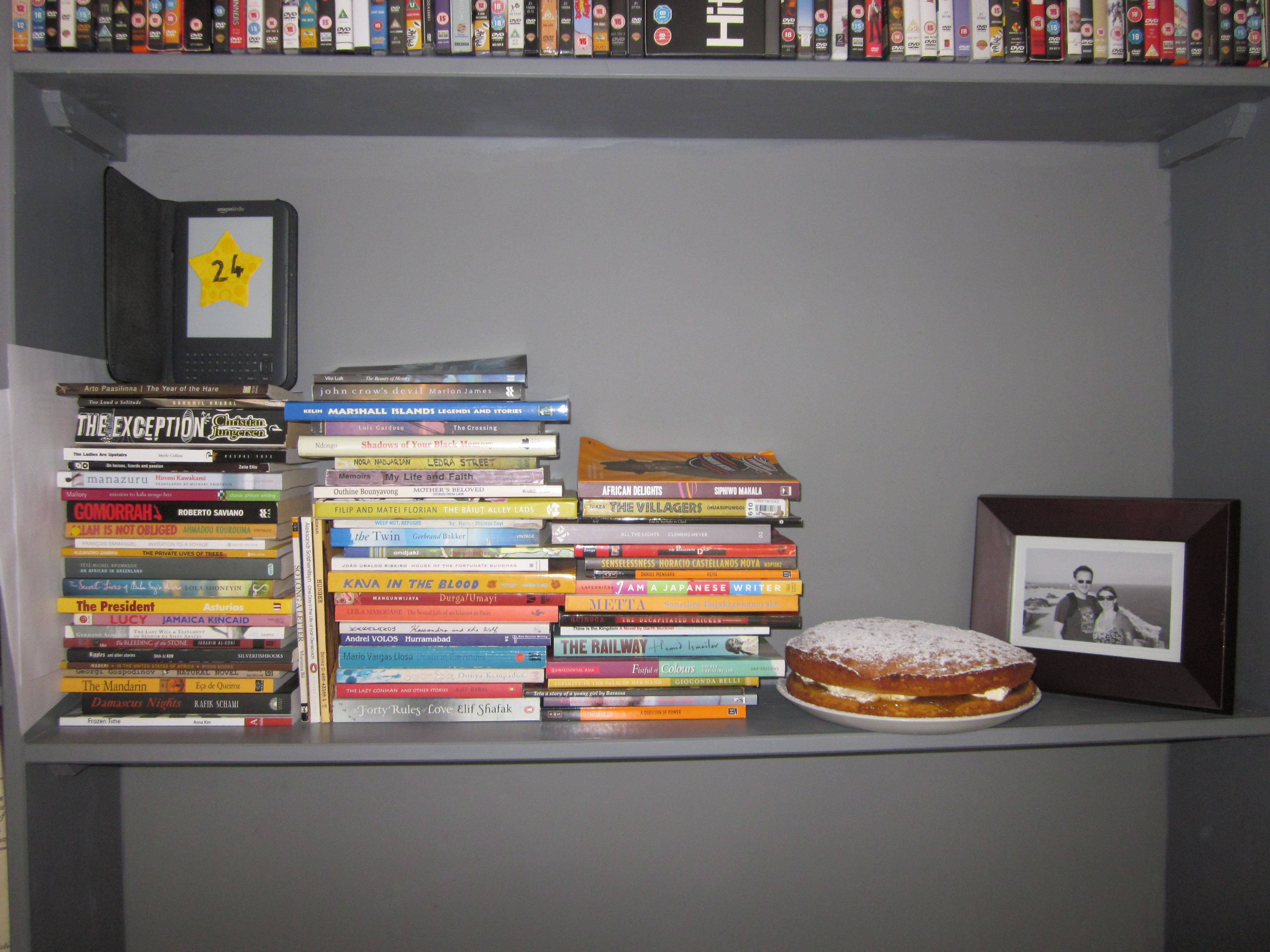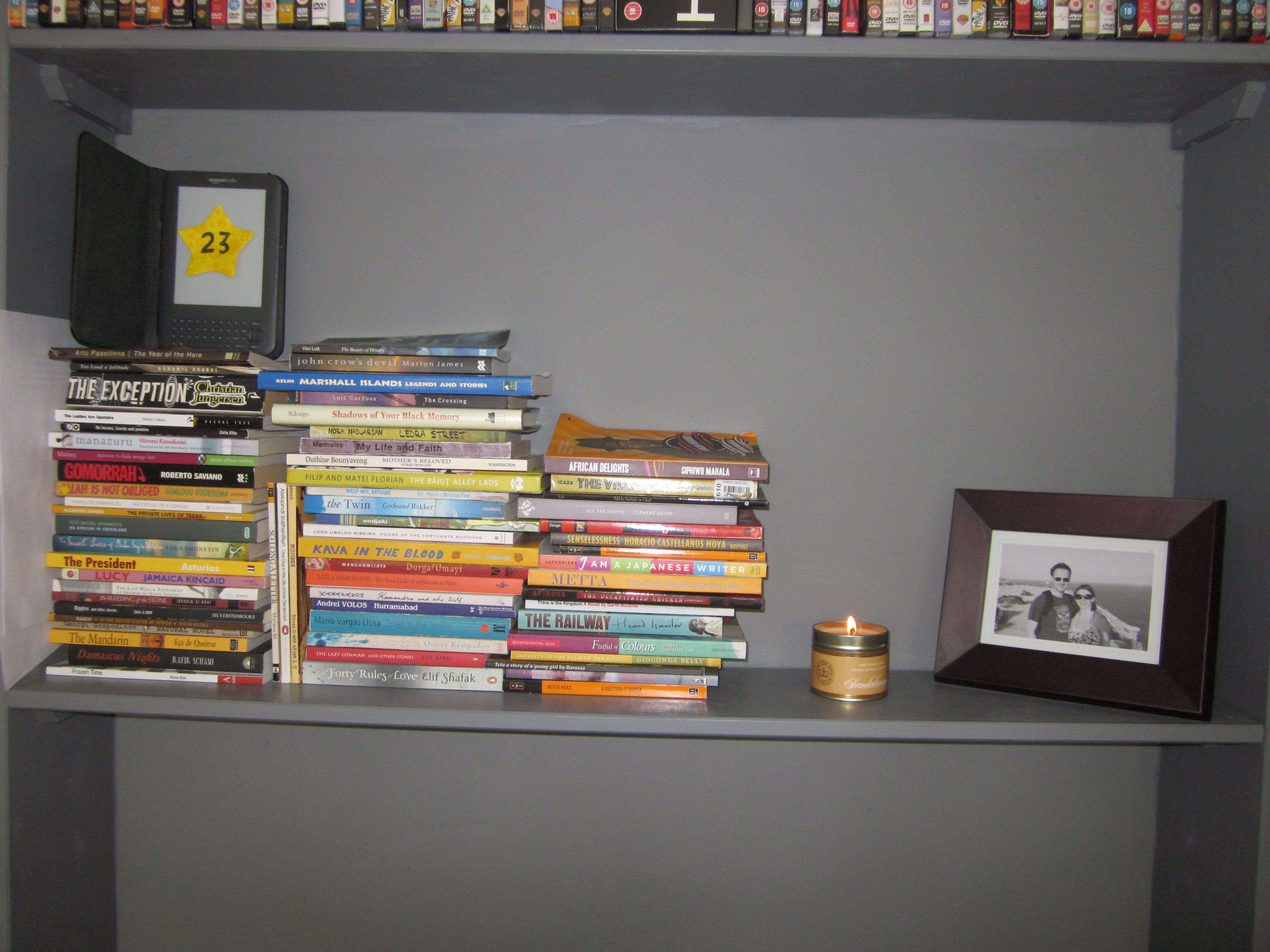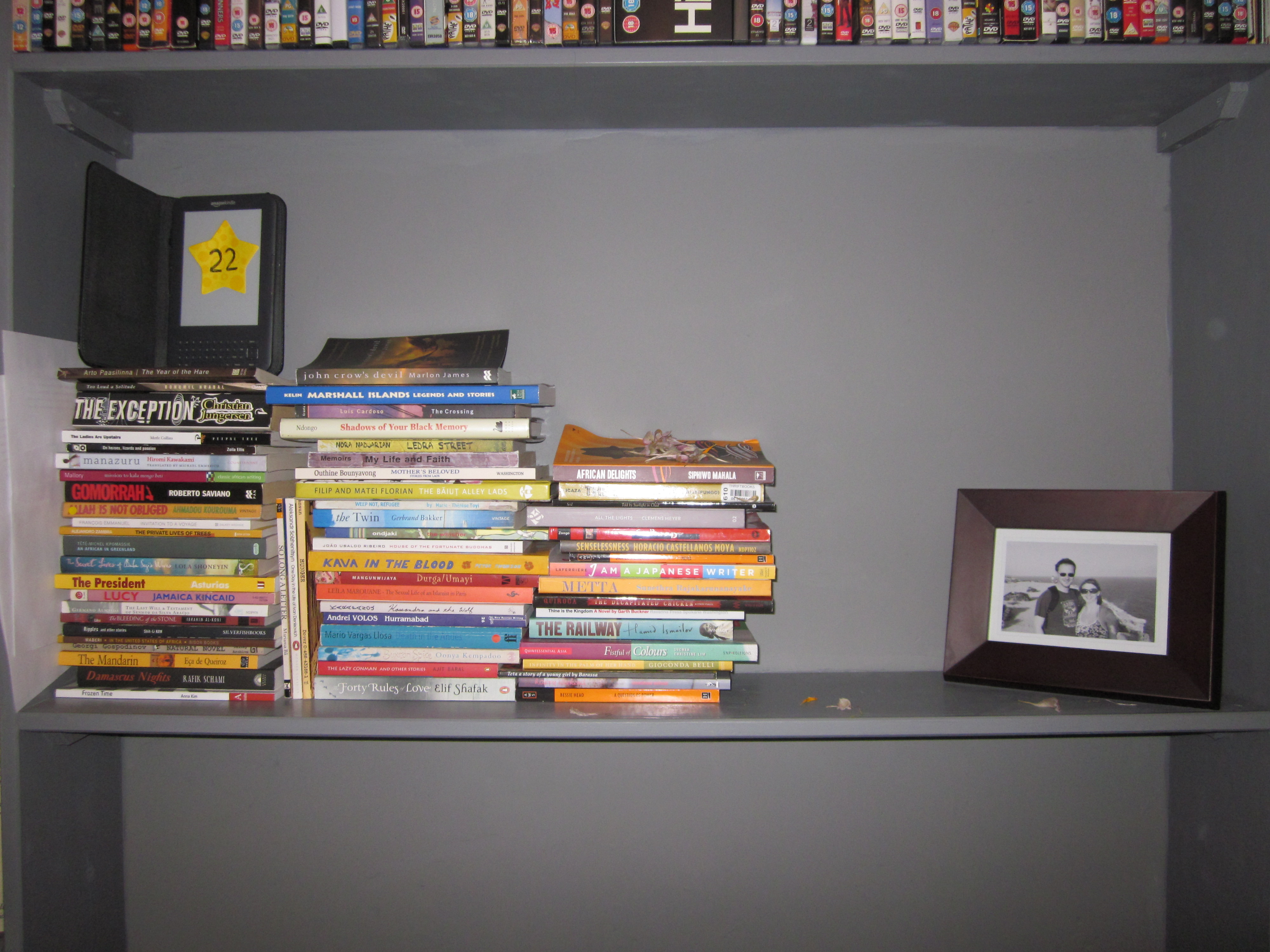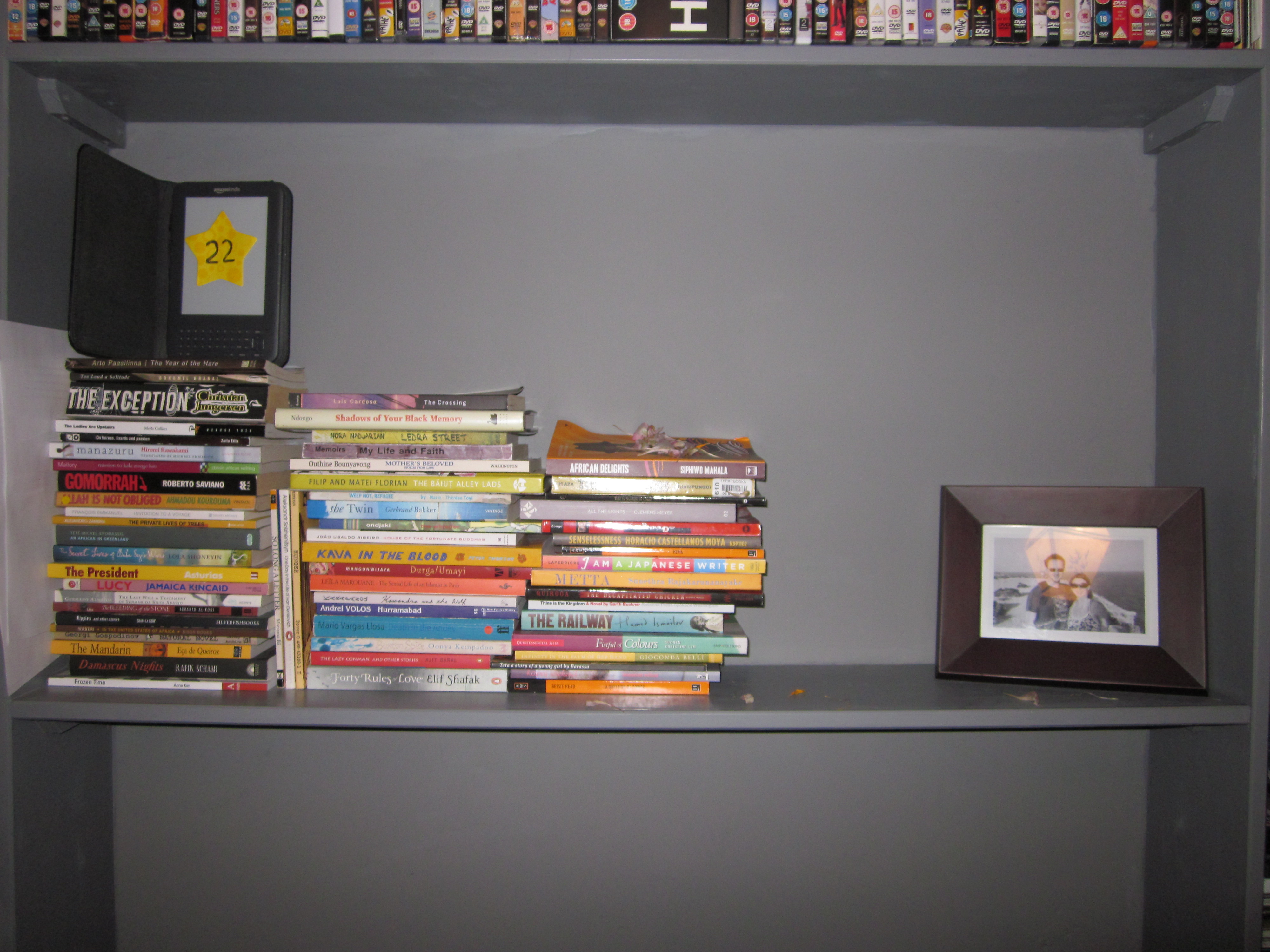
Vatican City: gospel truth?

Vatican City was always going to be a challenge. With an area of 0.2 sq miles and fewer than 900 citizens, it is the world’s smallest independent state. It’s also one of the most unusual – Vatican City nationals are made, not born (hardly surprising, given that the majority of its residents, barring a few Swiss Guards, are Roman Catholic priests) and the state is thought to be the only country in the world where you can take out money from a cash machine by following instructions in Latin.

All this made getting a novel, short story collection or memoir out of the place look doubtful. I was beginning to think I was going to have to resort to a papal bull just for the sake of having something to read.

Then I google-stumbled (gumbled – I think this should be a word) across an intriguing-sounding book called Gone with the Wind in the Vatican or Shroud of Secrecy, as my edition has it. Claiming to be the first treatise of written protest from within the Church since Martin Luther’s theses in 1517, the book is a sort of collective memoir-cum-exposé published by an anonymous group of Vatican prelates, calling themselves the Millenari, in Italy in 1999.

One of the group, Monsignor Luigi Marinelli (whose anagrammatic last name makes you wonder quite how many other people were in the Millenari), has since acknowledged his involvement in the book’s production. He has been investigated by the Roman Rota, the Vatican’s court, which also sought to recall the book from Italy and restrict its publication in translation – a controversial move, given that Italy is a separate sovereign state. Clearly, I had to see what all the fuss was about.

Right from the start (in the subtitle, in fact), the book sets out its mission to tell ‘the story of corruption within the Vatican’ and propose measures to help the secretive and hierarchical institution ‘cleanse what has become a festering wound’. It then proceeds to allege that almost every kind of malpractice and intrigue – blackmail, fraud, sexual favours, masonic links, spying, drug abuse, and even Satanic rituals – is rife among the elite clergy at the top of the Holy See, leaving those who want to advance their careers no option but to play the same game.

Crucially, unlike many works that criticise the Church, the book is written from a standpoint of belief both in Christian theology and in the potential of the institution. In fact, the authors go out of their way to demonstrate their faith, larding the text with quotations from scripture and even likening themselves to biblical prophets. At times, this repeated self-justification takes on a panicky air – although this is perhaps not surprising when you consider the power of the institution they are up against.

The most compelling passages of the book centre on the descriptions of the mechanisms within the ‘dictatorship’ of the Holy See and the way ‘the diplomacy of the Vatican immediately influences any states with which it has diplomatic ties’. At times cynical and sardonic, the narrative voice cites numerous instances of favouritism and petty rivalries advancing the careers of unsuitable (and often unqualified) candidates and blighting the prospects of deserving clergy. Perhaps most chilling of all are the allegations surrounding the way those high up in the hierarchy control and manipulate the Pope for their own ends:

‘To create a power vacuum at the top, they encourage the Pope to immerse himself in apostolic visits. […] Once back in Rome, bewildered and dazed by the rush of the crowd, ears still ringing with delirious hosannas, it is virtually impossible for the Pope to discover the intrigues of the court. […] When the Pope returns, steeped in glory, he is too tired and distracted to notice the insidious conspiracies hidden in the documents he signs. Everyone drafting the documents knows that the aging Pope won’t absorb the notes on the report.’

Perhaps because this is ‘a book of many voices’, the tone of much of the work is inconsistent, veering between the declamatory, the technical and the downright sensational. While some of the instances cited involve names and verifiable information, many of the anecdotes included are anonymous, and written more in the tone of salacious gossip than hard fact, so much so that I found myself wondering whether the writers’ assertions about favouritism said more about their frustrated hopes for their own careers than about the mechanisms themselves. There are also numerous references to miracles and revelations that non-Catholics will find hard to credit.

Nevertheless, as a window into a closed and mysterious world, this is a fascinating book. Accurate or not, it is also clearly a very brave work. No doubt it’s one of the more unusual texts I’ll encounter this year.

Shroud of Secrecy: The story of corruption within the Vatican (Via col vento in Vaticano) by The Millenari, translated from the Italian by Ian Martin (Key Porter Books, 2000)
Iraq: getting a perspective

There were quite a lot of contenders available in English for Iraq. Perhaps that’s not a surprise, given that the country has been in and out of Western headlines for more than the last 20 years. Still, it was good to know that the traumatic occurrences of recent decades had not disrupted storymaking in the region – or so I thought until I read this book.

The Madman of Freedom Square – the first commercially published short story collection by Hassan Blasim, co-editor of Arabic literary website Iraq Story – paints a brutal, yet layered picture of the effects of international events on individual lives in and around post-invasion Iraq. Often starting or ending with a mutilated corpse, the tales trace the connections that bind people to one another and reveal the psychological wounds that result when these ties are ripped apart. There are the refugees reduced to animal cruelty when the truck they are locked in is abandoned, the patriotic songwriter turned atheist who wanders the streets railing against God and existence only to meet a gruesome end, and the underground collective that roams Baghdad making art out of its murder victims.

More than anything, this is a book about the function of storytelling. From the very first tale, ‘The Reality and the Record’, in which a traumatised man tries to tell the right story to secure asylum at a refugee centre, the text interrogates the act of narrating, as though trying to identify its weak points and secret guilt.

Sometimes – as in ‘An Army Newspaper’, an account of an unscrupulous editor who gets trapped in his lies when the dead soldier whose work he has passed off as his own continues to submit reams of manuscripts – storytelling takes on monstrous, nightmarish proportions. At other points, as with the sensational anecdotes spread by gossipmongers in the wake of bomb blasts in ‘The Market of Stories’, it seems a low, self-indulgent exercise, a sort of ‘primitive tribal gibberish which tries to hide behind tasteless and gory laughter’.

That story, however, also holds something of a key to the text’s uneasy relationship with its own function. According to the narrator, it may have its roots in Iraq’s history:

‘Since the fall of Saddam Hussein there have been incessant calls for writing to be intelligible, realistic, factual and pragmatic. […] They claim that the writers of the past made the readers defect, whereas in fact for hundreds of years there were no readers in the country, in the broad sense of the word. There were only hungry people, killers, illiterates, soldiers, villagers, people who prayed, people who were lost and people who were oppressed. Our writers seem to have grown tired of writing for each other.’

It’s important to note, of course, that these are the narrator’s words rather than Blasim’s own. Nevertheless, the question of who narrates, who listens and the value of telling at all rankles throughout the book, inviting the reader to look beyond it to the man writing in Arabic in Finland – Blasim’s home since 2004 – and wonder who exactly these words are for.

Underpinning this unease are repeated comments on the world-altering properties of perspective, with many of Blasim’s narrators suffering from mental illness, trauma or profound emotions that render their accounts suspect. The most powerful example, however, comes in ‘The Virgin and the Soldier’, an account of two young lovers doomed to a horrific death when they are accidentally locked in at the sewing factory where they work at the start of a holiday:

‘In reality there was nothing in the factory but army uniforms, but the government’s aim was to make the UN inspectors suspect that the factory was used for prohibited military purposes. […]

On that morning the American satellite pictures could not of course detect the muffled screams on the second floor. The screaming was hardly audible, and desperate. From the end of a world that was dying it reached the sewing room, which was empty and looked like a dreary sunset over an abandoned city.’

Too much distance, Blasim seems to be suggesting, and we become unable to empathise with fellow human beings, like satellites monitoring the Earth from the exosphere. And yet, even as he writes this, the author draws us in to the heart of the events he describes, immersing us in their brutal, bloody and heartbreaking immediacy.

Some of the stories end less successfully than others and there are one or two twists that miss their marks, but overall this is a powerful and thought-provoking work that transports readers to the extremes of human experience – and a mental terrain most of us are lucky enough never to have to  travel through. If Blasim needed proof of the validity of storytelling, he has written it.

The Madman of Freedom Square by Hassan Blasim, translated from the Arabic by Jonathan Wright (Comma Press, 2011)

Cuba: stellar work

One of the strange things about translated books is that they reach us quite a while after they were written. Sometimes, as in the case of smash hits like Stieg Larsson’s Millennium Trilogy, this might be only a matter of a few months. More often than not it takes several years.

Then there are books like Lydia Cabrera’s Afro-Cuban Tales, which was published in Spanish in 1940 and only made it into English 64 years later. These burst into an era very different from the moment in history in which they were created, a bit like light reaching us from extinct stars.

The book was a recommendation from David Iaconangelo, the founder of Zafra Lit, a bilingual blog dedicated to new Cuban short fiction. He described the stories as so well-written and original that they were ‘somewhere between a work of anthropology and fiction’, and said Cabrera’s work documenting the way various African and Cuban cultures fused in the tales she recorded had had a major influence on later writers such as Alejo Carpentier. I was also intrigued to see from Fernando Ortiz’s introduction to the Spanish edition that this is apparently the first book ever published by a Havana-born woman. Clearly, I was going to have to take a look.

Iaconangelo was certainly right about the originality: I’ve never come across stories more extraordinary than these. Operating in a universe of turtle-men, tiger-men and elephant-men, where stags ride horses, fishermen negotiate with their prey and earthworms compete for the hands of beautiful heroines, these tales pull apart the threads of reality’s backdrop and invite the reader to step through to the weird, cruel and magical cosmos beyond.

Language itself buckles, blends and warps in its attempt to contain the vibrant currents that flow through these tales, with the cultural fusion reflected by the inclusion of utterances from the now extinct creolized dialect Bozal, as well as phrases from Lucumi, Congo and Abakua tongues. As one footnote explains, ‘the original meaning of many of the African words in this book has been lost’, giving a lot of them the mysterious quality of magical incantations, for which they were used in some Afro-Cuban circles.

In addition, the stories themselves test the limits of the language in which they are couched: in ‘Bregantino Bregantin’, for example – in which men are banished and women live along with a single male bull – communication changes so that ‘all masculine words not directly related to the bull were eliminated from the language’. The effect of reading this in the original, gendered Spanish must be particularly striking.

For all their strangeness, however, the stories nevertheless manage to comment on the world around them. Indeed, the distance that some of the more surreal episodes create probably grants the narratives more leverage to attack racism and the hypocrisy of institutions like the Church – ‘all of us are children of saints, and all of our meanness and the pleasure we take in sinning comes directly from them,’ begins one particularly mordant tale.

There are also moments of exceptional beauty, as in the opening paragraph of ‘The Mutes’:

‘On the first night, the moon looked like a thin strand of hair. On the next, like the edge of a transparent sickle. Next it looked like a slice of juicy honeydew melon, and then like a round millstone. Finally it dropped off into the night’s deep mouth, where the Eternally Hidden, the person whom no one has ever seen and who lives at the bottom of the bottomless, smashes up all the old moons with a stone to make stars while another moon is on its way.’

Brave, beautiful, weird and maddening, the stories that Lydia Cabrera gathered and filtered through her own writerly imagination are a lesson in how to break the rules and create something astonishing. As a collection, this book shouldn’t work: it’s inconsistent and erratic; characters stroll on half way through narratives and divert them another way; some stories peter out and the voice varies wildly between tales. But then, superficial logic would also tell us we shouldn’t be able to see light from stars that no longer exist.

Afro-Cuban Tales (Cuentos negros de Cuba) by Lydia Cabrera, translated from the Spanish by Alberto Hernandez-Chiroldes and Lauren Yoder (University of Nebraska Press, 2004)

Ukraine: killer punchlines

This was one of those books that you hear about and want to read. Not only was the premise of the novel – about an obituary writer who shares his flat with a king penguin – intriguing, but the story of Andrey Kurkov’s rise to become one of Ukraine’s most celebrated writers was pretty gripping in its own right: having to deal with more than 500 rejections from publishers, Kurkov self-published his early works and sold them on the streets of Kiev. Clearly, this was one dedicated writer.

The unlikely hero of Kurkov’s most famous work, which bears the Ronseal-style title Death and the Penguin, is Viktor, a novelist manqué who strikes it lucky when a newspaper hires him to write advance obituaries of some of the country’s great, good and not so good. All seems to be going well and Viktor looks set to break out of the lonely, frugal existence he has shared with Misha, a king penguin he adopted when the zoo closed down, until the subjects of his obituaries start to die in suspicious circumstances. As it becomes clear that his ‘vital images of the future departed’ carry more significance than he could ever have imagined, Viktor finds himself embroiled in an increasingly sinister plot, and realises he will need to use all his powers of invention to escape with his life.

Funny, dark and spare, Kurkov’s prose evokes complex situations in a handful of words. The writer does this by using small details to reveal the humanity of his characters: a militiaman’s wish for a quiet shift, a cartoon on TV, a gangster’s pride about his car.

He combines this with razor-sharp perception to produce striking and often touching reflections on death, loneliness, friendship and love. In particular, Viktor’s meditations on the strange alchemy that is the obituary writer’s craft – creating something fixed and definitive out of a mass of memories, half-truths and anecdotes – are fascinating:

‘The past believed in dates. And everyone’s life consisted of dates, giving life a rhythm and sense of gradation, as if from the eminence of a date one could look back and down, and see the past itself. A clear, comprehensible past, divided up into square of events, lines of paths taken.’

Similar to Vatanen’s hare in Arto Paasilinna’s The Year of the Hare (my Finnish book), Misha the penguin acts as a kind of barometer for his master, reflecting his mental and emotional state. He also humanises Viktor, giving him the vulnerability necessary to enable Kurkov to steer him through the moral hinterland the plot demands without losing the reader’s sympathy.

The result is that rarest of beasts: a novel that is every bit as gripping as it is well-written. I read it in virtually one sitting – and not merely because I had to keep up with the schedule. Great.

Death and the Penguin (Smert’postoronnego) by Andrey Kurkov, translated from the Russian by George Bird (Melville International Crime, 2011)

Tunisia: maze of discovery

This was a recommendation from one of the newest book bloggers on the block. Based in Redeyef, Tunisia, English teacher Ali Znaidi set up Tunisian Literature (in English) in May 2012 to plug a gap in the blogosphere, which seemed to have nothing in English dedicated specifically to Tunisian writing.

Providing news, book reviews and other information, Znaidi aims to raise awareness about his country’s literature. It therefore seemed natural to turn to him for a recommendation for this project – particularly as, from what I could find out, Tunisian literature is relatively rarely translated, compared to literature from many other Arab countries.

Znaidi confirmed what I suspected about the scarcity of Tunisian texts in English, but he came back with several suggestions. Of these, I went with Talismano by French-language writer Abdelwahab Meddeb.

Told by a Tunisian writer living in Paris (much like Meddeb himself), the 1979 novel, which the author reworked in 1987, is built around an imagined return to Tunis, Fez and the other cities of the narrator’s youth. As he wanders for a period of roughly 24 hours through streets built half from memory and half from fantasy, the protagonist tests the boundaries of experience and writing itself, by turns engaging in the sensual, riotous and often shocking events he encounters and stepping back to comment on the world and his place in it.

Culture and identity are central threads. As the writer walks through his ‘maze of discovery’, he records the impact that colonialism and the different communities that migrated to the region have had on the places he sees, mingling aspects of Islamic and Judao-Christian culture with ancient myths and secularism to create a heady, bustling and often bewildering text.

A polymath par excellence, Meddeb reaches for cultural references the way an experienced chef works with rare herbs and spices, adding complex layers of flavour and piquancy to his creation. From Dante, Hesse and Joyce, to the Koran and ancient Egyptian theology, the text is broad and full in its scope – a book more of the world than of any particular time and place.

Some of the references are clearly deliberately obscure, however, the experience of reading the novel as a Brit with very little knowledge of Tunisian culture added another layer of disorientation: there were times when I was not sure whether my missing things was part of the author’s design or a function of my own cultural blind spots.

This becomes clearer as the narrative unfolds, carrying with it a series of knowing commentaries on writing and the author’s craft. Perhaps the most telling of these comes right at the end in the Epilogue:

‘We have confided through writing, but without giving you a foothold, have strained your eyes with our arabesque of words, have recommended the circuits of our journey, have warned you of the fissure in all that meets the eye, have unsettled you on high moral grounds, have ruined you among the most robust constitutions, have dusted myself off, vanished into thin air, have found my way inside you through the least perceptible slit’.

No wonder then that extracting coherent meaning from the narrative sometimes feels like trying to scale a glass wall.

This can make for a frustrating reading experience, particularly in the early stages. However if you allow yourself to surrender to the narrative, and let it flow over you, carrying with it its tide of impenetrable allusions, you may be surprised by the insights and recognitions that flash suddenly from it like gems buried in the shifting sand of the seabed.

Beautiful, maddening, disturbing and strange, this is a book for the intrepid armchair adventurers out there. It is not a comfortable ride, but when you reach the end and look back along the route you’ve travelled, you get one hell of a view.

Talismano by Abdelwahab Meddeb, translated from the French by Jane Kuntz (Dalkey Archive Press, 2011)

Estonia: the past is another country

The Estonian Literature Centre was one of the first national literature organisations on the web. It launched in 2001, back when Mark Zuckerberg was just starting out at Harvard and tweeting was something only birds did. Judging by my correspondence with it, the organisation is also one of the most efficient of its type: within a few days of my query email, I received a message from Kerti at the centre. She sent me a list of three recommendations and attached the manuscript of a crime novel set in medieval Tallinn, for which the centre is trying to find an English-language publisher.

Tempting though the crime novel was, I decided to go with The Beauty of History by Viivi Luik. This was largely because, from what I could find out, she is one of the country’s most highly acclaimed writers behind Jaan Kross, the Estonian writer most well-known to the rest of the world.

The novel follows a young woman who agrees to pose for a sculptor around the time of the Prague Spring in 1968. With change sweeping across Europe and shivering the Iron Curtain, the woman sees life around her tilting out of alignment as old certainties buckle and the authorities rush to clamp down on underground networks. The sculptor senses it too and is preparing to escape to the West in order to avoid military service, but for his model the events have less tangible and more emotional consequences that send her groping through the past, present and future, trying to locate herself in a world that will never be the same.

This is a book about the power of words – words that forbid, mask and betray, and ‘must be soaked in blood in order to be effective’. With the oppressive Soviet regime necessitating the adoption of a ‘secret language’ for communication about the sculptor’s plans, innocent, everyday terms take on sly, double meanings that mean the heroine ‘can never understand whether the talk is simply of buying butter and cream or of the arrival of fateful news’.

Luik further emphasises the infiltration of terror into daily life through her use of quaint and everyday objects in her imagery: fear ‘flashes like a silver ear-trumpet into which one cannot speak, but only whisper and wheeze’, and ‘glows in naked forty-watt bulbs like an egg’.

In addition, the author’s spiralling of her heroine and her reader through time underlines the interconnectedness of personal and national narratives, revealing how political upheavals change not only the present and the future, but also the way we look at the past. When ‘all ages are flung together’ and ‘years are linked to one another like human vertebrae’, a single shock affects the whole organism.

The blending of myth, memory, past and future has a disorientating effect, which makes the narrative seem to whirl wildly at certain points, flinging the reader into confusion. This was no doubt exacerbated by my ignorance of Estonian political history, which meant that several references that might have provided hand holds slipped through my grasp.

Taken as a whole, though, this was an absorbing and beautiful tribute to the desire for freedom of thought, movement and self-determination. It left me with a powerful impression of what living under occupation might mean and a strange, wistful sense of the secret lives of everyday things.

Thanks, Kerti, for the recommendation – if any English-language publisher is looking for a historical Tallinn crime novel for its list, the Estonian Literature Centre may have just the book.

The Beauty of History (Ajaloo ilu) by Viivi Luik, translated from the Estonian by Hildi Hawkins (Norvil Press, 2007)

Jamaica: divine retribution

This was a recommendation from novelist and blogger Stephanie Saulter. She said that as I’d enjoyed Gaiman’s American Gods she thought I might like this ‘wonderfully dark fantasy that weaves folk tales and superstition into a real-life story of betrayal, deprivation and alienation’. I was intrigued.

Set in the fantastical town of Gibbeah – where birds attack humans and certain houses assume magical powers – Marlon James’s debut novel John Crow’s Devil examines the lengths that fear and hearsay will drive people to. When the self-proclaimed ‘Apostle’ York strides into the midst of a church service to drag the drunkard Hector Bligh, known as ‘the Rum Preacher’, from the pulpit, many see it as the wake-up call their sleepy community needs. But as the Apostle assumes control and begins to preach an erratic gospel of fire, brimstone, vengeance and violence for all those who do not stick to the path of righteousness, a darker truth emerges that tips the town into a spiral of hell.

James excels at portraits of outsiders. All his major characters harbour some secret suffering that sets them apart from the community and on course for the collision that blows the narrative into the stratosphere in the closing stages of the book. There is the self-loathing and prudish church administrator Lucinda, the fanatical and warped Apostle, the lonely widow who harbours the Rum Preacher, and of course guilt-ridden Bligh himself.

James puts these individual stories against a backdrop of suspicion and narrow-mindedness – ‘a town that preferred things black or white’ where ‘church people, through their stares, created a boundary of shame that few climbed over’. Oscillating between a more detached third-person narrative style and a collective, community voice, he weaves a web of whispers that evokes small-town gossip-mongering in all its terrifying yet seductive fullness:

‘Yes baba! Rumour jump from her yard and race down the street and stop at Mrs Fracas house, then Mrs Smithfield house where it pick up two more story, then it hop and skip and jump from one yard to the next, then it race to the grocery shop where it bounce and bounce like American ball. And every time rumour bounce, the story pick up something new.’

This use of multiple, characterful voices combines with superlative, supple writing that is more than equal to the horrors it unfolds – among them one of the most graphic and powerful flogging scenes going. What in another writer’s hands might descend into cheap sensationalism here grows in stature and subtlety with every twist of the knife. An outstanding piece of work. Thanks for the tip-off, Stephanie.

John Crow’s Devil by Marlon James (Macmillan Caribbean, 2008)

Marshall Islands: telling tales

The Marshall Islands posed a dilemma: preliminary research showed that all storytelling on this remote archipelago in the Pacific was done orally. As far as I could find out there was no such thing as a Marshallese writer.

Beginning to wonder if I was going to have to fly to the Pacific to listen to the stories myself, I contacted Peter Rudiak-Gould. An anthropology PhD student at Oxford University, he has written a textbook on Marshallese and Surviving Paradise – an account of the year he spent as a volunteer English teacher on one of the Marshall Islands. If anyone could help me, surely this was the man.

Rudiak-Gould came back with two suggestions: Melal: A Novel of the Pacific by Robert Barclay (a non-Marshallese national – although he did grow up in the Marshall Islands) and Marshall Islands Legends and Stories collected from indigenous storytellers by Daniel A Kelin II, a non-Marshallese national and Director of Drama Education for the Honolulu Theatre for Youth.

Both sounded like contenders, but in the end I plumped for the Kelin. This was because I was curious to see what the country’s traditional stories were like, but also because I wanted to test how it felt to read stories that were originally told in another medium. I had a suspicion that folk stories transcribed and set down in a book might have the dry, correct feeling of exhibits in an old-fashioned museum: neatly curated and labelled, with all the life and sense of their original purpose sucked out of them. Would Kelin, himself a performance artist, have managed to preserve some of the immediacy of the tales?

The 50 stories in Kelin’s collection present a broad and intriguing picture of Marshallese folklore. These are creations in which the impossible is commonplace: whales sleep on the roofs of houses, women fly, children are born 12 at a time and kingdoms exist at the bottom of the sea. Sometimes containing explanations of aspects of island life – such as how turtles first came to the nation or how women learnt to survive childbirth – they weave a complex web of duties and preoccupations, in which the importance of hospitality and respecting customs and authority jostles with a love of ingenuity, wit and cunning. There is the youngest son who defies his older brothers to feed his family, the iroij (chief) who strikes a deal with demons and gets washed out to sea when he fails to keep it, and the fishermen who lose the art of magic fishing because they do not pay attention to their elders.

Even more interesting than the stories themselves are the potted biographies of the storytellers and their incidental comments (included in italics), many of which reveal an extraordinary sense of connection with the tales they are telling. ‘They invited me to eat with them that day. If you ever stop by my island, I’ll show you the hole where the boys stayed,’ says Tonke Aisea at the end of a story about brothers tricking a demon, while Jeljel Jerbal leans out of his house to point out where the boy who wrestles a demon to death in his story lived.

This sense of ownership is complemented by Kelin’s explanations of the lengths he had to go to to obtain permission from the local iroijes to hear the stories  – the right to tell and listen to the stories is only granted to a lucky few – and the narrators’ moving comments about the slow death of their tradition through the westernisation of the younger generation. In addition, there are the illustrations by local artist Nashton Nashon, which give the book a striking character – so striking in fact that a woman on the tube even asked me what the book was about because it looked so unusual.

There’s no doubt – particularly in the tales with a lot of poetry and song – that something of the experience of hearing the stories in person is lost in the book. There were points when I found my ears straining in vain to catch the voice singing or chanting far away across the sea.

On the whole though, it was hard not to be impressed with Kelin’s passion and diligence and his evident efforts to present as much of the experience of listening to the stories as he could, even down to including photographs of many of the narrators. It made me glad that I had trusted him to transport me rather than making the trip myself. Besides, who’s to say whether I would have been allowed to hear the tales when I got there?

Marshall Islands Legends and Stories told by Tonke Aisea et al, collected, edited and translated by Daniel A Kelin II, illustrated by Nashton T Nashon (Bess Press Inc, 2003)

Finland: a walk on the wild side

As I’ve found repeatedly during the course of this project, some books select themselves. In the case of Arto Paasilinna’s The Year of the Hare, the sheer number of people who recommended it made it the only choice. Everyone I spoke to who had anything to say about Finnish literature wanted me to read this book.

The narrative follows Vatanen, a washed-up hack, who finds himself stranded when his photographer drives off and leaves him after their car hits a hare on their way to an assignment. Alone in the woods with nothing but the wounded animal for company, he decides to break with his joyless existence and takes off on a madcap adventure that sees him fighting forest fires,  dragging a cow out of a swamp, evading the police, and pursuing a bear to the edge of the White Sea.

This is a deeply funny book with its comedy working on several levels. Paasilinna engineers delightfully ludicrous scenarios – from the crazed bulldozer driver who ploughs his machine out to its doom in the middle of a frozen lake and then sits on its roof cursing onlookers and appealing for rescue, to the genteel woman politely picking hare droppings out of her soup. But he also excels at capturing the knots and non sequiturs in which people tie themselves up – none more so than Vatanen’s wife, whose reaction when she finally gets him on the phone is priceless:

‘If this is looking for a divorce, it won’t work, I can tell you! I’m not letting you off that way when you’ve ruined my life – eight years down the drain because of you! Daft I was to take you!’

The comedy is only one side of it, though. Beneath the robust surface of the jokes and the delicious, picaresque plot, which sees new intrigues erupting in every chapter, moves the swell of a much more profound coming to consciousness. Stripped of the trappings of his lacklustre, urban existence, Vatanen has the space to work out what he really needs for a fulfilling life. His discovery of the simple truth is quietly beautiful:

‘There was a half-moon, and the stars were glimmering faintly in the frozen evening. He had his own world, this one, and it was fine to be here, living alone in one’s own way.’

This undertow of self-discovery pulls the narrative along, making the more random episodes – which occasionally feel like short stories rather than chapters in a novel – skim effortlessly along its currents. With the hare as a kind of yardstick for his emotional state, Vatanen sounds the depths of experience. The result is joyful, surprising and touching – definitely one I’ll be reading again.

The Year of the Hare (Janiksen vuosi) by Arto Paasilinna, translated from the Finnish by Herbert Lomas (Peter Owen Publishers, 2009)

East Timor: poetry in motion

This book was recommended by The Modern Novel, a blogger writing about the development of the literary novel worldwide. TMN kindly posted a comment on this site helping me out with a few of the harder to reach destinations (there are still quite a few gaps on that there list and plenty of countries with only one or two titles suggested – go on, have a look and let me know what I’m missing).

Several of the recommendations weren’t available in translation – much more linguistically gifted than I am, TMN reads in French, German, Italian, Portuguese and Spanish, as well as English – however there were some great additions to the list among them. The Crossing by Luis Cardoso was one of these.

In actual fact, The Crossing is not technically a novel, it’s a memoir. Like me, TMN holds the view that the boundaries between these two genres blur the more closely you look at them, which is why we’re both including memoirs in our projects.

Telling the story of Cardoso’s childhood and adolescence in East Timor, the book reveals the nation’s troubled recent history through a small and touchingly precise lens. As waves of Portuguese, Japanese and Indonesian colonialism wash over the country, the author records the tragic impact of these events on the ‘people lost in time’ who have to live through them, caught between the oppressive yet relatively stable patterns of the past and the fragile freedom ahead.

This is a book as much about forgetting as it is about remembering. While Cardoso’s traumatised and exiled father frames the narrative – bumbling about Lisbon where his son is studying trying ‘to recover the memory he had lost’, all his fire and bluster gone – Cardoso himself seeks to reconcile the partial versions of events he encounters with his own fragmentary memories of his homeland.

A nostalgia for Portuguese rule – warmer than any other attitudes to colonialism I’ve read about so far this year – permeates much of the book. For characters like Cardoso’s father the Portuguese administration, despite its enforcement of apartheid, and its rigid and sometimes brutal practices, is ‘the erstwhile mother country […] even though the umbilical cord had been cut in such a way as to make the child bleed and the mother grieve’.

As well  as blending novel and memoir, Cardoso brings in elements of poetry too through his descriptions that conjure places and people as deftly as the briefest of stanzas. Time and again, he captures complex situations in a net woven only of a single sentence, as when he sets out his father’s deluded hopes for his son’s future:

‘He dreamed that, one day, I would take up a post in [an] administration [made up of people educated in Portugal] – the dreams of someone who has built a boat and wants to go on sailing through time, along the lost route of the colonizing caravels’.

The huge cast of walk-on characters and vast catalogue of events mentioned in this relatively slim book mean that occasionally the narrative can jump like a scratched record from one scene to the next. Several times, I found myself having to turn back a page or two, trying to work out how I had been thrust into a storm that seemed to have gusted up out of nowhere. Sometimes, there wasn’t really an explanation.

Taken as a whole, though, this is a touching, lyrical and sometimes playful account of the search for identity in a land you can only fleetingly call your own (East Timor only managed a few months of independence in 1975 before it was conquered by the Indonesians and at last gained its sovereignty in 2002). It makes a compelling artwork out of a shifting kaleidoscope of personal and political allegiances. A great suggestion.

The Crossing: A Story of East Timor (Cronica de uma travessia: A epoca do Ai-Dik-Funam) by Luis Cardoso, translated from the Portuguese by Margaret Jull Costa (Granta, 2000)