Republic of Congo: war of words

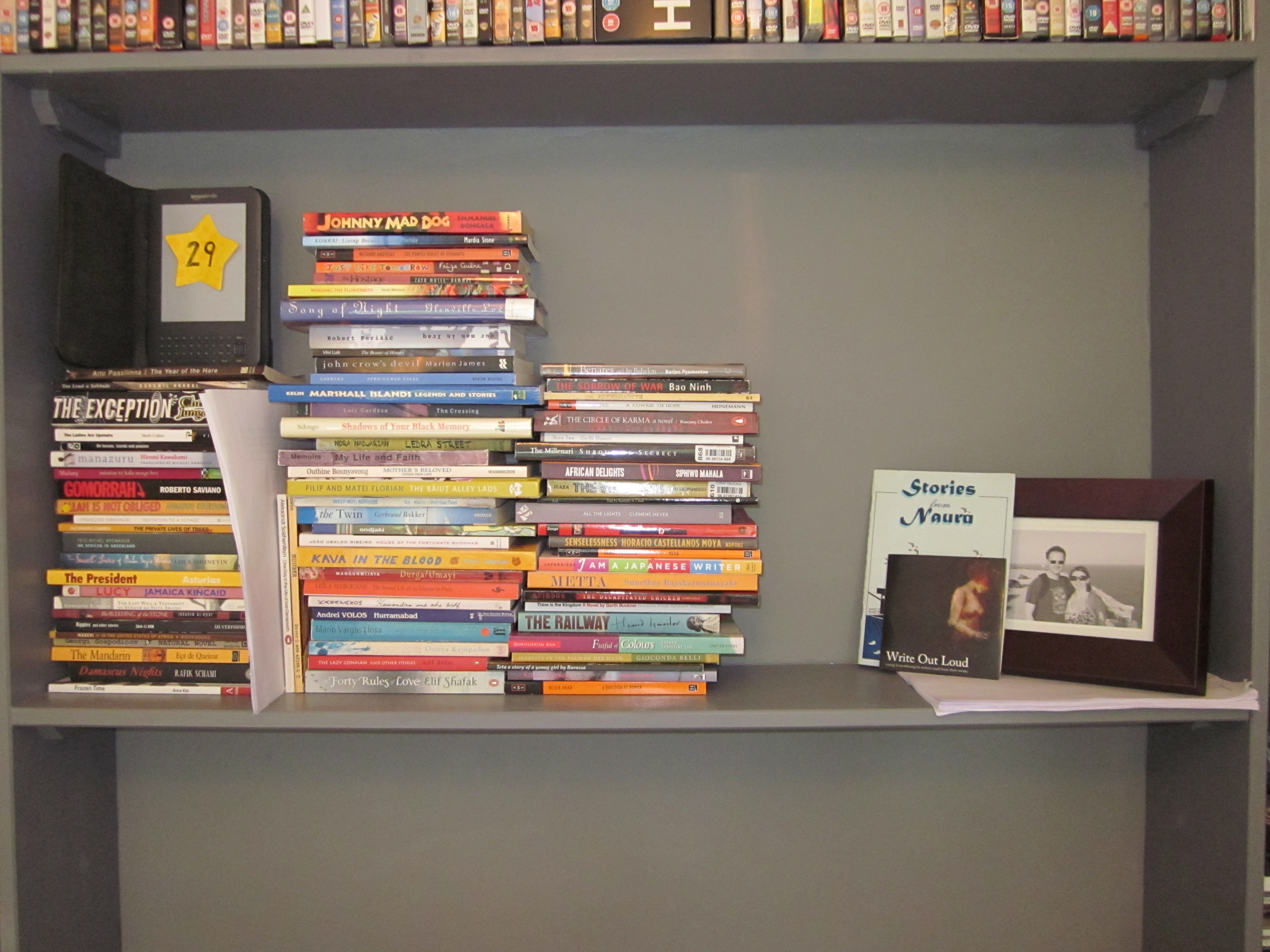
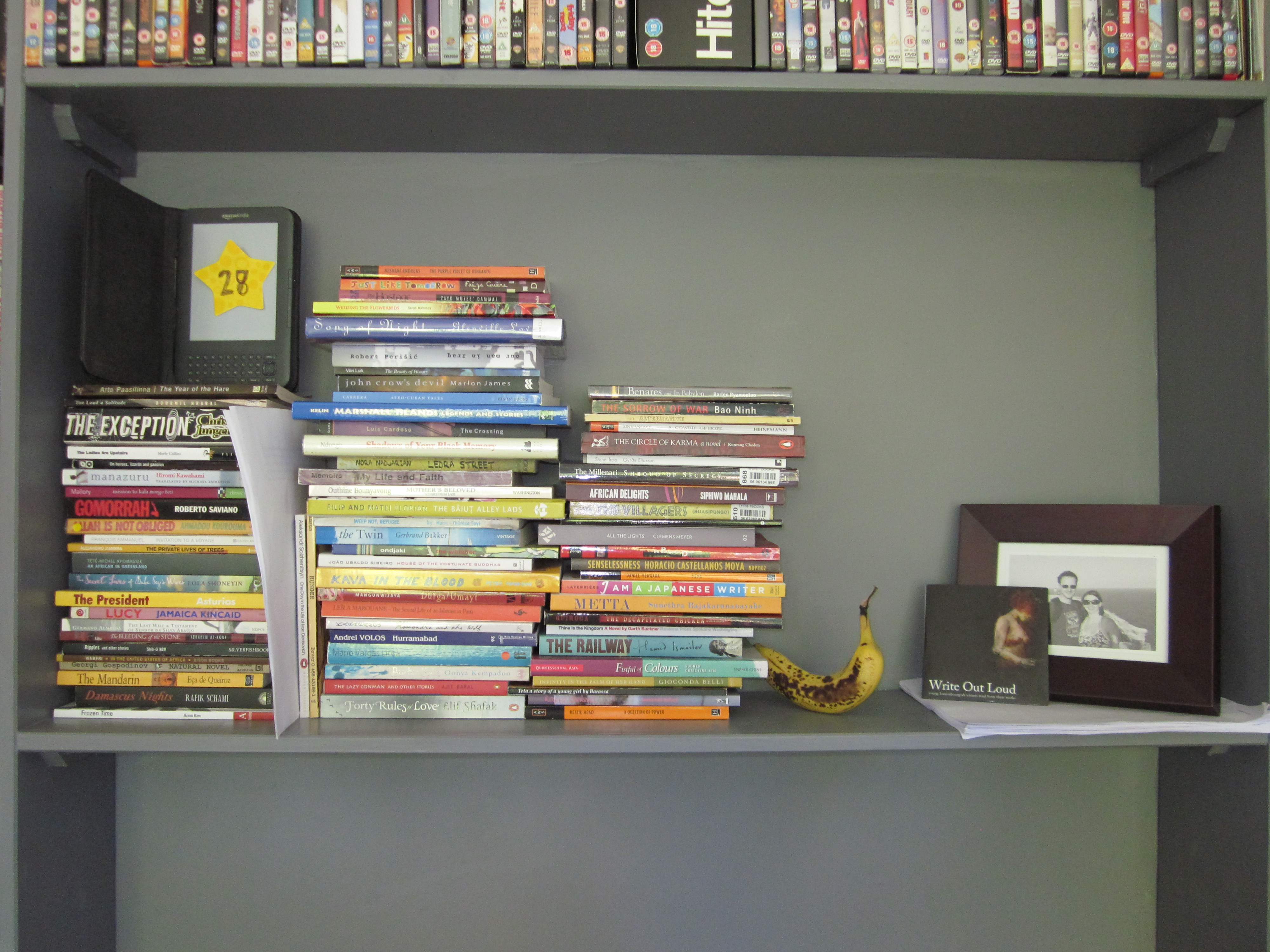
There are some titles that seem to tell you everything you need to know about what’s inside a book. In the case of Johnny Mad Dog, a novel by academic Emmanuel Dongala who fled his native Republic of Congo for the US in 1997 during the civil war, I was pretty clear about what to expect: violence, unpleasantness, people being killed in cruel and unusual ways and possibly an incident with a vicious canine, depending on how literal a writer Dongala was. Just as well then that I’m not a great believer in taking things at face value, because if I had done so I might have bypassed this novel and missed out on a whole lot more.

Set during the civil war, the book follows two characters as they struggle to survive and succeed in the midst of a humanitarian crisis. While scholarly Laokolé tries desperately to get herself, her younger brother Fofo and their disabled mother out of the city as looters descend for 48 hours of mayhem, 16-year-old rebel soldier, rapist and looter Johnny Mad Dog battles for supremacy among his peers, never more than moments away from the next senseless confrontation that could end his life. At last, drawn together into the heart of the vacuum as society implodes around them, the teenagers come face to face.

Yes, violence features heavily. There are sickening killings and assaults. There is the child shot by Johnny and his cronies on the roadside and the television star raped in the studio in front of her camera crew in the minutes before she is due to go on air. What stops these episodes from being gratuitous, however, is Dongala’s insight into the processes by which we justify unforgivable actions to ourselves. Tuned into Johnny’s thoughts as he commits these crimes, we hear his paranoid delusions that his victims are somehow from rival factions – or even Chechen spies – and his bizarre conviction that the women he abuses enjoy what he is doing.

Dongala’s ability to inhabit the minds of his characters also gives rise to some unexpected flashes of comedy. We witness the bathos and confusion of the rebels as they try to dream up a nom de guerre for their breakaway faction and find themselves repeatedly suggesting the names of cars and football teams, and the ludicrous exceptions they make to the dictates of their leaders in this land where there is ‘no longer any logic’.

There are some passages of powerfully empathetic writing too. Dongala’s portrait of Laokolé’s struggles, taking in everything from her thwarted desire to study engineering to the shame and discomfort of having to do without sanitary towels amid the crowds fleeing on the roads, is quite extraordinary.

Inevitably for so humane a writer, the targets of the greatest scorn and anger are not the bungling kids perpetrating violence but the organisations and authorities that dehumanise killers and victims alike. Of these, the UN representatives and rich Westerners at the embassy where Laokolé goes to seek shelter come in for the greatest vitriol – although Dongala is careful to include a sympathetic American who tries to rescue Laokolé and so avoids slipping into the same generalisations that make him angry. Perhaps most scathing of all is the scene in which a convoy of UN vehicles sent to rescue the Western nationals knocks down a young Congolese girl begging for a place in the cars and then halts to allow one woman to run back and collect her ‘little one’, which turns out to be a lap-dog.

Dongala’s impatience to relate these intense experiences means that occasionally his plotting can be a little abrupt. The American’s offer of adopting Laokolé, for example, seems to come a bit out of nowhere, although the extremity of the circumstances might excuse it. In addition, a few of Laokolé’s turns of phrase, such as her claim at one point to have been ‘yielding to an atavistic human instinct’, are a little hard to swallow even for a bright and well-educated 16-year-old.

Overall, though, this book delivers a lot more than its fierce title promises. Subtle and surprising, it takes readers by the hand and leads  us through the chaos of civil war, finding meaning amidst the madness. A powerful work.

Johnny Mad Dog (Johnny chien méchant) by Emmanuel Dongala, translated from the French by Maria Louise Ascher (Picador, 2005)
Iran: gender politics

I was tempted to choose Nasrin Alavi’s We are Iran as my Iranian book. Compiled from a series of blogs translated from Farsi, this book – or blook – caused a great deal of controversy when it burst on to the literary scene in 2005, purporting to provide Western readers with an unprecedented survey of contemporary Iranian thought. However, the book had had a fair bit of attention in the media and something about the way the texts in it had been curated for the Western eye made me hesitate – probably entirely unfairly, given that arguably every text in translation has been selected and prepared with English-language readers in mind.

Then I heard about Shahrnush Parsipur. Something of a trailblazer throughout her life, from being one of the first female students at the University of Tehran through to becoming one of Iran’s best-known and most innovative novelists, Parsipur captured my imagination. Her epic novel Touba and the Meaning of Night, which was published in 1989 just three years after Parsipur’s release from prison, caused controversy for its exploration of religion and gender power relations, as well as its departure from the literary style common before the 1979 Iranian Revolution. It finally became available in English translation in 2006, the year after the much-vaunted We are Iran. I was going to have to take a look.

Spanning the late nineteenth and early twentieth centuries, the novel presents an alternative reading of the history of Iran through the eyes of one woman, Touba, who grows up, marries, divorces, remarries and grows old during the course of it. As dynasties rise and fall and the world moves towards its bloodiest war, Touba embarks on a struggle for supremacy in her own life, finding herself drawn towards Sufism as a possible escape from the oppressive rules and judgments of a society that increasingly forces her to be a prisoner within the walls of her house.

Right from the opening passage, in which a scantily clad teenage Touba cleans the courtyard pool under the disapproving gaze of her tenant’s wives, Parsipur sets out the limitations imposed on women as a central theme in the book. Sometimes, as when Touba’s father reflects that bringing strange women into his home to work might be dangerous because ‘they might participate in some perverse activities with one another’, this is done with wry humour.

More usually, however, it has a much darker side. This initially reveals itself when 14-year-old Touba narrowly escapes a beating from her first husband for going out for a walk alone and later becomes painfully obvious in the story of the raped girl who, on revealing she is pregnant, is killed by her uncle Mirza Abuzar and buried under a tree in the garden. Touba’s reaction to the news is telling:

‘She was filled with the sense of guilt. She wanted to ask Mirza Abuzar why he had not discussed the matter with her. Then she thought, if he had mentioned it, would she have done anything? A living girl who has a bastard child in her is hateful and defiled. The same girl, however, if she is killed like this, will be chosen to be among the Pure Ones. She was realizing that she probably would have done nothing for the girl, or could have done nothing. She tried to put herself in Mirza Abuzar’s place. She truly felt sorry for him.’

Parsipur’s ability to think her way inside her characters like this means that the narrative is far from a one-sided polemic on the oppression of women. Even the most difficult of characters, such as the sinister Prince Gil and the sullen child Ismael who harbours murderous intentions towards Touba because of his anger at the loss of his parents, are presented as rounded and complex individuals with insight and thought processes that often surprise.

This multiplicity of perspectives and Parsipur’s use of elements of magic in her storytelling, give the narrative a sense of plurality that cuts across time and space. Often, in the embedded stories and mini-tales that Parsipur weaves into the novel, it seems as though the author is digging back into the past to gain the depth and distance that will allow her to tell contemporary truths.

The pacing is strange at times, partly due to the sheer scope of the story, which contains so many characters that the editors saw fit to list them all at the start of the book. As a result, the narrative moves in fits and starts, lingering over details only to jerk forward, sometimes skimming over incidents that seem to deserve more attention. This can be frustrating and leaves you glancing back over your shoulder now and then as a major character whizzes past into oblivion, like the stop you expected to get off at the moment you realise you’ve unintentionally caught the fast train.

On the whole, though, there can be no question that this is a towering achievement. Packed with insights, historical detail and rich compelling storytelling, the translation of this epic work opens up a world quite different from the one many English-readers will be used to. A rich addition to anyone’s bookshelf.

Touba and the Meaning of Night (Tuba va ma’na-ye shab) by Shahrnush Parsipur, translated from the Persian by Havva Houshmand and Kamran Talattof (The Feminist Press at the City University of New York, 2006)

Montenegro: home truths

Around the end  of May, I was mooching about on Twitter trying to drum up leads for some of the gaps on The List when @markbooks swooped in to recommend The Coming by Andrej Nikolaidis for the small South-eastern European country of Montenegro. @stujallen had just read it, he said.

I was in the process of thanking them when @MissCathO joined the party to say that, on the subject of Montenegrin literature, she was hoping to get an English translation of fiction by @ksenijapopovic shortly. Soon after that @ksenijapopovic popped up with the news that her novel was being proofread as we spoke and should be ready in ebook form in the next few weeks. I asked  her to keep me posted and she duly did, tweeting at me excitedly on 16 July to say that A Lullaby for No Man’s Wolf was now available on Amazon.

In the meantime, I’d done a bit of research on Ksenija Popovic (or Xenia Popovich as her name is rendered on the e-cover of the English version). It turns out she’s something of a Montenegrin literary star. Her first novel was a bestseller, won an award (the name of which I’ve been unable to find a satisfactory translation for) and was made into a film. She also did the translation of her latest book, the only one so far available in English, herself. Sorry though I was to have to bypass Andrej Nikolaidis, about whom I’d heard several good things, I was going to have to check this out.

A Lullaby for No Man’s Wolf unpicks the backstory of Klara, a classical pianist turned housewife, who at the age of 30 is already ‘old and tired’. Taking us back through her tough childhood in an orphanage, or ‘home for mistakes’, in an anonymous semi-American, semi-European town, the narrative explores the horrific events that led to the collapse of her relationship with her first love, Vuk, and her subsequent lonely marriage.

The wit and cynicism of Klara’s voice is one of the novel’s greatest strengths. ‘Born bitter, unwilling to indulge in childish deceptions’, she looks the calculating mechanisms of the children’s home, where wards of the state are ‘spared the pressure of attending high school’ by being sent to work in the neighbouring factory, full in the face. The early passage where Klara introduces us to the staff’s manipulative method of getting visitors to donate money pulls no punches:

‘The director’s impeccable system, which she liked to call her only child in a sea of other people’s children, triumphed whenever one of us pulled the lady by the sleeve and asked in a sweet voice, “Are you my mommy?”‘

The robustness of the storytelling means that the narrative is able to take the weight of the traumatic events that later crowd in upon it. While the gear change into graphic descriptions of abuse may be too abrupt and shocking for some readers’ tastes, Popovic’s fearlessness and frankness carry it through. Her insight into the way extreme experience warps the dynamics of human relationships is particularly impressive, and I found myself repeatedly typing ‘great’ and ‘wow’ into the notes on my Kindle as I read her account of the mental labyrinth Klara wanders through in the latter half of the novel.

The secret of the book’s success is that, unlike most authors writing about under 18s, Popovic is not an adult writing about children but a person writing about people. Her work is entirely free of that coyness writers usually seem to feel about children’s emotions, meaning that love, fear, anger, sexual attraction and hatred are every bit as raw, present, shocking and enthralling for her young characters as for adults, if not more so.

One or two strange words like ‘pianism’ and ‘snobbism’ have slipped through the translation net. These stick out, however, because the rest of the work flows so well – helped no doubt by the years Popovic spent in the US as a child. In fact, as the book goes on, you begin to wonder if they aren’t meant to be coinages by Klara, so atypical are they of the rest of the text.

But this is splitting hairs. As a whole, this is an outstanding piece of work: raw and fearless. If anyone needs proof of the value of authors being able to self-publish to ebook, it’s right here in this novel: the second self-published translation of a work published commercially in another language I’ve read this year. A fantastic achievement. More please.

A Lullaby for No Man’s Wolf by Xenia Popovich, translated from the Montenegrin by Xenia Popovich (Xenia Popovich, 2012)

Barbados: rum and water

I was very tempted to read a book by George Lamming as my Bajan choice. He’d been recommended by Trinidadian writer Vahni Capildeo, who I got in touch with through London-based literary organisation, Exiled Writers Ink. ‘Perhaps it’s just being from the region,’ she told me, ‘but I find some of the newer generation of Caribbean international prose writers like rum and water whereas he’s the rough spirit itself…’

This got me wondering about this next wave of Caribbean writers. Who where they and what were they writing about? Why did some of their work strike Capildeo as watered down?

While thinking about this, I stoogled (stumbled while googling – or should that be gumbled?) upon Glenville Lovell. Born and brought up in the Bajan village of Parish Land, Christ Church, this dancer-turned-writer had leapt on to the world literary scene in 1995 with his first novel Fire in the Canes to wide critical acclaim. He clearly set a lot of store by the tradition of storytelling he’d grown up with and I was intrigued to read that his performance background meant that he sometimes used music and choreography to develop his works. Perhaps I would come to regret this, but I was going to take a closer look.

Lovell’s second novel Song of Night unpicks the aftermath of a crime of passion from the perspective of the killer’s daughter. Ostracized by her small community of Bottom Rock, Cyan, or ‘Night’, must draw on her own resourcefulness and tenacity to survive. But in a society eroded by the tides of rich tourists that sweep through it, it’s difficult for a lone young woman to fend for herself without surrendering much of her pride and identity.

For all its tough subject matter – murder, prostitution, arson, drug use, domestic abuse, abortion and rape all have a part to play in the narrative – this is an extraordinarily beautiful book. Much of this comes from Lovell’s, use of imagery and fine ear for voices, which creates some taught dialogue. The text also bustles with anonymous commentators who gossip about the book’s spiralling events, conjuring a powerful sense of village life, a technique Marlon James would later use in John Crow’s Devil (my Jamaican book).

The focus of the novel is by no means parochial, though. Indeed, in many ways this is a book about the relation of Barbados to other nations and in particular the US. After decades of independence from British rule, the island seems to be sinking under another more insidious form of colonialism:

‘The once-colonized were free and willing to be colonized again by the burnt smell of suntan lotion, by the sight of broiling white flesh oozing green in the midday sun […] the businessmen and women, lonely housewives, schoolteachers, and policemen turned pleasure-seekers. They brought with them a sense of ownership, of the world belonging to them. And why not? The world spun on the edge of the American dollar.’

With this influx of rich Americans and Europeans comes the dilution of local identity, pride and purpose. Making money at any cost is the priority for many, while Bajans who aspire to more than a life of servicing the needs and desires of the world’s wealthy folk dream of emigrating to the US – although as rich African-American Koko points out, the land of the free has its own restrictions and limitations.

Nevertheless, there is no question that a lot of the richest Bajan culture now exists far from the island’s shores.  ‘All the writers live overseas,’ observes Koko, inviting the reader to look through her to Lovell, sitting in his New York apartment, writing passionately, sadly and angrily about a country he himself has left.

Playing these issues out in the plot, Lovell brings Night’s story to a gripping and bitter climax. He creates a powerful and memorable allegory for the wave of change overwhelming the island, while keeping all his characters, with the possible exception of the preacher who tries to save Night, vibrant, individual and strong. If this work feels watered down in comparison to  books by previous generations of Bajan writers, that may be precisely the point. But if that’s the case, Lamming must be strong stuff indeed.

Song of Night by Glenville Lovell (Soho Press, 1998)

Vietnam: war of words

I first heard of this book in a comment at the bottom of an article on the Guardian books website. Opinionated, witty and weird, these reader discussions can often say more about the people writing the comments than the literature they are debating. However, every now and then someone adds something that really makes you think.

In this case, the topic was books about the Vietnam War. Journalist Mark Hooper had posted his top ten but, as the first commenter remarked, had neglected to include any books by Vietnamese authors. Hooped responded to say that the article was about Vietnam books that claim to be ‘the best book on the Vietnam War you’ll ever read’. He had of course read The Sorrow of War by Bao Ninh, but the book jacket only said sober things like ‘a classic’ and ‘a triumph’ and so it didn’t qualify for the list.

I hadn’t read The Sorrow of War so I decided to give it a go. Given Hooper’s comments, I was surprised when my edition arrived to find the cover sporting a quote from the Independent saying that the novel ‘takes its place alongside the greatest war novel of the century, All Quiet on the Western Front‘ – surely by default that meant it was claiming to be the best Vietnam War book you’ll ever read?

I wondered briefly about popping up to the books department to try and track down this Mark Hooper and ask him what he thought he was playing at. But the article was more than four years old and besides I still had nearly 100 books to get through before the end of the year. I decided I’d better get on with the reading.

Drawing on Bao Ninh’s own horrific experiences during the conflict (he was one of only 10 survivors out of a brigade of 500), the novel tells the story of Kien, a war veteran struggling to piece his life together after 11 brutal years on the front line. Haunted by the memories of what he has seen and thoughts of his teenage life before the war, Kien wanders through the city of Hanoi and a society he no longer recognises. But until he finds a way to express and work through his experiences, peace will remain another world.

Ninh’s writing is exceptional. Blowing apart clinical descriptions of battle procedure with violent blasts of extreme experience, he captures the mixture of detachment and horror that characterises Kien’s mental state. The episodes he recounts – among them the violent rape and murder or three young girls by US troops and the drowning of a wounded man in a flooding ditch – are among the most graphic and shocking I’ve come across but they are never gratuitous and, even after more than 10 years of embedded reporting from the frontlines in Iraq and Afghanistan, they are startlingly fresh. Working with the eerie descriptions of phantoms and monsters that mark the protagonist and his terrified comrades’ ‘drift over the edge from logic’ after months in the Jungle of Screaming Souls, they capture ‘how cruelly [the young soldiers] were twisted and tortured by war’.

For all its anger and violence, however, the novel contains striking moments of beauty. The most bewitching of these involve Phuong, Kien’s childhood sweetheart, who, like him, is irrevocably altered by the conflict. Wistful and raw, these evocations of first love break in upon the narrative like rays of sunshine through the jungle canopy, making their surroundings seem all the more dark and threatening.

The chronology of the novel is complex, with the storyline shifting ground repeatedly so that the past and present all seem to inhabit a sort of formless now, reflecting Kien’s imprisonment in his vivid memories. In the hands of another writer, this might be frustrating, but in Ninh’s it is extraordinary, particularly in the final third, where the way events spiral in on Kien’s most painful recollection draws the book to a devastating close.

If we needed an argument for the importance of translation, it is here in this subtle, gripping, angry and tender depiction of the personal consequences of war. Striding across the arbitrary fronts of race and nationality, Bao Ninh speaks to the heart of human loss and longing. In a world where western journalists write lists of novels that tell only one side of this bitter story, his work should be read much more.

The Sorrow of War (Than Phan Cua Tinh Yeu) by Bao Ninh, English version by Frank Palmos from translation by Phan Thanh Hao (Minerva, 1994)

Solomon Islands: between two worlds

This was another recommendation from The Modern Novel  – and a welcome one too, given that the list entry for the Solomon Islands was ominously blank. There just seemed to be nothing out there from this tiny archipelago hovering some way above Australia in the big, blue Pacific.

So when my copy of John Saunana’s 1980 novel The Alternative arrived from a bookseller in Spain, I was interested to see that when it was published it had been held up as the great white hope of literature in the region. ‘At a time when contemporary Solomon Islands writing is growing in scope and depth, this novel will stand as a signal achievement, as a challenge to other Solomon Islands writers,’ proclaims the blurb, while the flyleaf boasts the support of a range of illustrious organisations.

I couldn’t help wondering where the fruits of this apparent late 20th century burgeoning of Solomon Islands writing had got to. As far as I’d been able to find out, those looking for written work in English from this Commonwealth nation would find very little alternative to, er, The Alternative.

Exploring the effects of colonialism, the novel tells the story of Maduru, an intelligent boy forced to inhabit two universes. Singled out for education at an exclusive, British-style boarding school, dubbed the ‘Eton of the Pacific’, he finds himself pulled between the culture he was born into and the one that has been imposed on his island home. At last, as British decolonisation sets in and old certainties begin to crumble, he is forced to choose between his place in the world and his sense of self.

The novel is strong on its depiction of the way colonialism seeps into and warps an individual’s sense of identity. Portraying Maduru’s moments of wishing to be white and his contempt for the ‘bush kanakas’ in his home village, as well as his internalisation of Western attitudes, Saunana is skilled at showing how subjection spreads its roots through everyday life. Perhaps the most powerful example of this comes in the early chapters, when Maduru, indignant at being cast as the Virgin Mary in a school play, rebels against his teachers in his mind: ‘if I were Samson I’d tear you to pieces like the lion, and pull down this chapel like the Temple and kill everybody in it,’ he thinks, unaware that his choice of imagery betrays exactly how deep into his consciousness Western culture has sunk.

Saunana’s anger at the injustice and discrimination of the colonial regime comes across clearly too. At times, this takes the form of highlighting the absurd reality of living in a ‘colonial relic’, subject to decisions taken by penpushers in a drab, rainy country on the other side of the world. Elsewhere, it is expressed more extremely, as when the headmaster, driven to distraction by Maduru’s unionisation of the student body to get a teacher removed, gives vent to a rant about ‘this God-forsaken place’, which lays his prejudices bare. There is also the interesting decision to put some of the later dialogue in Maduru’s mother tongue, excluding English language readers from understanding the full meaning.

Without doubt, this is a novel of its time. Some of the attitudes, in particular Maduru’s unashamed sexism, read oddly in 21st century London.

There are also some pacing problems in the narrative. Saunana has a strange habit of spending the last pages of a chapter building a dilemma for his hero, only to diffuse it and sweep it away in the final paragraph, leaving the reader nonplussed. Digressions – some delightful, some downright odd – are rife and there are moments of hyperbole, which teeter on the verge of the ridiculous in the school context, although they work better if understood as metaphors for a wider national struggle.

Nevertheless, this is a fascinating, strange and engrossing book. Anyone with an interest in colonial and post-colonial literature will find much to chew on here.

And if you do know what happened to all those other Solomon Islands writers of the early eighties, leave a comment and let me know  – it’d be great to hear of any more works out there.

The Alternative by John Saunana (University of the South Pacific, 1980)

HALFWAY APPEAL

So here we are: 98 books in and 98 books to go. Halfway round the world, exactly halfway through the year.

And what a journey it’s been so far. We’ve heard the North Korean government’s official line on fiction, sourced a manuscript of a classic novel unavailable in English from Mozambique and listened to a story written specially for the project from the world’s newest country South Sudan.

We’ve seen a Burundian novel published to ebook because of enthusiasm from blog readers, discovered the Andorran Dan Brown and had help from a Luxembourgish pop star to find a book from the world’s only grand duchy. We’ve even seen the world change slightly, with Palestine replacing Kosovo on the list.

The project’s been featured in two national newspapers, on UNESCO’s list of World Book Day initiatives and on countless other blogs around the globe, from Romania to South Korea.

None of this would have been possible without you. From the many people who’ve suggested books, helped with research and even gone to bookshops in far-flung places on my behalf, to the kind folk who comment on, like, tweet and share posts, making all the early mornings and late nights worthwhile, you have kept me going. Thank you.

But it’s not over yet. Not by a long chalk. And some of the biggest challenges lie ahead.

There are 25 countries that I have yet to find any books for. These are:

  • Brunei
  • Central African Republic
  • Comoros
  • Guinea Bissau
  • Honduras
  • Kiribati
  • Liechtenstein
  • Madagascar
  • Mauritania
  • Micronesia, Federated States of
  • Monaco
  • Mongolia
  • Myanmar
  • Niger
  • Palau
  • Panama
  • Papua New Guinea
  • Qatar
  • Saint Vincent and the Grenadines
  • San Marino
  • Sao Tome and Principe
  • Seychelles
  • Slovakia
  • Tuvalu
  • Vanuatu

There are also plenty of other countries on the list that could do with some more recommendations.

So I’m asking you – yes, you, sitting there reading this now – to help me again. Please tweet/share/email/discuss/create expressive dance routines about this project. Please look at the list and see if there are any countries you might be able to help find novels, short story collections or memoirs from.

Maybe you have friends or relatives there? Maybe someone you work with does? Or someone whose restaurant you eat in? Or that nice man you sit next to sometimes on the bus*? Perhaps you’re going on holiday there this summer or you found a blog by someone from there recently?

However you do it and however tenuous the connections seem, I’d love to hear about them. Let’s see what we can find between us.

*Please be sure before you engage him in conversation that he really is a nice man.

Bhutan: what goes around…

What people don’t tell you when you set out to read the world is that the research can take almost as many hours as the reading. Googling, emailing groups and individuals for recommendations, checking that suggestions meet the criteria, trying to decide which book to go for – it all takes time. So it’s always a joy when an expert on a particular country’s literature helps me out.

Ngawang at the Writers Association of Bhutan is one of these wonderful people. When I contacted the group through its blog, he sent me a list of five writers, together with four suggestions of titles. Of these, I chose The Circle of Karma by Kunzang Choden, partly because Ngawang described it as ‘one of the best books by a Bhutanese author’, but also because it is the first book by a Bhutanese woman published outside Bhutan, which makes it something of a milestone in South Asian literature. I was very excited when it arrived from India, vacuum-packed in cellophane.

The novel follows the life of Tsomo, a young girl from rural Bhutan who, not content to settle for a life of domestic drudgery, sets out to explore the world. Forced to be an outsider because of a mysterious illness that gives her a permanently distended belly, Tsomo works her way into northern India, drawn by the friendships she makes, a growing fascination with the Buddhist masters and communities that thrive in the Himalayan foothills, and a desire for peace.

The raw deal facing women in rural South Asian society is a major theme. Right from the opening chapters – in which the young Tsomo, unable to convince her father to educate her alongside her brothers, decides that being born a woman must be a punishment for bad karma from previous lives – the book portrays a world in which misogyny, sexual abuse and injustice are daily realities.

Women are by no means passive victims, however. One of the strengths of the book is its portrayal of the series of exuberant and warm friendships Tsomo makes throughout her life with other women. Many of these relationships, such as her bond with Dechen Choki – a young woman Tsomo saves from being raped repeatedly by their supervisor when they are working as manual labourers – are founded on the women’s shared experience of adversity.

This salvaging of positives from suffering is one of the many Buddhist tenets woven through the book. With much of its narrative taking the form of parabolic episodes through which Tsomo learns truths about the world and herself, the novel almost reads like a manual for progression to enlightenment at points.

What makes it work is Choden’s gift for evocation, both of place and of experience. Her descriptions of the rugged spiritual terrain Tsomo covers in her quest for peace and her moments of ecstasy reminded me of other great religious works, such as Sigrid Undset’s Kristin Lavransdatter, particularly in the passages concerning Tsomo’s pilgrimages to sacred sites such as Bodhgaya and Kathmandu:

‘Once there they looked for the Boudhanath chorten, the Great Stupa, the starting point for every Bhutanese pilgrim in Nepal. From the moment they arrived at the chorten, Tsomo felt its awesome presence everywhere. The eyes on the chorten seemed to look deep into her soul and she felt humbled and almost afraid. She felt she could not hide anything from those eyes and yet at the same time, she was drawn to them in a strange way.’

Now and then the narrative gets bogged down in explaining the many religious and social customs that fill the book. This no doubt owes something to Choden’s decision to write her novel in English – a sign that she intended her story to be read outside Bhutan by people who may not be familiar with the country’s culture. Occasionally passages on topics such as why formal marriage is not common in rural communities and the ritual of overfeeding guests can read more like anthropological essays than chapters in a novel.

Mostly, though, this is a fascinating and absorbing book. Reading it drew me into this little-known world even more profoundly than I suspect visiting a hundred Buddhist gompas in the Himalayas would. A rare treat.

The Circle of Karma by Kunzang Choden (Zubaan/Penguin India, 2005)

Ukraine: killer punchlines

This was one of those books that you hear about and want to read. Not only was the premise of the novel – about an obituary writer who shares his flat with a king penguin – intriguing, but the story of Andrey Kurkov’s rise to become one of Ukraine’s most celebrated writers was pretty gripping in its own right: having to deal with more than 500 rejections from publishers, Kurkov self-published his early works and sold them on the streets of Kiev. Clearly, this was one dedicated writer.

The unlikely hero of Kurkov’s most famous work, which bears the Ronseal-style title Death and the Penguin, is Viktor, a novelist manqué who strikes it lucky when a newspaper hires him to write advance obituaries of some of the country’s great, good and not so good. All seems to be going well and Viktor looks set to break out of the lonely, frugal existence he has shared with Misha, a king penguin he adopted when the zoo closed down, until the subjects of his obituaries start to die in suspicious circumstances. As it becomes clear that his ‘vital images of the future departed’ carry more significance than he could ever have imagined, Viktor finds himself embroiled in an increasingly sinister plot, and realises he will need to use all his powers of invention to escape with his life.

Funny, dark and spare, Kurkov’s prose evokes complex situations in a handful of words. The writer does this by using small details to reveal the humanity of his characters: a militiaman’s wish for a quiet shift, a cartoon on TV, a gangster’s pride about his car.

He combines this with razor-sharp perception to produce striking and often touching reflections on death, loneliness, friendship and love. In particular, Viktor’s meditations on the strange alchemy that is the obituary writer’s craft – creating something fixed and definitive out of a mass of memories, half-truths and anecdotes – are fascinating:

‘The past believed in dates. And everyone’s life consisted of dates, giving life a rhythm and sense of gradation, as if from the eminence of a date one could look back and down, and see the past itself. A clear, comprehensible past, divided up into square of events, lines of paths taken.’

Similar to Vatanen’s hare in Arto Paasilinna’s The Year of the Hare (my Finnish book), Misha the penguin acts as a kind of barometer for his master, reflecting his mental and emotional state. He also humanises Viktor, giving him the vulnerability necessary to enable Kurkov to steer him through the moral hinterland the plot demands without losing the reader’s sympathy.

The result is that rarest of beasts: a novel that is every bit as gripping as it is well-written. I read it in virtually one sitting – and not merely because I had to keep up with the schedule. Great.

Death and the Penguin (Smert’postoronnego) by Andrey Kurkov, translated from the Russian by George Bird (Melville International Crime, 2011)

Belize: high praise

This was a recommendation from Shirlene at Belizean Publisher Cubola Productions, who I emailed for suggestions. There were several authors she could recommend, she said, but Zoila Ellis was her top pick and she was sure I would enjoy her work.

It turned out Shirlene was in good company. When I opened my copy, I was met by a foreword by Governor-General Dr Colville Young, in which he remembers Ellis’s tentative request that he might look at her work and see if it was worth publishing in 1988 and talks in glowing terms about what he found when he  did. It sounded promising so I settled down to read.

The seven short stories in On Heroes Lizards and Passions paint a powerful and varied picture of life in Belize and the Belizean diaspora. Centring on moments when characters find release from fears, prejudices, assumptions, hopes and dreams, they reveal the way that, wittingly or unwittingly, we can change the course of one another’s lives. There is the lapsed priest who finds a way to make peace with his inadequacies through a neighbour’s chance comment, the pregnant teenager set free by her grandmother’s compassion and the lizard community thrown into confusion by the arrival of humans.

Ellis’s speciality is pinpointing the blind spots and bigotry lodged in her characters’ psyches, all the while keeping their humanity in the forefront of the reader’s mind. The most memorable example of this is ‘And the Subway Takes me Home’, in which Carla struggles against prejudice in her work as a maid for a rich white American pensioner, all the while pondering how to get her son away from his Kerub girlfriend back home in Belize:

‘How could she explain to him: “Son I don’t know her, but I know a lot of people like her. Kerubs are all alike. Clannish, dirty, smell of fish. Before you know it you married to her and her whole generation move in with you.”‘

The power of the story lies in Ellis’s tracing of the steps that have led to Carla’s skewed way of thinking, which makes the explosion of her plans at the end of the story all the more devastating and cathartic.

Ellis’s eye for the wrinkles in the human mind can give rise to a great deal of comedy too. The final story, ‘A Hero’s Welcome’, in which a remote Belizean community prepares a grand celebration to welcome home Mas’ Tom, its one and only member to go off and fight in the second world war, is at once hilarious and touching. As we watch the villagers scrambling to devise fitting entertainments for the man they have pictured playing a pivotal role in secret missions all over the globe and come to think of as ‘their salvation’, the widening gap between their imaginings and the unprepossessing truth becomes funnier and sadder with every page.

Occasionally Ellis’s phonetic representations of Belizean speech can sometime be a little hard to decipher. This disturbed the flow of some of the early stories, although I did find myself keying into it more and more towards the end.

But this was a minor issue. Overall this was a great read by a subtle and empathetic storyteller with a keen awareness of how the cogs turn in the human (and possibly lizard) brain. Shirlene and Dr Colville Young were right: I thoroughly enjoyed it. If only every constitutional figurehead were as proactive in championing writing like this.

On Heroes Lizards and Passion by Zoila Ellis (Cubola Productions, 1997)