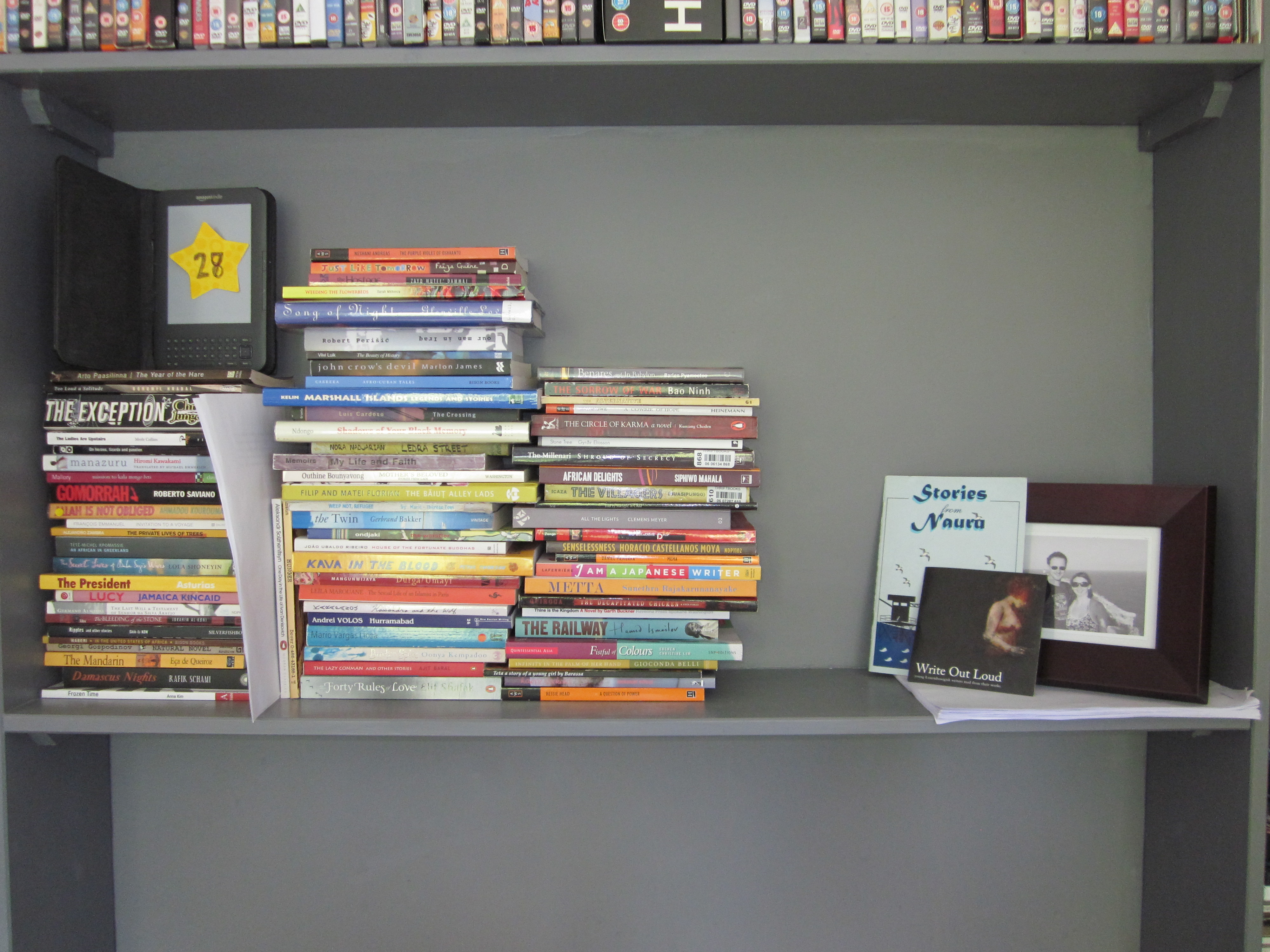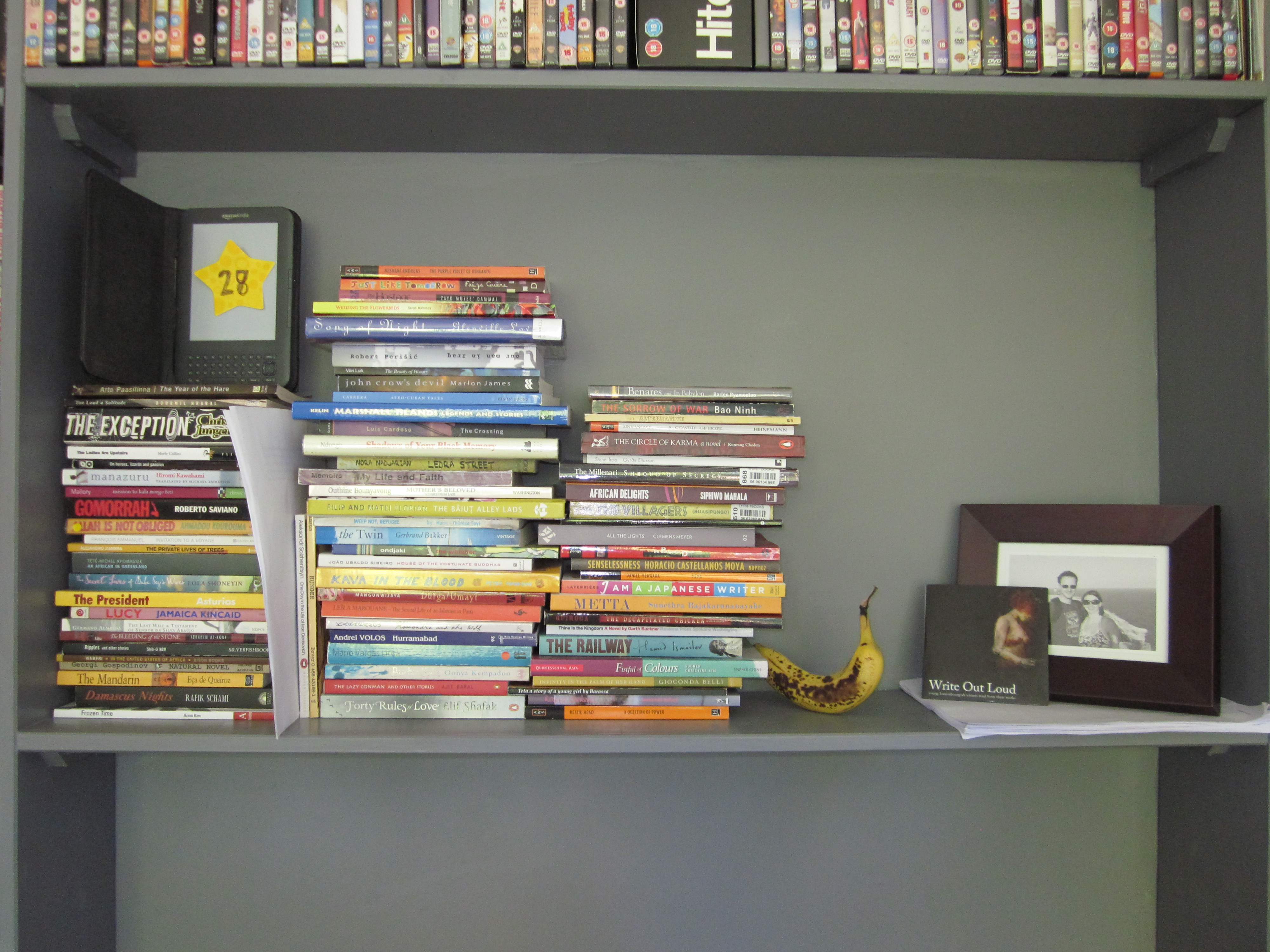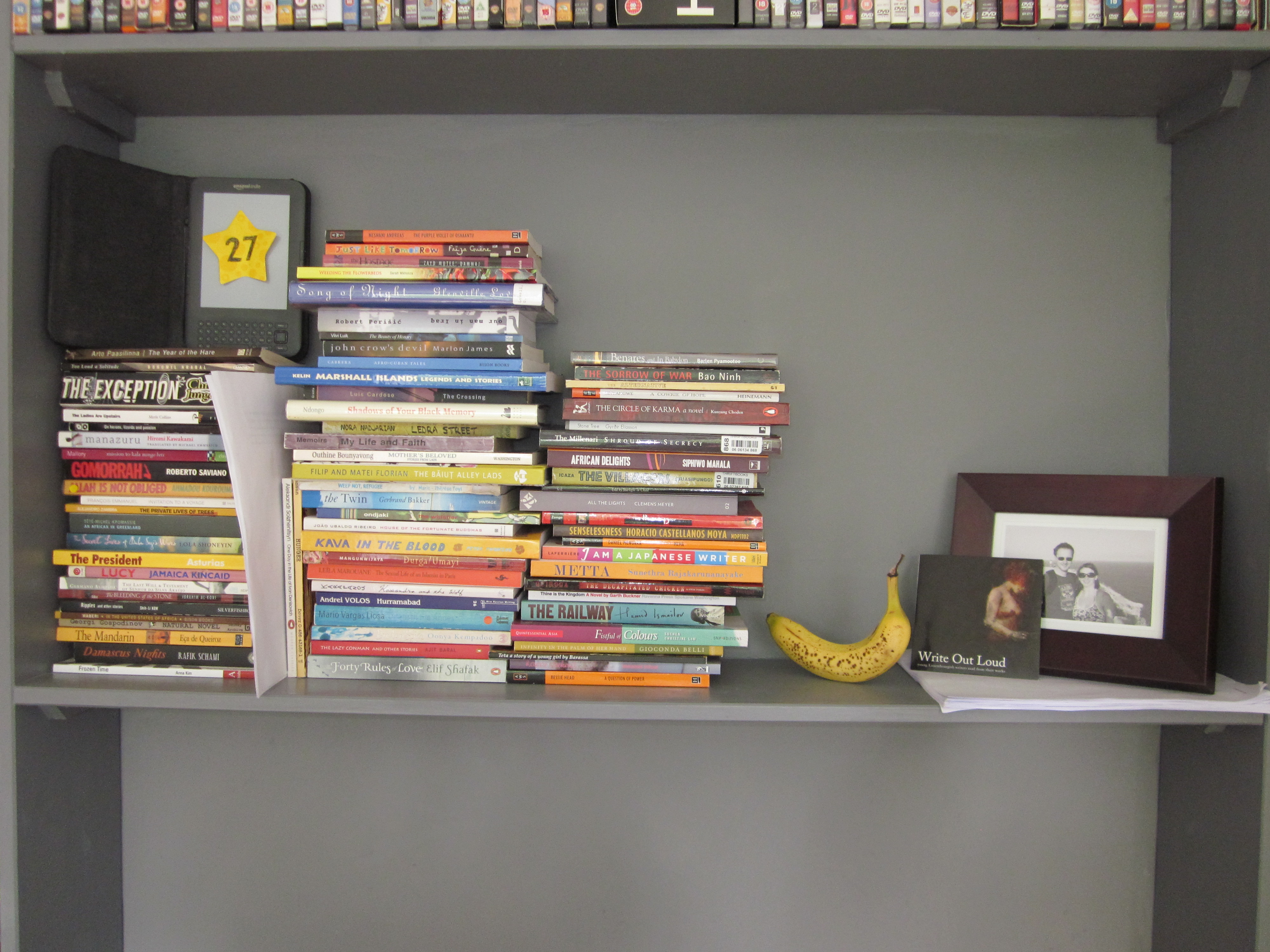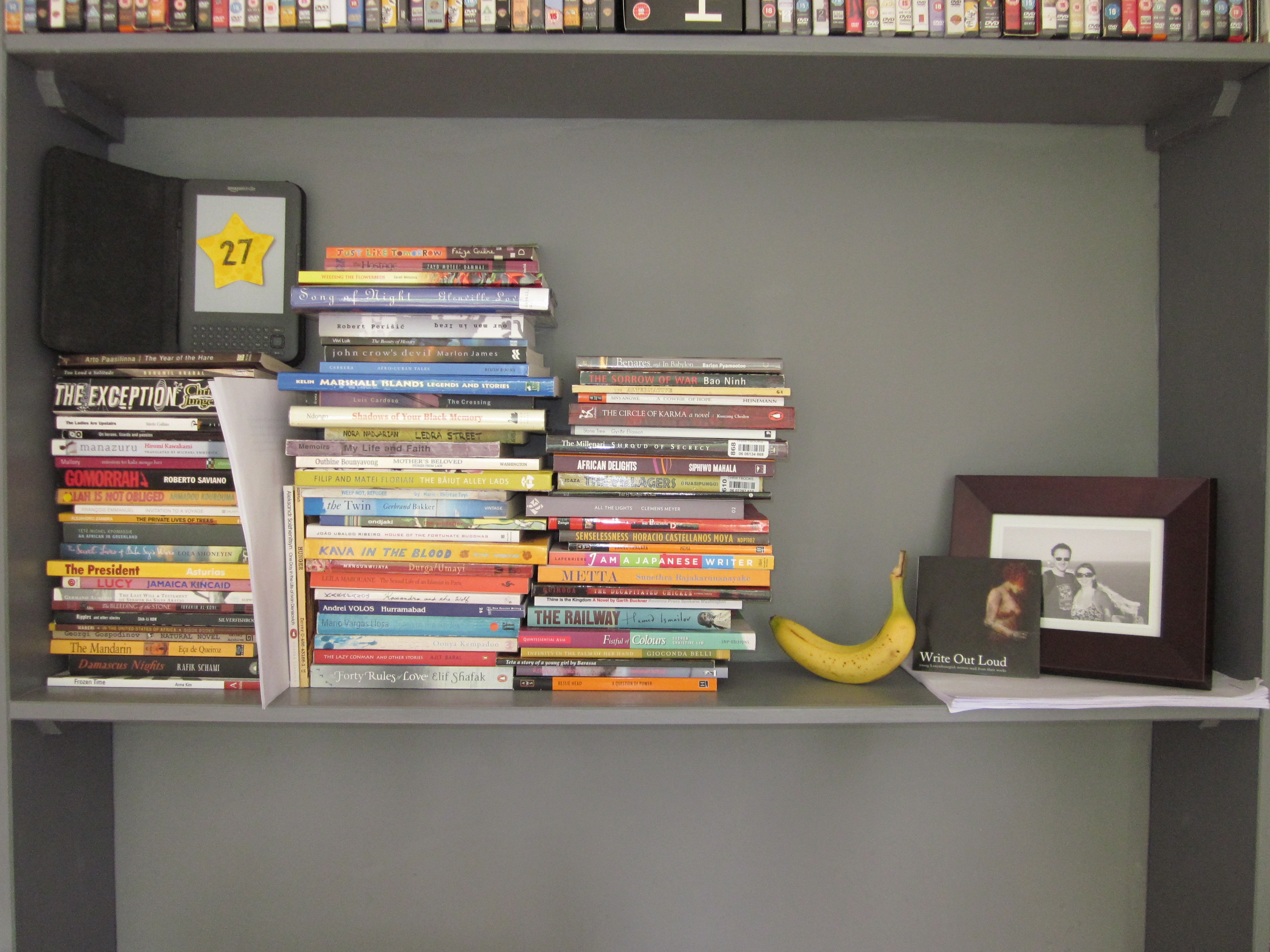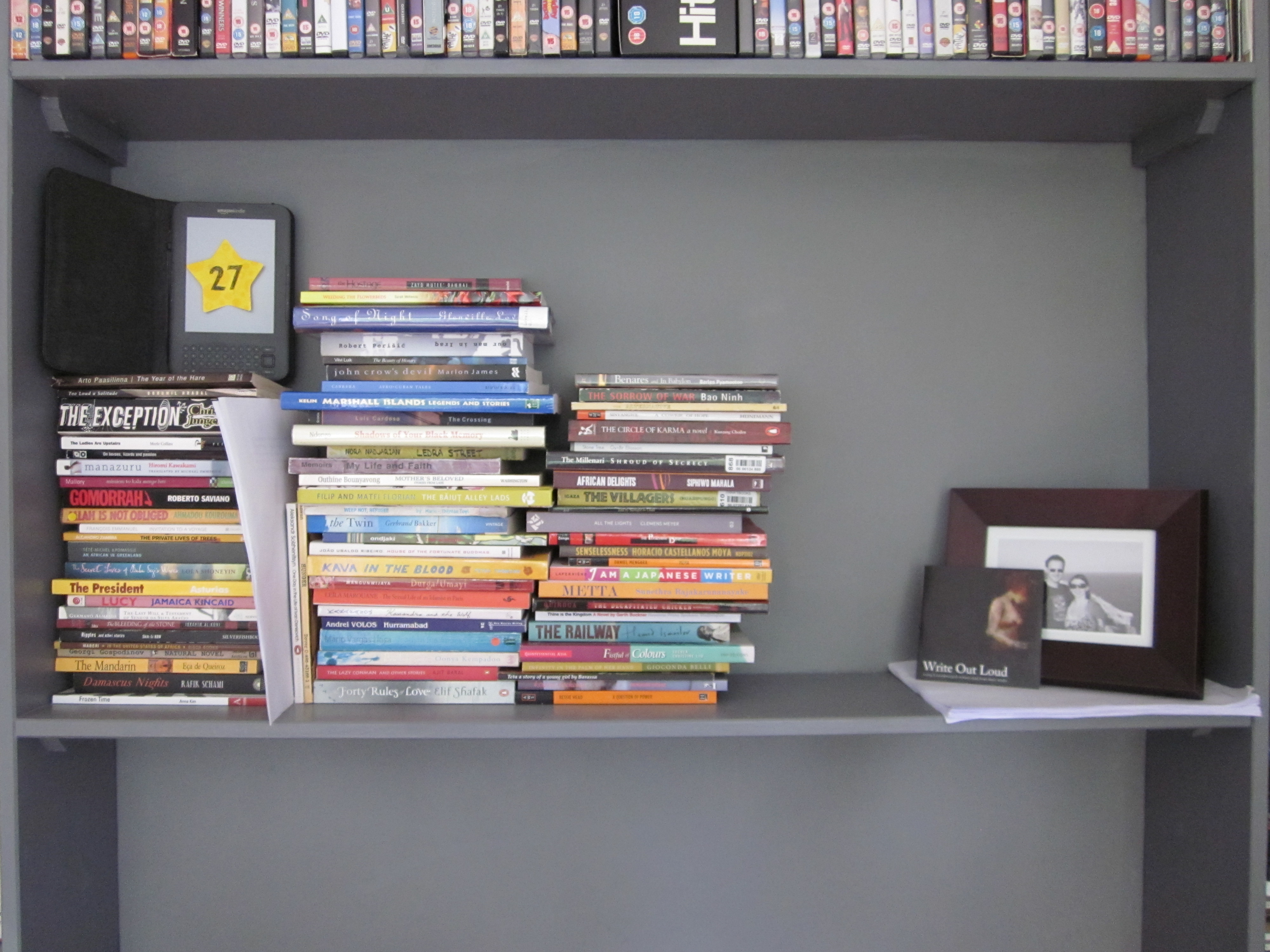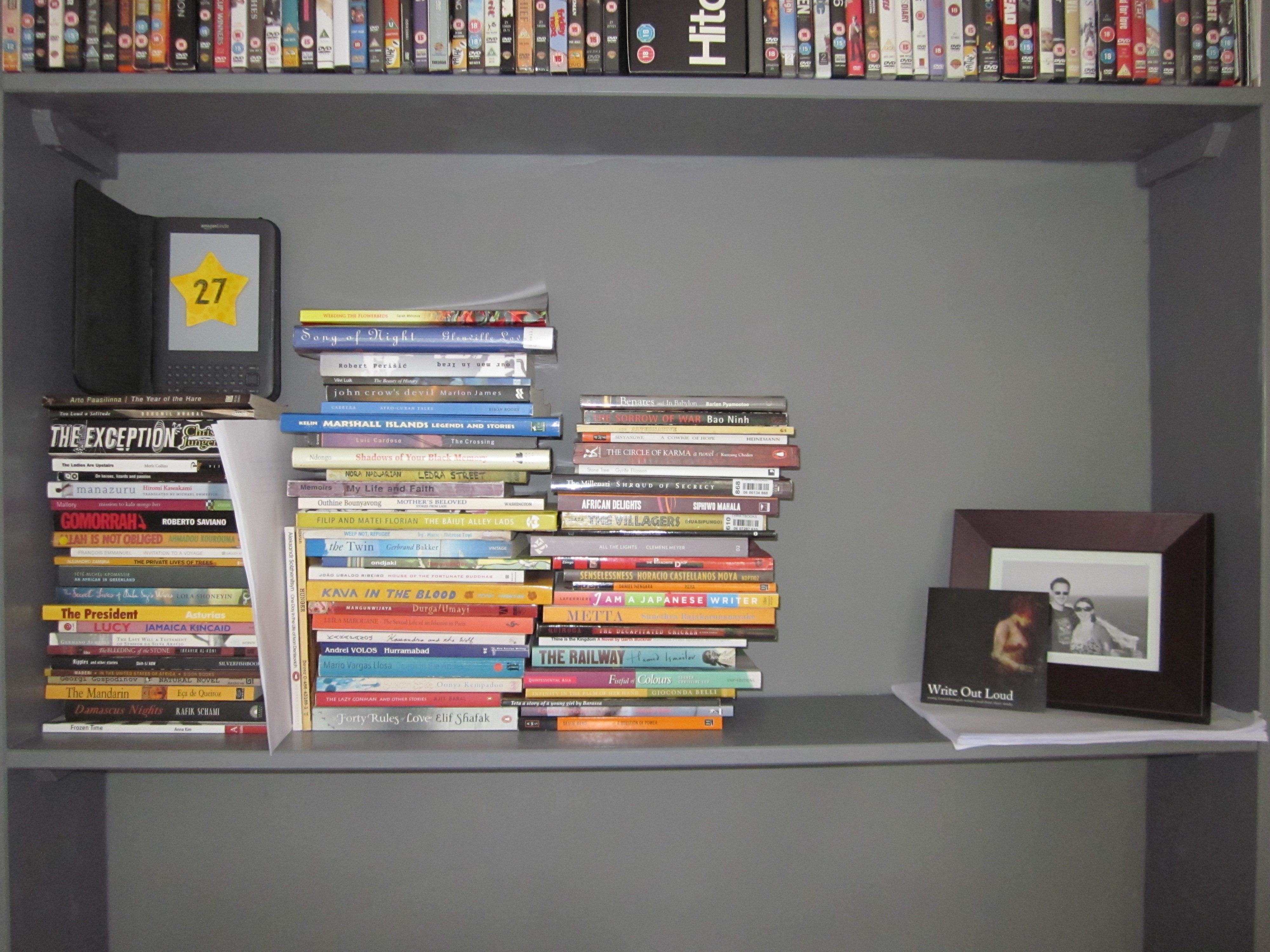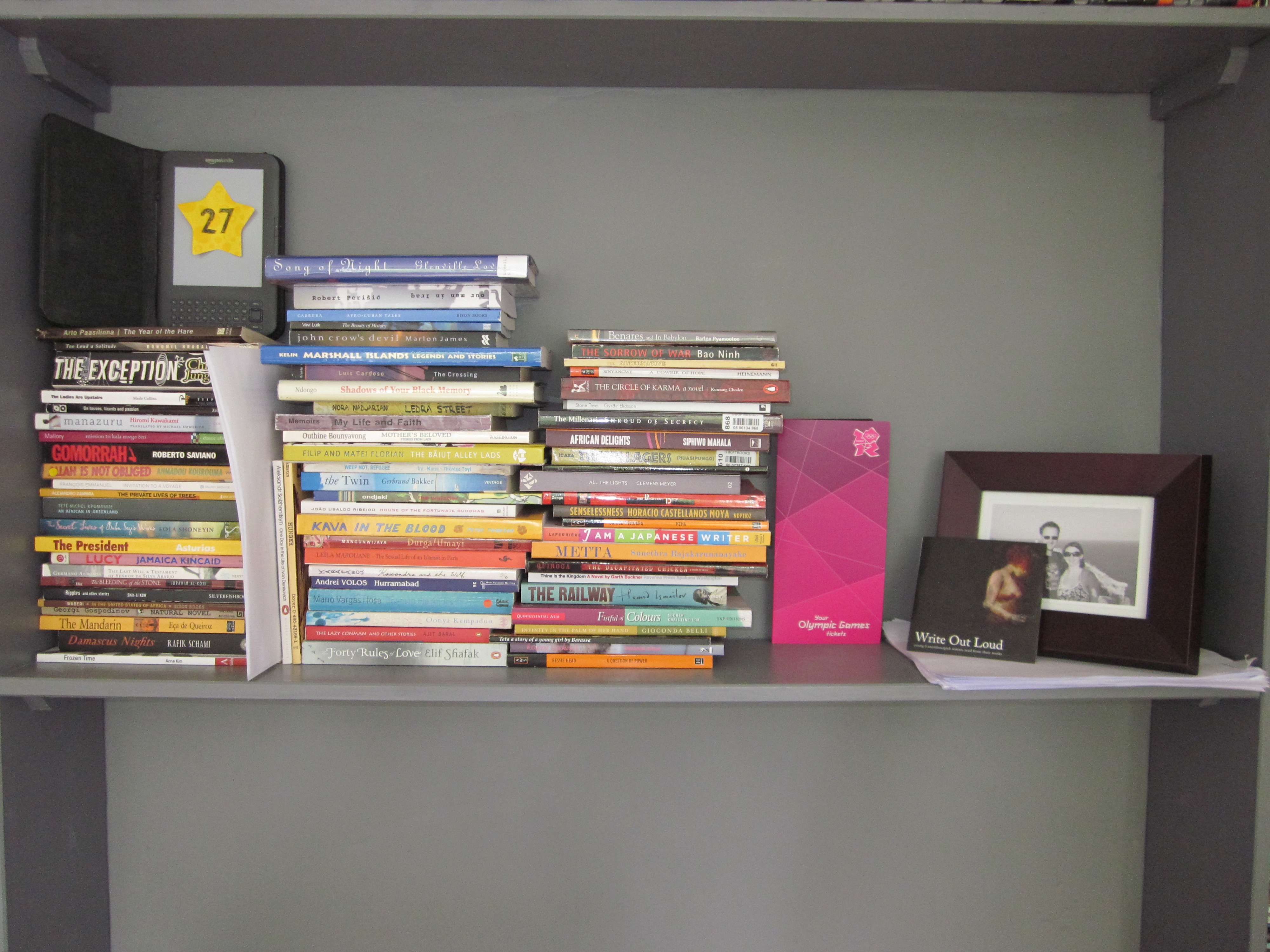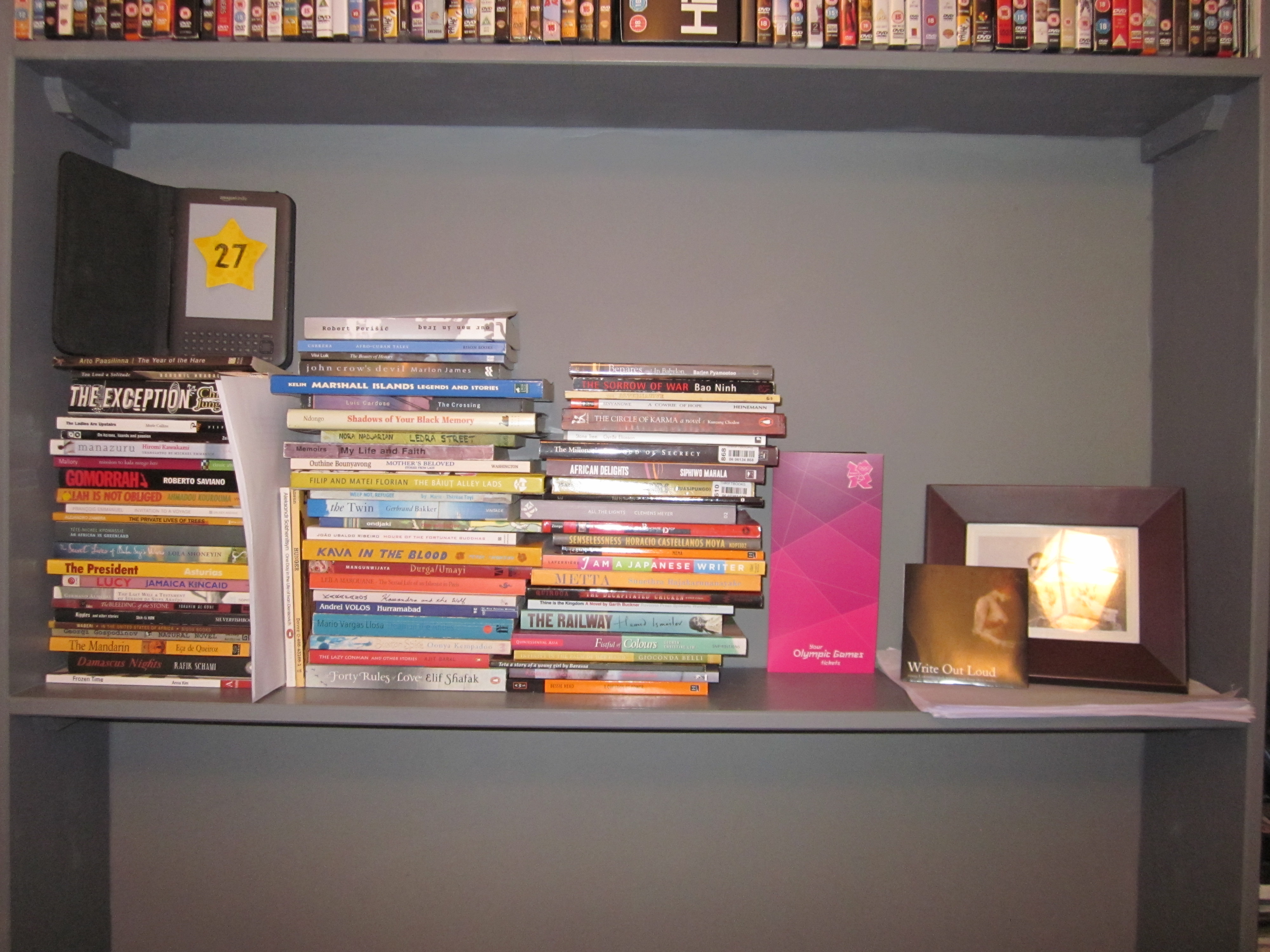
Montenegro: home truths

Around the end  of May, I was mooching about on Twitter trying to drum up leads for some of the gaps on The List when @markbooks swooped in to recommend The Coming by Andrej Nikolaidis for the small South-eastern European country of Montenegro. @stujallen had just read it, he said.

I was in the process of thanking them when @MissCathO joined the party to say that, on the subject of Montenegrin literature, she was hoping to get an English translation of fiction by @ksenijapopovic shortly. Soon after that @ksenijapopovic popped up with the news that her novel was being proofread as we spoke and should be ready in ebook form in the next few weeks. I asked  her to keep me posted and she duly did, tweeting at me excitedly on 16 July to say that A Lullaby for No Man’s Wolf was now available on Amazon.

In the meantime, I’d done a bit of research on Ksenija Popovic (or Xenia Popovich as her name is rendered on the e-cover of the English version). It turns out she’s something of a Montenegrin literary star. Her first novel was a bestseller, won an award (the name of which I’ve been unable to find a satisfactory translation for) and was made into a film. She also did the translation of her latest book, the only one so far available in English, herself. Sorry though I was to have to bypass Andrej Nikolaidis, about whom I’d heard several good things, I was going to have to check this out.

A Lullaby for No Man’s Wolf unpicks the backstory of Klara, a classical pianist turned housewife, who at the age of 30 is already ‘old and tired’. Taking us back through her tough childhood in an orphanage, or ‘home for mistakes’, in an anonymous semi-American, semi-European town, the narrative explores the horrific events that led to the collapse of her relationship with her first love, Vuk, and her subsequent lonely marriage.

The wit and cynicism of Klara’s voice is one of the novel’s greatest strengths. ‘Born bitter, unwilling to indulge in childish deceptions’, she looks the calculating mechanisms of the children’s home, where wards of the state are ‘spared the pressure of attending high school’ by being sent to work in the neighbouring factory, full in the face. The early passage where Klara introduces us to the staff’s manipulative method of getting visitors to donate money pulls no punches:

‘The director’s impeccable system, which she liked to call her only child in a sea of other people’s children, triumphed whenever one of us pulled the lady by the sleeve and asked in a sweet voice, “Are you my mommy?”‘

The robustness of the storytelling means that the narrative is able to take the weight of the traumatic events that later crowd in upon it. While the gear change into graphic descriptions of abuse may be too abrupt and shocking for some readers’ tastes, Popovic’s fearlessness and frankness carry it through. Her insight into the way extreme experience warps the dynamics of human relationships is particularly impressive, and I found myself repeatedly typing ‘great’ and ‘wow’ into the notes on my Kindle as I read her account of the mental labyrinth Klara wanders through in the latter half of the novel.

The secret of the book’s success is that, unlike most authors writing about under 18s, Popovic is not an adult writing about children but a person writing about people. Her work is entirely free of that coyness writers usually seem to feel about children’s emotions, meaning that love, fear, anger, sexual attraction and hatred are every bit as raw, present, shocking and enthralling for her young characters as for adults, if not more so.

One or two strange words like ‘pianism’ and ‘snobbism’ have slipped through the translation net. These stick out, however, because the rest of the work flows so well – helped no doubt by the years Popovic spent in the US as a child. In fact, as the book goes on, you begin to wonder if they aren’t meant to be coinages by Klara, so atypical are they of the rest of the text.

But this is splitting hairs. As a whole, this is an outstanding piece of work: raw and fearless. If anyone needs proof of the value of authors being able to self-publish to ebook, it’s right here in this novel: the second self-published translation of a work published commercially in another language I’ve read this year. A fantastic achievement. More please.

A Lullaby for No Man’s Wolf by Xenia Popovich, translated from the Montenegrin by Xenia Popovich (Xenia Popovich, 2012)

Namibia: marital ties

I started reading this book while sitting in a television studio waiting to be interviewed about A Year of Reading the World by Isha Sesay for her NewsCenter show on CNN International. I was quite nervous and sitting at the newsreader’s desk with lots of cameras and screens with my face on them leering down at me wasn’t the most relaxing of places to be reading, so it’s a testament to the power of Neshani Andreas’s storytelling that The Purple Violet of Oshaantu managed to draw me in all the same.

Published in 2001 and already considered a classic, the novel follows Mee Ali and her friend Kauna as they struggle against the patriarchal structures of society in rural northern Namibia. When Kauna’s abusive and unfaithful husband Shange dies suddenly, the women feel the full force of the way society is weighted against them and it is left to Mee Ali to help her companion rise above the waves of prejudice, avarice and cruelty that threaten to wash her away.

Andreas excels at capturing the little details that tell us everything we need to know about a character’s emotional state. From the incongruous reactions that show mental turbulence, as when Kauna laughs hysterically in the wake of discovering her husband’s body, to the flashes of insight that strike through everyday conversations, shedding light on secrets and fears, the narrative is full of riches. I particularly liked Mee Ali’s description of Kauna’s in-laws’ responses to her sensible suggestion that they should wait for doctors to determine the cause of Shange’s death instead of jumping to conclusions: ‘They looked at me as if I had another head, that of a cow perhaps. Did I look foolish?’

These insights make Andreas’s portrayal of the injustice of women’s lot very powerful. Interspersing the narrative with accounts of the extreme suffering inflicted on wives in the community, such as the public breakdown of Mee Namutenya when her husband takes a second wife and Mee Sara’s persecution by witch doctors on the death of her husband, Andreas presents a controlled and compelling argument against the practices that have so long been justified as tradition. Perhaps the most memorable of these concerns Mee Ali’s indignant reaction to the way her own happy marriage to Michael is viewed by her community:

‘Now this. “Oh, he doesn’t beat you? You are lucky.” I am really tired of it all. Yes, Michael is a good man and I am grateful for that. I just don’t know what people want me to do. Kneel down at his feet and say, “Thank you, Michael, for marrying a low class”? I am not lucky. I simply do not deserve to be treated like a filthy animal.’

Yet although the village women police and persecute each other through gossip, there is nevertheless an underlying sense of community and mutual support that erupts to the surface now and then with joyous results. Chief among these moments is the time when Kauna screws up her courage to ask her neighbours to come and do okakungungu [join together to work on her land] so that she can get her field dug before the rains come. The subsequent scene when the women respond to her call is incredibly moving.

Occasionally the time shifts can be a little disorientating. In addition, the long chunks of dialogue sometimes make the narrative feel more like a play script than a novel.

As a whole though, this is a powerful and important work by a writer who deserves her place among Africa’s literary greats. It certainly helped to calm my nerves.

The Purple Violet of Oshaantu by Neshani Andreas (Heinemann, 2001)

France: a fine line

I heard about this book through a class I’ve been attending on free speech and translation, run by English PEN. The final session was set to involve a visit from translator Sarah Ardizzone (née Adams), who was going to talk about how she worked with writer Faïza Guène’s heavily inflected, Moroccan-street-slang-laden French to create the English version of the novel Just Like Tomorrow.

The work piqued my interest for another reason too: having read Leïla Marouane’s The Sexual Life of an Islamist in Paris for my Algerian book, I was curious to see how another novel set in the French capital’s North African community but this time written by a French-born author might compare to it. Would reading this book help me to draw that ever more elusive line between where one country’s literature stops and another’s begins?

Just Like Tomorrow follows 15-year-old Doria as she copes with life on the city’s grim Paradise estate. Her father has recently left her mother for a younger wife in Morocco and the two women now live on the bread line, depending on the income from Doria’s mother’s precarious cleaning job and their own abilities to make do and mend. Caught between the disapproval of their conservative neighbours and the shallow complacency of a series of social workers, Doria has nothing but her wit and verve to keep her from becoming just another statistic on the French authorities’ books.

Sadly, Sarah Ardizzone was unable to make the class, which was a shame because it would have been fascinating to hear about the process by which she converted Guène’s prose into a sort of light Jafaican (or Multicultural London English as it’s more formally known). Translating dialects can be tricky at the best of times – and a questionable decision can be very distracting – but here Doria’s narrative voice, peppered with ‘innit’s, ‘you get me’s and ‘back in the day’s, is thoroughly engaging and believable. The only sticking points come occasionally in the form of cultural references, which veer between British romance author Barbara Cartland (unlikely to be known to many urban teenagers), TV programme The Price is Right and French gameshow Fort Boyard, as though final decisions about the framework of Doria’s translated world haven’t quite been made – although these may have been carried over from the original.

The success of the voice is central to the book, because it is Doria’s wry, fearless, fresh vision and killer putdowns that make the novel. So much so, that I’m struggling to choose which of the many great oneliners to share with you. There’s the cashier who is ‘so flat you could fax her’, the absent father now known to his daughter as ‘Mr How-Big-Is-My-Beard’, and, perhaps my favourite of all, Doria’s succinct explanation of the Arabic term ‘insh’Allah’:

‘She played that wild card, AKA ‘insh’Allah’. It doesn’t mean yes or no. The proper translation is “God willing”. Thing is, you never find out if God’s willing or not…’

The humour, however, never clouds our vision of the hardships Doria and her mother face. If anything, it enhances the picture by making us indignant that such vibrant individuals should be forced to endure the sneers of snobs and racists, the harsh treatment of shady employers and the patronisation of officials. Guène brings this home through a series of small, yet telling scenes – such as Doria’s struggle to scrape enough money together to pay for sanitary towels at the local shop’s checkout and her recollection of the day she unwittingly went to school in a second-hand pyjama top, bearing the English phrase ‘Sweet Dreams’.

Does her perspective on Paris differ from the attitude of Marouane’s protagonist to the city? Well, perhaps, in as much as he might be described as being on the fringes of French culture looking longingly in at what he thinks he sees, while Doria is very much in the thick of the less-than-perfect reality.

Such questions seem to pale into insignificance, however, in the face of the fact that this is simply a fabulous, and thoroughly engaging book. Its portrait of a divided society, full of contradictions, tensions and hope will enthrall, challenge and resonate with readers – wherever they are in the world.

Just Like Tomorrow (Kiffe kiffe demain) by Faïza Guène, translated from the French by Sarah Ardizzone (Definitions, 2006)

Yemen: the past is another country

There isn’t much Yemeni prose for curious English-language readers to get their hands on. At first I assumed this was because of a lack of translation – and that is part of it – but after some time researching Yemeni writers and emailing addresses for bookshops and writers associations that, without exception, bounced my messages straight back at me, I realised that there might be a bit more to it.

In fact, the country’s political history, which saw the rigid regime of the Imams give way to decades of war and unrest in the latter half of the 20th century, means that fiction writing and publishing in the country has been pretty thin on the ground. Nevertheless, there have been some pioneers and of these Zayd Mutee’ Dammaj, whose 1984 novel The Hostage was chosen as one of the top 100 Arabic novels of the 20th century by the Arab Writers Union, has to be one of the most celebrated.

Set during the run up to a brief revolution in the 1940s, the book portrays the struggles of a young boy who is taken hostage because of his father’s political activities and is sent to work as a duwaydar [attendant] in the Governor’s palace. Required to service every whim and desire of the men and women of the household, the boy learns the meaning of powerlessness and subjection. Yet, as his political awareness grows and society outside the palace gates begins to stir, his experiences give him the insight he needs to begin to imagine another future.

Interlink Books, the company behind the Emerging Voices series in which this translation was published, were clearly worried that the historical and social context of the novel might be challenging for Western readers. Not only did they include a preface explaining the reasons for translating the book in this edition, but they also added two introductions and footnotes to the Arabic terms in the text.

They needn’t have been so diligent because Dammaj’s skill as a storyteller is more than equal to the task of carrying his readers over his narrative’s sometimes challenging terrain. Indeed, the sense that we are getting a glimpse into the closed, privileged and long-lost world of palace life under the Imams’ rule is one of the novel’s great strengths. This is helped by the protagonist’s position as an outsider, which means that we discover the world with him and watch as he compares the formal processes of power with the way things are done in his own largely illiterate home community.

However, perhaps the most startling arena of discovery is that of the palace’s sexual politics. Women in this closed world are extremely predatory towards the young pubescent boys serving them, as are the soldiers manning the gates, leaving the hero feeling ‘like a rare bird […] put in a golden cage for life’. During a drive back from a state visit, the women’s possessiveness even spills over into a physical fight, with the boy tossed between them like a doll:

‘Then suddenly, she got hold of me and threw me towards them, so that I lost my balance and fell in some of their laps.

‘”You’re simply jealous of me,” she said, “because he’s sitting next to me. Am I jealous of you because he’s in your beds every night?”‘

Humiliation doesn’t get much deeper than this. However for Dammaj’s hero, the extreme pressure of being possessed and passed around in this way is just the force he needs to sublimate his powerlessness into dignity and develop his own desire for self-determination.

This growth of the protagonist from a naive child into a humane and thoughtful young man is what transforms the narrative from an intriguing account of life in a particular period into a timeless, classic tale. Dummaj shows us the human heart beating beneath the strange clothes and outmoded customs. Powerful writing indeed.

The Hostage (Ar-Rahina) by Zayd Mutee’ Dammaj, translated from the Arabic by May Jayyusi and Christopher Tingley (Interlink Books, 1994)

Swaziland: teenage rebellion

The tiny Kingdom of Swaziland doesn’t sound too promising when you’re on the hunt for world literature. According to the CIA World Factbook, it has the globe’s lowest life expectancy, with those born in 2011 only predicted to live an average of 31.88 years – just a year older than I am now.

Given such a bleak backdrop, I assumed any story I did find would be pretty solemn. So when The Modern Novel recommended Sarah Mkhonza’s self-published memoir Weeding the Flowerbeds, I was in for a surprise.

Recalling Mkhonza’s time boarding at Manzini Nazarene High School in the seventies, the book reflects on life in southern Africa in the years after Swaziland declared independence from British rule. With Apartheid and racism enshrined in the statutes of all the region’s nations, there is much for young girls Bulelo (Mkhonza), Sisile and Makhosi to struggle against, but there is also a wind of change blowing that promises more opportunities and possibilities for young women than ever before.

As in John Saunana’s novel The Alternative (my Solomon Islands book), boarding school with its British structures and legacy is a microcosm of the struggles the nation faces as it tries to shape an identity independent of its colonial past.  From the prejudice against Zulu and the very anglocentric reading lists – including Shakespeare, the Victorian classics and The Flies of the Lord as one confused English teacher calls the book he has to give lessons on – to the continued religious efforts to teach the ‘saga of the cross […] to the children of Swazis who still believed in muti [magic] and sangomas’, Bulelo is surrounded by the attitudes of the old regime.

Mkhonza treats this with a great deal of humour, recalling how she and her classmates ‘wondered what the United States of England was like’. She is also refreshingly honest about the way she and her fellow students ‘used the power of the underdog toward white people’, bamboozling their British-born teachers with dialect and slang. This is nevertheless tempered with a great deal of affection for many of the staff and the opportunities her education gave her: ‘This is why you are reading this book,’ she writes at one point. ‘We had some very good teachers who were dedicated to teaching us’.

The memoir really comes alive in the passages where Mkhonza recalls her female friends and the challenges facing them as young women, a subject to which Mkhonza has devoted much of her adult life and because of which she was forced to leave Swaziland in 2003. Among the more serious accounts of the mistreatment of women in wider society, there are some wonderfully funny stories of the sisterly bond developed over boyfriends, whose letters came secretly to PO Box 315 Manzini (I wonder what would happen if we wrote to that address now?), and the covert reading of Drum magazine. Indeed, the brusque problem-page advice of Agony Aunt Dolly is too good not to share:

‘You are stupid if you think the man loves you and you are still in high school. You are stupid when you think an older man can love you better than his wife. If you have sex with him, you will become pregnant, and that will be the end of you.’

Powerful episodes aside, though, the narrative often lacks tension and a throughline to drive it forward. At times, particularly when Mkhonza reflects on the boredom that characterises much of school life, we can feel as though we are plodding with Bulelo from class to class and, like her, begin to wonder exactly why we are bothering. There are also some quirks with the writing style, which skips between the past and present tenses in a way that is too erratic for it to be deliberate.

Many of these problems could have been ironed out with the help of a sensitive editor, something that Mkhonza, as a self-publishing writer, was probably obliged to do without. As it stands, though, this is an intriguing and witty, if inconsistent, account of how a significant moment in Swaziland’s history played out in young lives. It is full of hope, and worth reading for Aunt Dolly alone.

Weeding the Flowerbeds by Sarah Mkhonza (Sarah Mkhonza, Xlibris, 2009)

Barbados: rum and water

I was very tempted to read a book by George Lamming as my Bajan choice. He’d been recommended by Trinidadian writer Vahni Capildeo, who I got in touch with through London-based literary organisation, Exiled Writers Ink. ‘Perhaps it’s just being from the region,’ she told me, ‘but I find some of the newer generation of Caribbean international prose writers like rum and water whereas he’s the rough spirit itself…’

This got me wondering about this next wave of Caribbean writers. Who where they and what were they writing about? Why did some of their work strike Capildeo as watered down?

While thinking about this, I stoogled (stumbled while googling – or should that be gumbled?) upon Glenville Lovell. Born and brought up in the Bajan village of Parish Land, Christ Church, this dancer-turned-writer had leapt on to the world literary scene in 1995 with his first novel Fire in the Canes to wide critical acclaim. He clearly set a lot of store by the tradition of storytelling he’d grown up with and I was intrigued to read that his performance background meant that he sometimes used music and choreography to develop his works. Perhaps I would come to regret this, but I was going to take a closer look.

Lovell’s second novel Song of Night unpicks the aftermath of a crime of passion from the perspective of the killer’s daughter. Ostracized by her small community of Bottom Rock, Cyan, or ‘Night’, must draw on her own resourcefulness and tenacity to survive. But in a society eroded by the tides of rich tourists that sweep through it, it’s difficult for a lone young woman to fend for herself without surrendering much of her pride and identity.

For all its tough subject matter – murder, prostitution, arson, drug use, domestic abuse, abortion and rape all have a part to play in the narrative – this is an extraordinarily beautiful book. Much of this comes from Lovell’s, use of imagery and fine ear for voices, which creates some taught dialogue. The text also bustles with anonymous commentators who gossip about the book’s spiralling events, conjuring a powerful sense of village life, a technique Marlon James would later use in John Crow’s Devil (my Jamaican book).

The focus of the novel is by no means parochial, though. Indeed, in many ways this is a book about the relation of Barbados to other nations and in particular the US. After decades of independence from British rule, the island seems to be sinking under another more insidious form of colonialism:

‘The once-colonized were free and willing to be colonized again by the burnt smell of suntan lotion, by the sight of broiling white flesh oozing green in the midday sun […] the businessmen and women, lonely housewives, schoolteachers, and policemen turned pleasure-seekers. They brought with them a sense of ownership, of the world belonging to them. And why not? The world spun on the edge of the American dollar.’

With this influx of rich Americans and Europeans comes the dilution of local identity, pride and purpose. Making money at any cost is the priority for many, while Bajans who aspire to more than a life of servicing the needs and desires of the world’s wealthy folk dream of emigrating to the US – although as rich African-American Koko points out, the land of the free has its own restrictions and limitations.

Nevertheless, there is no question that a lot of the richest Bajan culture now exists far from the island’s shores.  ‘All the writers live overseas,’ observes Koko, inviting the reader to look through her to Lovell, sitting in his New York apartment, writing passionately, sadly and angrily about a country he himself has left.

Playing these issues out in the plot, Lovell brings Night’s story to a gripping and bitter climax. He creates a powerful and memorable allegory for the wave of change overwhelming the island, while keeping all his characters, with the possible exception of the preacher who tries to save Night, vibrant, individual and strong. If this work feels watered down in comparison to  books by previous generations of Bajan writers, that may be precisely the point. But if that’s the case, Lamming must be strong stuff indeed.

Song of Night by Glenville Lovell (Soho Press, 1998)

Thailand: watching the watchers

Chart Korbjitti caught my eye on Wikipedia’s list of Thai writers. Not only is he a two-time recipient of the Southeast Asian Write award, but he was named a National Artist in Literature in 2004. He made his career through self-publishing his work and is one of that hardy breed of full-time writers who commit to doing nothing but waking up and spinning stories all day long. I also like his glasses.

This is fitting because, as it turns out, vision is a central theme in the book I chose to read. Set in a theatre, the novel records the reactions of a 62-year-old filmmaker as he watches a show dubbed ‘the most boring play of the year’ by Thailand’s drama critics. As the action unfolds in an old people’s home, the protagonist finds himself drawn into the slow drift of events, pausing now and again to imagine how he would represent the action if he were portraying it in a film. Distanced from his everyday routine by the strange suspension of reality the theatre affords, he reflects on the sad events of his life and in the end takes a great deal from the drama playing out in front of him – although whether what he infers is what the play’s director intends remains a mystery.

The novel is one of the most structurally innovative books I’ve read. Jumping between the action on stage, the protagonist’s interior monologue and his imagined shooting script for the scenes he witnesses, the narrative tests the limits of the written medium while exploring the visual arena of stage and screen. The filmmaker’s watching and commenting makes even the most mundane of onstage actions – washing, feeding and entertaining the frail and largely bedridden inhabitants of the home – come alive.

This is particularly true when what he sees encourages the protagonist (if that is the right word for someone who is essentially watching the actions of others) to look for parallels in his own experience. These reflections range from pettish and sometimes funny reflections on the selling of lottery tickets through social issues such as child labour to admissions of his own fears and loneliness. Indeed, the narrative is frequently startling in its stark reflections on ‘the pain of being left alone in the world’. ‘To tell you frankly, when I see something like this, I’m scared. Scared to have to lie on a bed like this. I’m thinking of my wife –’ says the narrator, striking a balance of honesty and reticence that means the narrative never tips over into wallowing.

Yet Korbjitti pushes the boundaries even beyond the trope of a man sitting in an auditorium watching a play. As the show progresses, we find the thoughts of the characters on stage beginning to spill into the narrative, forcing us to question where these recollections and preoccupations come from. In addition, the nagging smell of urine that irritates the filmmaker throughout the show invites us to wonder exactly where the boundary between the real and the imagined lies.

The result is a masterful dissection of the experience of consuming art. At times, I had to stop myself from turning round to see Korbjitti watching me read, constructing a story about a blogger reading a book about a filmmaker watching a play. But perhaps he’s already written it…

Time: a Thai Novel by Chart Korbjitti, translated from the Thai by Marcel Barang (Thai Fiction Publishing, 2010)

Croatia: from our own correspondent

I was all set to read something by Dubravka Ugresic for my Croatian book when a Serbian colleague who reads a lot of literature from the region burst my bubble – surely I could find something more interesting from Croatia, she said. Never one to turn down a challenge (how do you think I ended up trying to read a book from every country in the world in a year in the first place?), I decided to give it a shot. But given that Dubravka Ugresic was the frontrunner in the recommendations I’d had so far, I was going to need some help.

My first port of call was the British-Croatian Society. In response to my appeal for books I could read in translation, their secretary put me in touch with Susan Curtis-Kojakovic, director of Istros Books, a company set up in 2010 to publish literature from South-east Europe in English. I was in luck: they had published a Croatian novel only that week.

Our Man in Iraq by Robert Perišič is the story of a Croatian journalist, Toni, who faces the sack when the ill-qualified reporter he has sent to cover the war in Iraq for his newspaper becomes increasingly erratic before disappearing altogether. Obliged to fabricate his colleague’s articles, all the while struggling to hold together his increasingly fragile relationship with his actress girlfriend, Toni begins to draw on his memories of Croatia’s own conflict, unaware of the ridiculous lengths he will have to go to try to save his career.

The Graham Greene reference in the title (it would be interesting to know whether this was in the original or added for the benefit of English readers) is more fitted to the novel’s witty tone than its content. Unlike in Our Man in Havana, our hero is not the bewildered novice parachuted into a remote corner of the world and forced to make the best of it, but the bungler who sent him. Given the gravity of the situation in Iraq, this reversal, which keeps the war-zone correspondent a shadowy, mysterious figure for whom we can’t feel too anxious, is probably necessary for the comedy to work. Still, it’s striking to see a comic novel set, partly – albeit indirectly – in Iraq.

Perišič’s wit is complemented by his insight into the dynamics of human relationships. This comes across most strongly in his descriptions of the ebb and flow of Toni’s interactions with his live-in girlfriend Sanja. ‘Part of our love (and understanding) thrived on nonsense,’ explains Toni, going on to portray the fluctuations in their daily conversations with just the right mixture of perceptiveness, self-deprecation and bathos – a tone which also enables him to launch into passages of detailed commentary about the personal and social affects of the Croatian War of Independence without losing the reader.

There are one or two problems with the text. In particular, though funny when Toni’s terrible impression of an English TV chef is transliterated in all its auricular weirdness, the editorial decision to represent regional accents or dialects with regional English accents is very disconcerting. We find Toni’s mother talking in uneven Scots, while a man from his home village sounds as though he might be more at home strolling through the East End.

These jar, however, because the novel is, for the most part, so well done. It is a thoroughly enjoyable and thought-provoking story, which, while recalling some of the comic greats that have gone before, add its own brave, quirky and refreshing perspective to the tradition. An unexpected delight. I’d like to read more.

Our Man in Iraq by Robert Perišič, translated from the Croatian by Will Firth (Istros Books, 2012)

Mauritius: travellers’ tales

This was a second-hand recommendation. It was posted on the A Year of Reading the World Facebook page by Michael Walkden, who said he’d recently met Natasha Soobramanien, a writer of Mauritian descent, and asked her to recommend a book for his project (intriguingly, he didn’t say what his project is – if you’re reading this, Michael, I’d love to hear more). She’d suggested Benares by writer and film director Barlen Pyamootoo and he thought he’d pass the tip on.

I was doubly grateful for the recommendation when, on researching the novel, I discovered that it was very short. So short, in fact, that in most editions it is published with another novella, In Babylon. This would certainly help to keep me on target to read one book every 1.87 days. In fact, I reckoned I could probably read the whole thing in a single journey to work.

The doors beeped shut on the East London line and I plunged into Pyamootoo’s tale of two men who set out to find a couple of prostitutes in Port Louis to bring back to their village of Benares for the night. Driven into town by trusty friend and former mill worker Jimi, the pair meander around the red-light district, paying visits to several formidable madams before finally managing to engage two women to accompany them home. As the car takes them back through the benighted landscape and the men and women sound each other out through small talk, a wider discussion opens up about identity, companionship and the loss of the old ways of life.

Pulling out of Canada Water station, I made a note in the margin about the details that bring the narrative alive: the brothel with the beds with concrete bases, the narrator’s friend Mayi’s eyes ‘rolling and blinking like a wanted man’s’, the lights of smugglers’ boats flashing out at sea.

These give Pyamootoo license to dwell on ostensibly simple and even mundane exchanges, using them to chart the minute shifts in dynamics that keep the drama and tension in the scenes. This only breaks down once – when the narrator stops the car to go into a restaurant and buy some cigarettes. Here, the flat transaction feels like an unnecessary interlude, although it may serve to point up the subtle transformation taking place in the car.

This, as I realised while changing lines at Highbury & Islington station, concerns the slow seep of the background into the foreground. While the descriptions of the billboards and buildings sites around the capital start off as almost incidental details, the development and commercialisation of much of the island at the expense of its poorest communities – as evidenced by the closure of Benares’s mill – come to underpin the novella.

Each of the characters gradually reveals vulnerabilities and insecurities that derive from the breakdown of the old structures. The only way to bridge these gaps is to tell stories, as the narrator discovers when he embarks on a wistful account of his journey to the other Benares, a sacred city in India where many Hindus go to die in the hope of attaining paradise: ‘I thought to myself that stories must be what we travel for, to have something to tell the people we love’, he reflects.

Pyamootoo’s writing about this ‘feeling of opening up to the world, of becoming part of some sort of network’ is so compelling and seductive that I finished the last 10 pages of the novella sauntering along the pavement away from King’s Cross, oblivious to the commuters shoving past me. I hadn’t expected the story to be so beautiful and so surprising. It made me sad to turn the last page. If only every journey to work could be like this.

Benares by Barlen Pyamootoo, translated from the French by Will Hobson (Canongate, 2004)

Vietnam: war of words

I first heard of this book in a comment at the bottom of an article on the Guardian books website. Opinionated, witty and weird, these reader discussions can often say more about the people writing the comments than the literature they are debating. However, every now and then someone adds something that really makes you think.

In this case, the topic was books about the Vietnam War. Journalist Mark Hooper had posted his top ten but, as the first commenter remarked, had neglected to include any books by Vietnamese authors. Hooped responded to say that the article was about Vietnam books that claim to be ‘the best book on the Vietnam War you’ll ever read’. He had of course read The Sorrow of War by Bao Ninh, but the book jacket only said sober things like ‘a classic’ and ‘a triumph’ and so it didn’t qualify for the list.

I hadn’t read The Sorrow of War so I decided to give it a go. Given Hooper’s comments, I was surprised when my edition arrived to find the cover sporting a quote from the Independent saying that the novel ‘takes its place alongside the greatest war novel of the century, All Quiet on the Western Front‘ – surely by default that meant it was claiming to be the best Vietnam War book you’ll ever read?

I wondered briefly about popping up to the books department to try and track down this Mark Hooper and ask him what he thought he was playing at. But the article was more than four years old and besides I still had nearly 100 books to get through before the end of the year. I decided I’d better get on with the reading.

Drawing on Bao Ninh’s own horrific experiences during the conflict (he was one of only 10 survivors out of a brigade of 500), the novel tells the story of Kien, a war veteran struggling to piece his life together after 11 brutal years on the front line. Haunted by the memories of what he has seen and thoughts of his teenage life before the war, Kien wanders through the city of Hanoi and a society he no longer recognises. But until he finds a way to express and work through his experiences, peace will remain another world.

Ninh’s writing is exceptional. Blowing apart clinical descriptions of battle procedure with violent blasts of extreme experience, he captures the mixture of detachment and horror that characterises Kien’s mental state. The episodes he recounts – among them the violent rape and murder or three young girls by US troops and the drowning of a wounded man in a flooding ditch – are among the most graphic and shocking I’ve come across but they are never gratuitous and, even after more than 10 years of embedded reporting from the frontlines in Iraq and Afghanistan, they are startlingly fresh. Working with the eerie descriptions of phantoms and monsters that mark the protagonist and his terrified comrades’ ‘drift over the edge from logic’ after months in the Jungle of Screaming Souls, they capture ‘how cruelly [the young soldiers] were twisted and tortured by war’.

For all its anger and violence, however, the novel contains striking moments of beauty. The most bewitching of these involve Phuong, Kien’s childhood sweetheart, who, like him, is irrevocably altered by the conflict. Wistful and raw, these evocations of first love break in upon the narrative like rays of sunshine through the jungle canopy, making their surroundings seem all the more dark and threatening.

The chronology of the novel is complex, with the storyline shifting ground repeatedly so that the past and present all seem to inhabit a sort of formless now, reflecting Kien’s imprisonment in his vivid memories. In the hands of another writer, this might be frustrating, but in Ninh’s it is extraordinary, particularly in the final third, where the way events spiral in on Kien’s most painful recollection draws the book to a devastating close.

If we needed an argument for the importance of translation, it is here in this subtle, gripping, angry and tender depiction of the personal consequences of war. Striding across the arbitrary fronts of race and nationality, Bao Ninh speaks to the heart of human loss and longing. In a world where western journalists write lists of novels that tell only one side of this bitter story, his work should be read much more.

The Sorrow of War (Than Phan Cua Tinh Yeu) by Bao Ninh, English version by Frank Palmos from translation by Phan Thanh Hao (Minerva, 1994)