Book of the month: Machado de Assis

This month, the seventh in my year of reading nothing new, I delved back further than usual. My edition of July’s featured title was published in 2020, but the original came out some considerable time before that, in 1881.

The English translation of The Posthumous Memoirs of Brás Cubas is a collaboration between two translators to whom I owe a debt of gratitude. Back in 2012, Margaret Jull Costa and Robin Patterson were among the nine volunteers who translated A casa do pastor by Olinda Beja so that I would have a book to read from São Tomé and Príncipe.

As its title suggests, the novel by the legendary Brazilian author Joaquim Maria Machado de Assis presents an account written from beyond the grave by its title character, an aristocrat with a string of failed love affairs and thwarted political ambitions to his name. It wastes no time in declaring its singularity. Right from its dedication (to the first worm to gnaw its author’s flesh), it demonstrates a determination to explode conventions and taboos.

The narrative also rides roughshod over literary customs. Digressions abound, chronology scatters and we are repeatedly informed that the author is minded to cut a section we have just read, as well as told about notes for chapters that will not be written, and, once, presented with a passage in which all dialogue is blank. ‘This is, after all, the work of a dead man’, Brás Cubas or whatever remains of him declares, as if with a shrug.

Indeed, being dead seems to absolve the protagonist-narrator of all obligations to please, giving him carte blanche to lay into whomever he chooses. The reader is no exception, and neither is Brás Cubas himself:

The main problem with this book is you, the reader. You’re in a hurry to get old, and the book progresses slowly; you love direct, sustained narrative, a regular, fluid style, whereas this book and my style are like a pair of drunkards: they stagger left and right, start and stop, mumble, yell, roar with laughter, shake their fists at the heavens, then stumble and fall…

Of course, regardless of its narrator’s declarations about having no need to please, such devil-may-care posturing is extremely entertaining and pleasing. A great deal of humour comes from a choice of register that deflates the pretensions of the characters. There is also a wonderful inventiveness to the writing. Although he often abandons analogies in mid-flow, the imagery Brás Cubas does use is often startlingly fresh and witty. ‘One morning, while I was strolling in the garden, an idea appeared on the trapeze I have inside my head,’ he declares at the start of chapter two. Among the many things to admire about the translation is surely the fact that Jull Costa and Patterson have managed to achieve a voice that is simultaneously erratic and distinctive, that, while roving among the registers, feels true to its singular speaker. (Although the inclusion of footnotes creates a strange tension in this anarchic, irreverent text: I found myself constantly questioning whether what seemed to be straight, factual glosses were in fact up to something I hadn’t fathomed – maybe they were.)

Another of the book’s startling qualities is the way it seems to reach both forward and backwards in literary history. Its irreverence and textual high-jinks recall the works of eighteenth century writers such as Sterne; there is more than a touch of the picaresque about it; yet its inventiveness also hints at psychedelia and the experimentation of the greats of modernism. In this sense, Machado has achieved a powerful impression of, if not the eternity that entraps its narrator, then timelessness.

The same goes for its satire. At once of its moment and resonant beyond its setting, Machado’s exposure of the hypocrisy of this society built on the backs of slaves, in which the desire for fame eclipses genuine advancement and learning, speaks to worlds he can never have known.

At one point Brás Cubas even seems to reach from the pages to grip our hands. He imagines a ‘bibliomaniac’ seventy years or so on from the time of writing considering the novel. The description is not flattering – he conjures a sallow, white-haired creature whose main interest in the volume is because it is rare rather than of any literary value.

I like to think I’m some distance from the figure Machado imagined. Yet, knowing the author to have been something of a ‘bibliomaniac’ himself – he reportedly set himself the goal of reading all the world’s classics in their original languages – I suspect he may have more sympathy for such creatures then this depiction implies. At any rate, another seventy years on from the time of the bibliomaniac Brás Cubas pictures, this bibliomaniac salutes his author, even as she corrects him: the value of his novel has nothing to do with its scarcity. It is thankfully widely available. And a jolly good thing too.

The Posthumous Memoirs of Brás Cubas by Joaquim Maria Machado de Assis, translated from the Portuguese by Margaret Jull Costa and Robin Patterson (Liveright, 2020)

Book of the month: Sheyla Smanioto

This WITMonth, it’s my pleasure to feature a multi-award-winning feminist tornado of a novel recently arrived in English.

Out of Earth by Brazilian novelist Sheyla Smanioto came onto my radar when Sophie Lewis, who translated the book with Laura Garmeson, contacted me about it. I rarely accept review copies these days – I would be inundated if I did and I like to buy most of the books I feature on this blog in order to support fellow writers. (I also rarely feature books when they are newly published as I think the very small window of time titles get to succeed is one of the many problems with the publishing industry today so I try to do what I can to keep good books visible for longer by reviewing older titles.)

In this case, however, I decided to make an exception. Having admired Lewis’s work for many years and knowing how passionate she is about championing bold and daring translations (she was one of the original driving forces behind groundbreaking indie publisher And Other Stories), I was pretty sure this book would be something special. And I wasn’t wrong.

At this point in a review I would normally give a brief overview of the plot. In the case of Out of Earth, that’s tricky because this is not a book that plays by the rules. The linear and-then-and-then-and-then of storytelling has no place here. Rather, the narrative expounds the realities of inherited trauma and domestic violence, using the experience of four generations of women in the arid Brazilian sertão as a lens through which to reveal painful truths.

Language itself is at war with accepted modes of expression in this novel. Evasive, skewed and sometimes choric, the narrative voice courts ambiguity, teetering repeatedly on the verge of nonsense and shrugging off the rules of grammar to invite and dismiss multiple interpretations of even simple claims. Take the second paragraph:

He whistles, Tonho does. Calls the dog over right up close. The dog hesitates, tail lowered. The dog hesitates, then comes. It wants to know why the calling. Then he strikes the animal on the flank, yelping softly. The dog, not Tonho. The dog lies dying, slowly slowly. Not Tonho, he likes listening to the faltering barks of the dog on the ground guts blood bone breath. Tonho’s, not the dog’s. But right before the dog dies, in that very moment, you wouldn’t be able to tell which was the dog and which was Antônio.

Comprehension and interpretation, the text signals, are partial and contingent, forever shifting. We can never be confident we have fully got the measure of what is happening or who it is happening to, as the following clause or sentence may rewrite what has gone before or require us to revise our impressions.

This linguistic signposting provides a key to much of what follows. Over the ensuing pages victims morph into witnesses and the traumatised reenact their traumas even as they try to protect their younger relatives. ‘Have you noticed how babies newly born are just a heap of people thrown together?’ asks the narrative. In this book grown people are heaps of other people thrown together too, such that we can rarely be sure where one ends and another begins. With this interbleeding of selfhood and experience comes a strange strain of dramatic irony, granting use eerie foreknowledge of how certain moments will play out because we have read something like them before.

Yet, for all its ambiguity – for all that the lens through which we look is smeared and flyblown – the narrative has moments of searing clarity. At points, the language focuses daylight on dark areas so intensely that it almost scorches us. Here’s how Smanioto et al present Tonho as he visits the full force of his fury on Fátima:

He’s beating again: for suffering in others. He’s beating everything under the sun he’s beating. He beats he sees no body, he beats, beats, beats he sees no body, he beats beats beats not a single dog he beats. He doesn’t see any body at all he doesn’t see anything until he stumbles across Fátima he doesn’t see any Fátima in the midst of so much Tonho until he comes across Fátima at death’s door.

Uncomfortably, in this work centring female experience, it is the psychology of the male abusers that gives rise to some of the most powerful and memorable writing. Smanioto provides several brilliant instances of the mechanisms of self-justification as men perpetrate horrors on female bodies. These moments of ruthless, undeniable action feel shocking and sharp; but in the context of the swirling ambiguity of much of the rest of the text, they are oddly welcome too.

For this is perhaps the most profound and troubling thing this book shows us: storytelling as we are used to experiencing it is in itself a problematic and potentially exploitative thing. In their requirement for doer and done to, for causality and conclusions, for the casting of characters into recognisable, defined roles, traditional narratives force through choices and demand the supremacy of certain readings, leaving little space for multiple, conflicting or blurred perspectives.

‘Reading: devouring the hunger of others,’ reads a section heading towards the end. With her exploded poem of a book Smanioto obliges us to confront the role our appetites play in the perpetuation of such hunger.

Out of Earth by Shela Smanioto, translated from the Portuguese by Laura Garmeson and Sophie Lewis (Boiler House Press, 2023)

Picture: ‘sertao casa flamboyant’ by Maria Hsu on flickr.com

Book of the month: Patrícia Melo

This #WITMonth, my reading has had a particular flavour. In October, I’ll be the inaugural Literary Explorer in Residence at the Cheltenham Literature Festival (theme: ‘Read the World’). One of the events I’ll be involved in is chairing a discussion about ‘Crime Fiction Around the World’ between celebrated writers Ragnar Jónasson, Mark Sanderson and Manjiri Prabhu.

As a result, I’ve been using the summer holiday to catch up on some of the world’s most intriguing who/how/whydunnits, with the help of recommendations gleaned from social media and more knowledgeable bloggers in this field, among them Marina Sofia, a contributor to Crime Fiction Lover and one of the driving forces behind Corylus Books. Female-authored highlights from recent weeks include: The Aosawa Murders by Ritu Onda, translated by Alison Watts, and Divorce Turkish Style by Esmahan Aykol, translated by Ruth Whitehouse.

For me, one of the fascinating things about crime stories that travel is the contrasting ways that regional norms around criminality, detection and punishment shape page-turners based on concepts of right and wrong. A murder mystery set in a country with the death penalty may land awkwardly for readers unused to the idea of criminals being executed; an investigation proceeding in a city where limitations on resources or infrastructure mean that the sort of forensic techniques commonly available in the global North are off-limits presents an author with contrasting choices to those confronting, say, Jo Nesbø. Meanwhile, varied conventions around interrogation practices and the handling of evidence may mean that the unravelling of a particular crime has the potential to play out rather differently depending on where it takes place and who is telling the story.

Bestselling Brazilian author Patrícia Melo embraces this issue in The Body Snatcher, translated by Clifford Landers. Presenting a narrator-protagonist who considers himself morally ‘neutral, to tell the truth’ and is well aware that ‘we’re not in Sweden, the police here are corrupt’, she unravels the mystery not of how a crime is solved but how it is committed and the ways a human mind must contort itself in order to do and try to get away with despicable things.

The premise is outlandish: out fishing one day in rural Corumbá, near the Bolivian border, the cash-strapped narrator witnesses a fatal light-aircraft crash. Discovering that the pilot is the son of one of the region’s wealthiest families and that his backpack contains a large packet of cocaine, he hits on the idea of selling the drugs and ultimately extorting money from the dead man’s parents as they grow desperate to recover their son’s body. What follows is a deft, fast-moving story full of twists and surprises.

Melo and Landers’ writing carries the day. While some of the set up and events, particularly in the early part of the story, would probably feel a little heavy-handed or convenient in another author’s hands (the protagonist wangling a job as the wealthy family’s chauffeur, for example, or his girlfriend having recently started working at the mortuary), this novel sweeps us over bumps in the road with an engaging, witty and beguiling narrative voice that can’t help but fascinate. Reading it is like watching a high-wire act – part of the enjoyment comes from the knowledge that the performer could tumble and seeing the flare and skill with which Melo dodges one pitfall after another.

Spare rather than bald, the writing bristles with beautifully succinct descriptions and observations. Consider this depiction of the pilot’s mother ‘being eaten alive by the worms of [her] son’s death’:

‘Every day there was a new health problem, a neck pain, another in the temples, in the neck and temples at the same time, her arms numb, tingling in the legs, tachycardia, vomiting, always some new symptom. And new doctors. If Junior were to appear, even dead, I knew the illness would go away. The same thing happened with my mother. At first the sickness is just a fiction, a kind of blackmail the body uses against the mind, and then, over time, it becomes a true cancer.’

These insights into human psychology are one of the keys to the novel’s success. With an uncanny sense of how the mind moves, Melo is careful to sweep us along in the currents of her narrator’s obsession. Starting with the revelation of a few shabby but relatable traits in her narrator – drawing comfort from disaster headlines because of the satisfaction of being outside the events, for example – she brings us along on his journey towards the unforgiveable, taking us through the loops of rationalisation and justification by which almost any act can be made acceptable to the doer.

Except that in the world Melo presents, the acts are not quite as unforgiveable as they might appear in some other places. With corruption revealed at every turn – indeed, with double-dealing repeatedly offered as the only way to afford a decent standard of living – the moral compass swings increasingly wildly as we journey through the book. By the end, the question is not so much whether the protagonist will be found out but whether we would want him to be. What makes this novel great is that rather than leave us on the outside, looking at the conundrum through the prism of our own society’s conventions about law enforcement and justice, it draws us into its centre, filling us with the same doubts and contradictions that besiege its characters.

A novel about a plane crash leading to an extortion attempt set in the British countryside might take very different twists and turns. And that’s precisely the point. This is a story that is the product both of its characters and of the world in which it takes place. In great writing, the two are inextricable.

The Body Snatcher (Ladrão de cadáveres) by Patrícia Melo, translated from the Portuguese by Clifford E. Landers (Bitter Lemon Press, 2015)

Picture: ‘Pantanal, Corumbá/MS’ by Coordenação-Geral de Observação da Terra/INPE on flickr.com

Zulmira Ribeiro Tavares

Today, I am sorry to learn of the death of Brazilian writer Zulmira Ribeiro Tavares. Although her work is little known in the English-speaking world, the author – who was born in 1930 – was celebrated in her home country. She won many awards, including the prestigious Jabuti prize.

I was lucky enough to hear about her work through translator Daniel Hahn. I featured his ebook translation of her novella Family Heirlooms as a Book of the month back in 2015 and was delighted by its humour and inventiveness.

Daniel Hahn is keen to find an anglophone home for Tavares’s work and surely an English-language deal would be a fitting tribute to this distinguished literary career.

Publishers, over to you!

Book of the month: Zulmira Ribeiro Tavares

4432852985_72537e424b_b

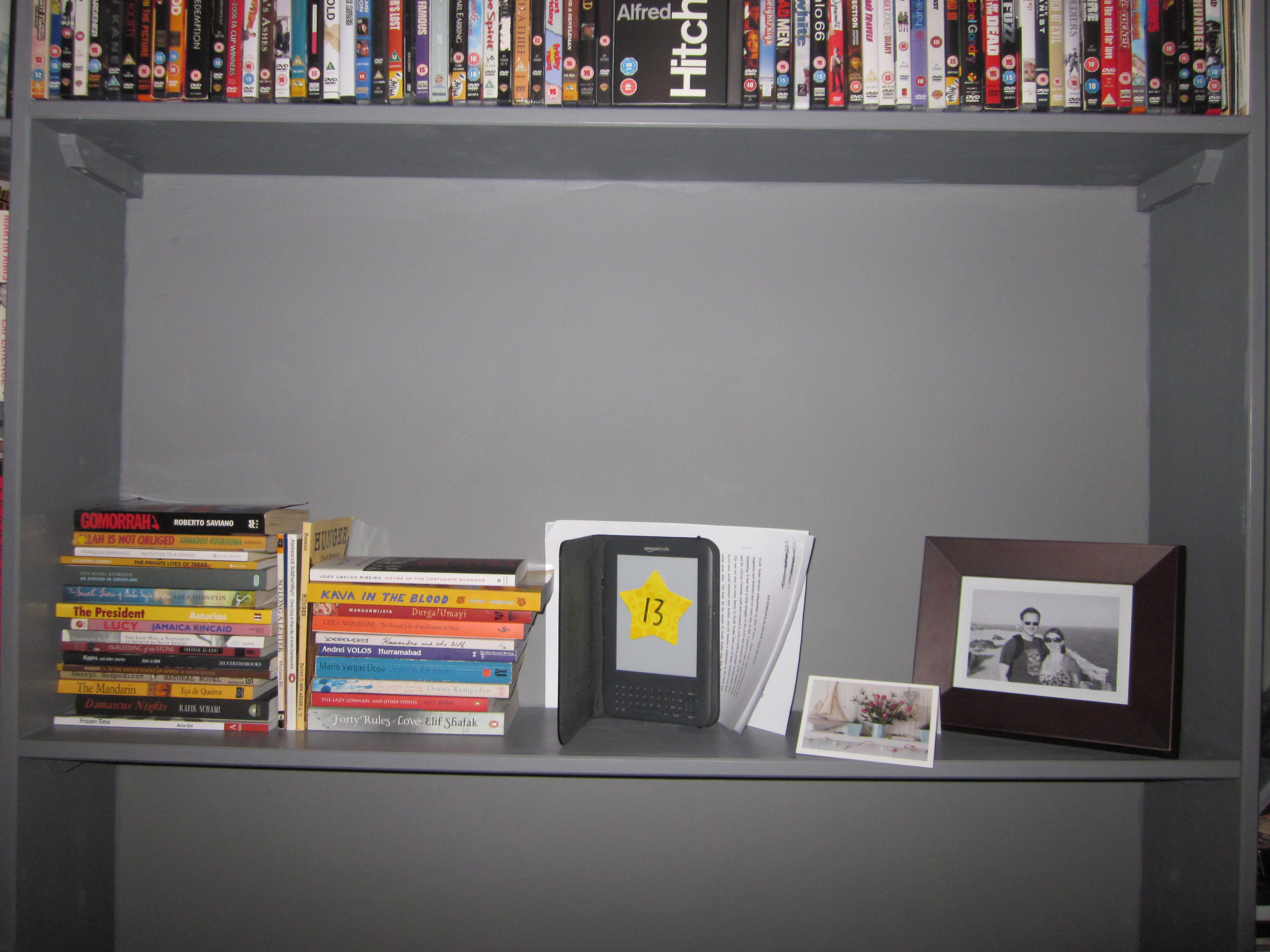
Brazil is certainly not short of stories. When I was collecting recommendations for my year of reading the world back in 2012, many people suggested tempting-sounding titles from South America’s most populous country. Since then, booklovers have continued to get in touch with ideas, leaving comments on the post I wrote about João Ubaldo Ribeiro’s House of the Fortunate Buddhas (the novel I chose for my project), and whizzing over emails and tweets.

Indeed, only this morning, Carlos left a comment to tell me about ‘The Devil to Pay in the Backlands’ (Grande Sertão: Veredas in the original), which he regards as ‘the greatest Brazilian novel’. He went on to say, however, that he believes it’s untranslatable because author João Guimarães Rosa invented many of the words in it, creating ‘a unique reading experience’, which Carlos fears would be lost if the book were converted into another language. (It would be interesting to hear what others think about this.)

Beyond the personal recommendations I’ve been lucky to get from readers, a number of anthologies of Brazilian writing have opened up the work of some of the nation’s newer authors to English-language readers in recent years. Thanks to publications such as Granta’s Best of Young Brazilian Novelists, writers such as JP Cuenca, Vanessa Barbara and Tatiana Salem Levy are on the anglophone radar. Their work (or some of it at least) is accessible to the huge number of people who read in English, the most published language in the world.

As a result, there are thankfully a relatively large number of translated Brazilian works that I could have chosen as November’s Book of the month – both recent novels and fantastic blasts from the past. Over the past year, for example, I’ve found myself enthralled by the writings of Clarice Lispector and could happily have written an enthusiastic post about her wonderfully strange novel Hour of the Star. 

However, in the discussions I’ve had about Brazil recently, one title in particular caught my attention. It was a novella translated by my friend Daniel Hahn for Berlin-based ebook company Frisch & Co: Zulmira Ribeiro Tavares’s Family Heirlooms.

I was intrigued by Frisch & Co and by Hahn’s comment that Tavares was not likely to be known to many English-language readers, despite her being much-lauded at home in Brazil. This month, there was another incentive too. Having spent the last few weeks reading Tolstoy’s magnificent War and Peace, the idea of a book I could finish in a handful of hours was very appealing! So I decided to give the book, which was first published in Portuguese in 1990, a go.

Set in Itaim Bibi, a district in São Paulo, the novella follows Maria Bráulia Munhoz, an elderly, yet formidable, widow who is putting her affairs in order with the reluctant help of her nephew. When one of the pieces in her jewellery collection, a handsome pigeon’s-blood ruby ring, is found to be a fake, the discovery triggers an avalanche of recollections and revelations that uncovers the foundations of the central character and the bourgeois world that is fading with her.

The discrepancy between our private selves and the faces we present to the world is everywhere apparent in the book. From the formal ceremony of the rose-petal-strewn fingerbowl that Maria Bráulia Munhoz insists must follow every meal, to the ritual of her make-up routine and the awkward posturing of her nephew, Tavares captures the thousand ways we shore ourselves up with pretence.

Often, this is very funny. In the description of the nephew’s sensitivity about his thinning hair and the way that he is ‘more afraid of his aunt’s migraines than the movement of shares on the Stock Exchange’, we see the glimmer of Tavares’s sense of the ridiculous. The author (or perhaps more accurately Hahn in his translation) makes rich use of lacunae too, frequently deflating characters’ pretensions by the inclusion of pithy, bracketed dollops of interior monologue.

The writing is inventive. At several points, for example, life itself crops up, personified and spoiling for a fight, ready to beat characters down. And for my money, you have to go some distance to find a simile better than the description of a stroke that afflicts one of the lesser characters towards the end of the book:

‘His words seemed to be coming from very far away, like the roar of the sea – they were transatlantic words – only to die there in the corner of his mouth, forming, in front of his embarrassed friends, a slight layer of froth that took a while to disappear […] All that muted volume, that threat coming from so far away, a thought coming from such a depth, and soon just a little bit of froth, nothing at all, just a little froth, a mere trifle.’

It’s fair to say that not all the devices work as well as this. Labyrinthine sentences leave the reader foundering occasionally. Similarly, some of the imagery cancels itself out by changing tack from one phrase to the next.

All in all, though, this is an enjoyable and illuminating read. It walks the tightrope between humour and insight with aplomb, finishing with a flourish. I found it a joy – and a delightful counterpoint to the Napoleonic wars.

Now, back to Tolstoy’s Moscow, where the enemy has entered the gates…

Family Heirlooms (Jóias de Família) by Zulmira Ribeiro Tavares, translated from the Portuguese by Daniel Hahn (Frisch & Co., 2014)

Picture: São Paulo by Júlio Boaro on Flickr

Brazil: Goethe the ‘dirty old man’

From one Portuguese-language country with very few novels available in translation we jump to another that has a whole heap of them (by British standards, at least).

With so many exciting recommendations on the list, Brazil was a tough choice. In the end, I plumped for House of the Fortunate Buddhas because of the intriguing circumstances of its inception: Joao Ubaldo Ribeiro was commissioned to write one in a series of books inspired by the seven deadly sins. I was curious to see whether a novel written to order in such a way would turn out to be any good. And I wanted to see how Ribeiro handled the vice he chose to write about: lust.

As with the other Dalkey Archive book I’ve read so far this year (Francois Emmanuel’s Invitation to a Voyage), voice is this novel’s driving force. Prompted to record her story by a terminal illness, Ribeiro’s fearless narrator, a self-confessed ‘queen of lectures’, recalls her heyday in the 1940s and 50s. She focuses on her and her friends’ many and varied sexual exploits ‘at a time when everything was more difficult for women’, attacking the social mores that straitjacket desire and force people to ‘live according to rules and patterns for which no human was made’.

This disarming frankness extends to literary conventions too. Unafraid to share her opinions on any subject, the narrator weighs into many of academia’s leading lights, calling Lacan’s work ‘con games’, Goethe ‘a real fucker who died a dirty old man’ and Freud ‘the greatest waste of genius since Plato, the son of a bitch’.

Similarly forthright about her own blindspots and limitations, she questions her own utterances and literary skill with urgency and humour. ‘This testimony isn’t a novel, it doesn’t even have a plot – although the novels of Henry James barely had one, now that I think about it,’ she says at one point.

This unflinching engagement with the world and her place in it, enables the narrator to venture confidently where others fear to tread. The narrative is filled with exceedingly graphic accounts of sex in all its forms, which succeed because they are free from the coyness amd awkwardness that send other writers fumbling for euphemisms and clichés.

Ribeiro’s ability to inhabit the female universe is impressive. The voice is powerful, believable and peppered with details that will have many women nodding wryly in recognition. Only occasionally did I find some of the claims about the power dynamics between the sexes hard to swallow and sense a slight Tiresian wistfulness in the descriptions of men as ‘poor machos chained to a bunch of strange expectations’.

In general, this is an engrossing and persuasive performance by a leading writer on the world literary stage. With its narrator’s bold depiction of her – perhaps Utopian – vision for ‘a world of sex without problems’, it brims with generosity, fellow-feeling and a desire to improve the lot  of humankind. The issue, it suggests, may not lie with the unbridled expression of sexual desire, but with the concept of sin itself.

Perhaps this is simply the passionate manifesto for free love it appears to be. Or maybe, on some ‘con game’, Lacanian or Freudian level, the artist Ribeiro is protesting that the basis of his commission is ultimately flawed.

House of the Fortunate Buddhas by Joao Ubaldo Ribeiro (translated from the Portuguese by Clifford E Landers). Dalkey Archive Press, 2011