East Timor: poetry in motion

This book was recommended by The Modern Novel, a blogger writing about the development of the literary novel worldwide. TMN kindly posted a comment on this site helping me out with a few of the harder to reach destinations (there are still quite a few gaps on that there list and plenty of countries with only one or two titles suggested – go on, have a look and let me know what I’m missing).

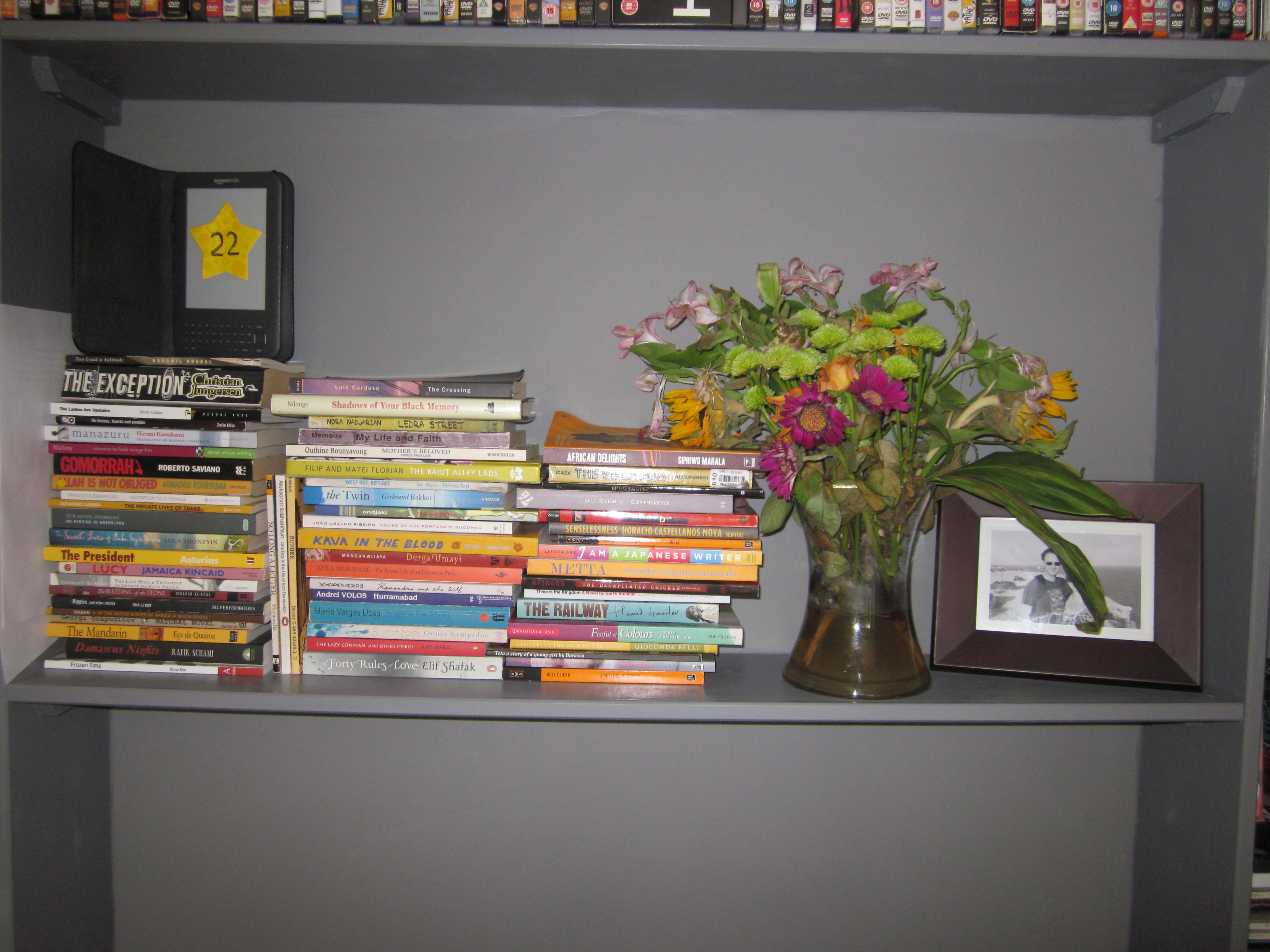
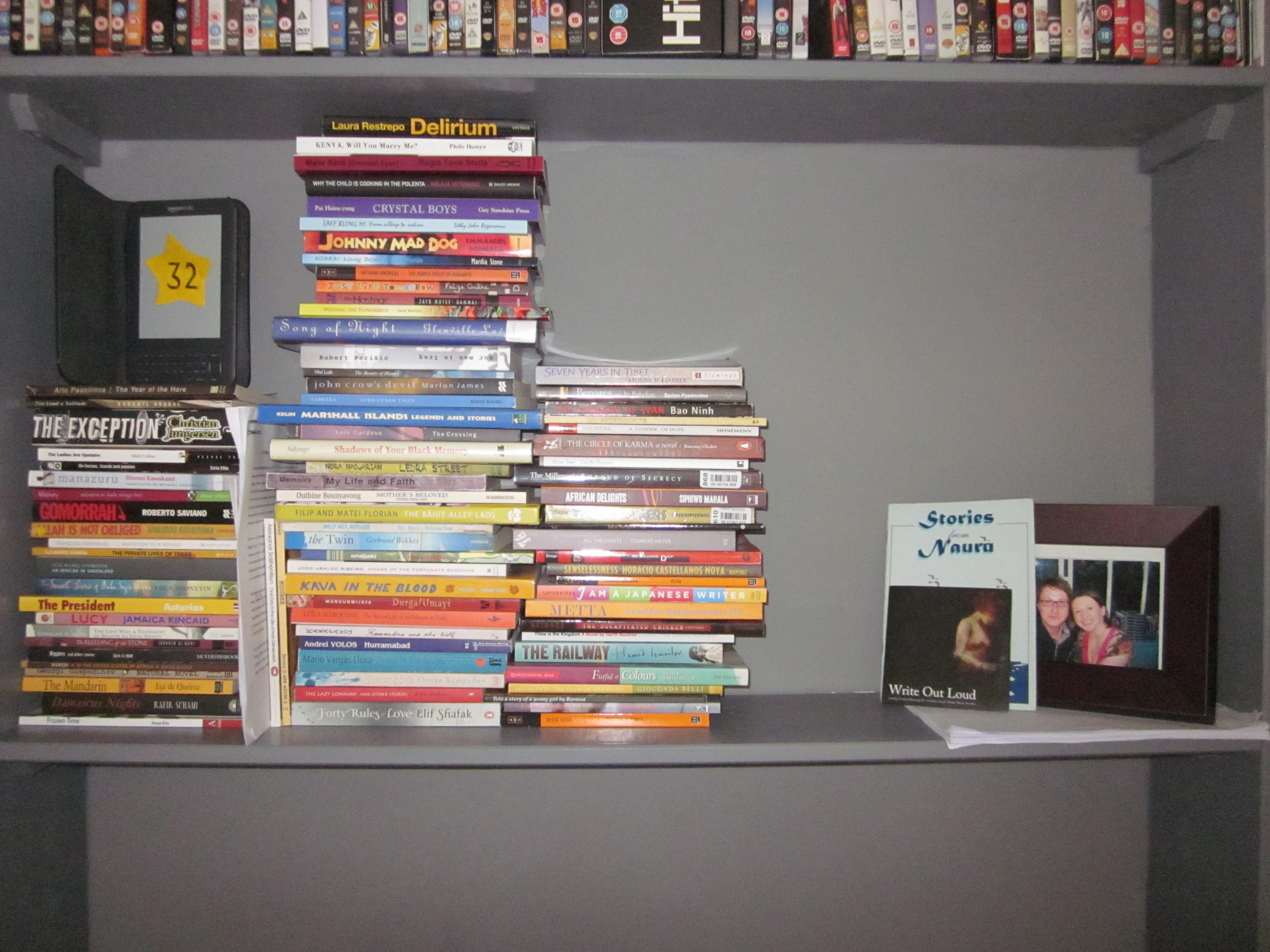
Several of the recommendations weren’t available in translation – much more linguistically gifted than I am, TMN reads in French, German, Italian, Portuguese and Spanish, as well as English – however there were some great additions to the list among them. The Crossing by Luis Cardoso was one of these.

In actual fact, The Crossing is not technically a novel, it’s a memoir. Like me, TMN holds the view that the boundaries between these two genres blur the more closely you look at them, which is why we’re both including memoirs in our projects.

Telling the story of Cardoso’s childhood and adolescence in East Timor, the book reveals the nation’s troubled recent history through a small and touchingly precise lens. As waves of Portuguese, Japanese and Indonesian colonialism wash over the country, the author records the tragic impact of these events on the ‘people lost in time’ who have to live through them, caught between the oppressive yet relatively stable patterns of the past and the fragile freedom ahead.

This is a book as much about forgetting as it is about remembering. While Cardoso’s traumatised and exiled father frames the narrative – bumbling about Lisbon where his son is studying trying ‘to recover the memory he had lost’, all his fire and bluster gone – Cardoso himself seeks to reconcile the partial versions of events he encounters with his own fragmentary memories of his homeland.

A nostalgia for Portuguese rule – warmer than any other attitudes to colonialism I’ve read about so far this year – permeates much of the book. For characters like Cardoso’s father the Portuguese administration, despite its enforcement of apartheid, and its rigid and sometimes brutal practices, is ‘the erstwhile mother country […] even though the umbilical cord had been cut in such a way as to make the child bleed and the mother grieve’.

As well  as blending novel and memoir, Cardoso brings in elements of poetry too through his descriptions that conjure places and people as deftly as the briefest of stanzas. Time and again, he captures complex situations in a net woven only of a single sentence, as when he sets out his father’s deluded hopes for his son’s future:

‘He dreamed that, one day, I would take up a post in [an] administration [made up of people educated in Portugal] – the dreams of someone who has built a boat and wants to go on sailing through time, along the lost route of the colonizing caravels’.

The huge cast of walk-on characters and vast catalogue of events mentioned in this relatively slim book mean that occasionally the narrative can jump like a scratched record from one scene to the next. Several times, I found myself having to turn back a page or two, trying to work out how I had been thrust into a storm that seemed to have gusted up out of nowhere. Sometimes, there wasn’t really an explanation.

Taken as a whole, though, this is a touching, lyrical and sometimes playful account of the search for identity in a land you can only fleetingly call your own (East Timor only managed a few months of independence in 1975 before it was conquered by the Indonesians and at last gained its sovereignty in 2002). It makes a compelling artwork out of a shifting kaleidoscope of personal and political allegiances. A great suggestion.

The Crossing: A Story of East Timor (Cronica de uma travessia: A epoca do Ai-Dik-Funam) by Luis Cardoso, translated from the Portuguese by Margaret Jull Costa (Granta, 2000)

North Korea: keeping the faith

There have been some intriguing books published about North Korea in recent years. From Barbara Demick’s outstanding Nothing to Envy to Blaine Harden’s Escape from Camp 14, an extract of which was published last month in the Guardian, there is no shortage of harrowing survivors’ accounts of life in the world’s most secretive state.

When I was starting to prepare for this project late last year, several people suggested that I contact the South Korean embassy in London to see if they knew of dissident literature by North Korean escapees that I could read. I was on the point of doing so when it occurred to me that, while this might well yield some fascinating texts, it would bring me no closer to knowing anything about literature inside North Korea itself. What did people in Pyongyang read? What stories were household classics in the land of the then-Dear Leader? I had to find out.

With this in mind, I visited the Democratic People’s Republic of Korea’s website and dropped them a line. I was delighted to receive an email back from Spanish-born North Korean Special Delegate Alejandro Cao de Benos (the first foreigner ever to be granted North Korean citizenship and allowed to work for the government) and the two of us had an extraordinary exchange about what books might be available for me to read in English. You can read a full account of our correspondence in the blog post I wrote for the Huffington Post at the time.

I was planning to give Mr Cao de Benos another try after the dust had settled from Kim Jong Il’s death, however in the interim I heard from Nicholas Mercury, founder of North Korea Books, and what he said intrigued me. He had been prompted to get into North Korean literature and subsequently start his business selling rare books in English from the DPRK after reading My Life and Faith, a memoir by Korean Army war correspondent and ardent DPRK patriot Ri In Mo. He commended it to me as a text that contained ‘a point of view completely unknown in the West…that of utter love and devotion and sacrifice for a country, political system, and especially leadership, that (most) of the rest of the world prefers to despise and hate’.

I needed no further encouragement to give it a try and was delighted when the book arrived from an address in Beijing, accompanied by a DVD featuring subtitled extracts from DPRK films, military displays, dances and marching songs.

Telling the story of Ri’s early affinity for the DPRK’s ideology, his capture in 1952 and alleged 34 years of torture and imprisonment in South Korea ‘in blatant violation of the Geneva Convention’, and triumphal return to his homeland in 1993, My Life and Faith provides a fascinating insight into North Korea. At times extremely gripping, with overtones of jail literature by the likes of Albie Sachs and Nelson Mandela – to whom Ri is compared in the introduction – it presents a thought-provoking perspective on national identity and Western attitudes to the motherland. ‘It is not until they take off the colour glasses of “anti-communism” that they understand it’, he writes.

The human touches make the book. From the portrait of life in North Korea both before and after partition – where ‘widow kidnapping’ was once rife and many families were too poor to afford clothes and lived holed up in their houses ashamed to receive guests – to the descriptions of Ri’s wife sitting next to him as he writes, complaining about his old-fashioned turns of phrase, the sense of the man behind the narrative is strong.

These details win Ri credibility when he launches into broader ideological attacks, often citing statistics and events that few readers would have the means to verify. His tirades against ‘the US imperialists and Syngman Rhee puppet clique’ often have a familiar feel as they chime in closely with accusations levelled at the North Korean regime by the Western media. So we hear allegations of South Korean historians conveniently omitting or twisting facts, ‘lies’ from UN representatives, pro-Western propaganda in films and books, and a fascinating account of Ri’s interactions with the world’s media after his release in South Korea:

‘While talking with them, I found that there were differences in the way they expressed my ideas, and they seemed to take great effort to alter my words. When I said “people” by habit, they changed it to “the masses”[…] While altering my words in this way, the young journalists expressed the regrets [sic], “If the words used in north Korea are used, readers may find fault with them, so they should be altered somewhat. I’m sorry’

[…]

Many journalists with newspapers, radio and the foreign press visited me. They seemed to have not understood me well. There were instances of seriously distorted information.’

At times, the rhetoric undoes itself by too obviously pulling the tricks it ascribes to Western states. Ri regales us with the story of the South Korean soldier, a ‘victim of propaganda’ who killed himself rather than allow himself to fall into North Korean hands because he had heard exaggerated reports of the nation’s cruelty only to reel off a hysterical catalogue of Western atrocities in the next paragraph. The mawkish poems ‘Dedicated to the Dear Leader’ that pepper the narrative, the repeated assertions about the ‘deep solicitude’ of the nation’s leader and the accounts of the miracles that took place on the death of Kim Il Sung also have a distancing effect.

Nevertheless, I was impressed by how persuasive and compelling the book was. Now and then, in the face of its heartfelt appeals, I felt the see-saw tipping and found myself scrabbling for arguments to redress the balance. Then I remembered that, as Mr Cao de Benos confirmed to me, variations on this story – books ‘showing honour, loyalty and sacrifice for the motherland’ – are the only narratives allowed in the DPRK. Reading the world would not be an option there. And no amount of passion, rhetoric or idealism can make up for that.

My Life and Faith by Ri In Mo, translated from the Korean by ? (Foreign Languages Publishing House, Pyongyang, Juche 86 (1997))

Malawi: a story from the fourth world


Malawian artist Samson Kambalu begins his account of his childhood and rise to international recognition with a prologue remembering the day he and his Scottish fiancée notified the High Commission in Malawi of their intention to get married. Asked if he was doing this to get a British passport, Kambalu answered ‘Not really’ to the great indignation of the consul, who informed him crossly: ‘The answer is NO, OK? The answer is NO’.

The following 335 pages illustrate why that ‘Not really’ stands.

One of eight children born into a Christian family in the then-dictatorship of Malawi or ‘the abyss of the fourth world’ as he calls it, Kambalu grew up in the shadow of his intellectually ambitious yet ultimately frustrated clinical officer father, the Jive Talker of the title. Posted to remote locations all over the impoverished sub-Saharan country, the Jive Talker took refuge in alcohol and Nietzsche as his career crumbled and his family and their peers suffered ever greater privations until at last Kambalu’s parents died of AIDs-related illnesses around the turn of the millennium.

Yet this is no self-pitying catalogue of woes. Told with wit and flair, Kambalu’s account paints a picture of a vital place full of creativity and interest. Life there is a precarious business and the world is cruelly indifferent to individuals’ sufferings (‘Anybody who survives Malawi deserves to be called Superman’, he remarks at one point), yet it is a world Kambalu describes with dignity and humour.

This humour often tips over into the deeply touching, as when Kambalu remembers his friend Joe Bugner’s reaction to the news that he had secured a place at the highly competitive, state-funded, English-style boarding school Kamuzu Academy, known as the ‘Eton of Africa’:

‘You are the man. In future all that is wrong with the world you will only see on TV,’ which was a pretty poignant remark considering there was no TV in Malawi at the time.

Far from being a purely personal account though, The Jive Talker is in many ways a history of Malawi too, with much of the political and social development of the country over the last few centuries woven into the narrative. The description of the cultural split caused by the arrival of 19th century missionaries, which saw the country change from a matriarchal society in which family members were known only by their shared clan name into a patriarchal society where everyone had to have his or her own Christian name is fascinating, as are Kambalu’s reflections on the Banda regime.

The most interesting aspects of this episodic (and occasionally rambling) narrative, though, are the powerful insights into Kambalu’s development as a conceptual artist and the creation of the philosophy of Holyballism, which made his name. Described with such intensity that they sometimes take on an almost magical realist quality, these passages reveal the alchemy by which Kambalu was able to assimilate the conflicting cultures he grew up with and broker some sort of peace with his past — no mean feat.

The Jive Talker: Or, How to Get a British Passport by Samson Kambalu. Publisher (Kindle edition): Vintage Digital (2008)

What counts as a story?

It seemed so simple: read one book from every country in the world in 2012. What could possibly be confusing about that?

But as soon as I started to plan the project in earnest, the questions started coming in. Was I including poetry? What about plays? And memoirs? Where did I stand on biographies? Did journalism count? Did the books have to be contemporary?

I realised I was going to have to define my terms a little more carefully.

A lot of the people I spoke to about this project felt that I should stick to prose fiction. This was my first instinct too. After all, novels, novellas and short stories are the main media for storytelling, aren’t they? Surely I should keep a level playing field between all countries by reading only one particular kind of book?

But as time went on, I got more and more recommendations for intriguing books that wouldn’t fit that mould and found myself getting frustrated. I heard of literary award-winning journalism that had led to bounties being placed on writers’ heads and biographies detailing extraordinary lives, and I wanted to read them.

There were also books that straddled several genres. Dr Ruth Martin, who recommended Elias Canetti’s autobiographical work The Torch in My Ear for Austria, for example, wrote in her comment that ‘the writing is wonderfully literary and he does “embellish” the truth a little’. One man’s memoir might just be another man’s fairytale…

I also realised that, while prose fiction may be fairly ubiquitous, it’s by no means native to every culture. In fact, in places where stories tend to be passed on verbally, narrative poems may be much truer reflections of literature there.

The question of contemporaneity also gave me a dilemma or two. Much like M Lynx Qualey, who very kindly wrote a blog post setting out her recommendations for Arabic literature in translation,  I was tempted to keep to recent texts. But when Dr Valerie Henitiuk of the British Centre for Literary Translation told me that her all-time favourite translation was Sonja Arntzen’s rendering of the 10th century Japanese Kagero Diary, there was no way I was going to bar it from the list.

So, after chewing it over for a while, I decided that I would count all narratives that could be read to full effect by one reader on their own. This means memoirs, novels, short stories, novellas, biographies, narrative poems and reportage are in and, with regret, non-narrative poetry and plays are out.

I also decided that while I would stick to mainly contemporary stories, I wanted to leave the door open for fantastic blasts from the past. The one condition is that the works have to have been created when the country was in existence in something like its modern-day form.

So if you know of an outstanding eighth century Swedish epic, or an intriguing narrative poem from Tuvalu, now’s your chance to tell the world (well, me, at least) about it. Keep the suggestions coming in – there are still quite a few gaps on that there list…