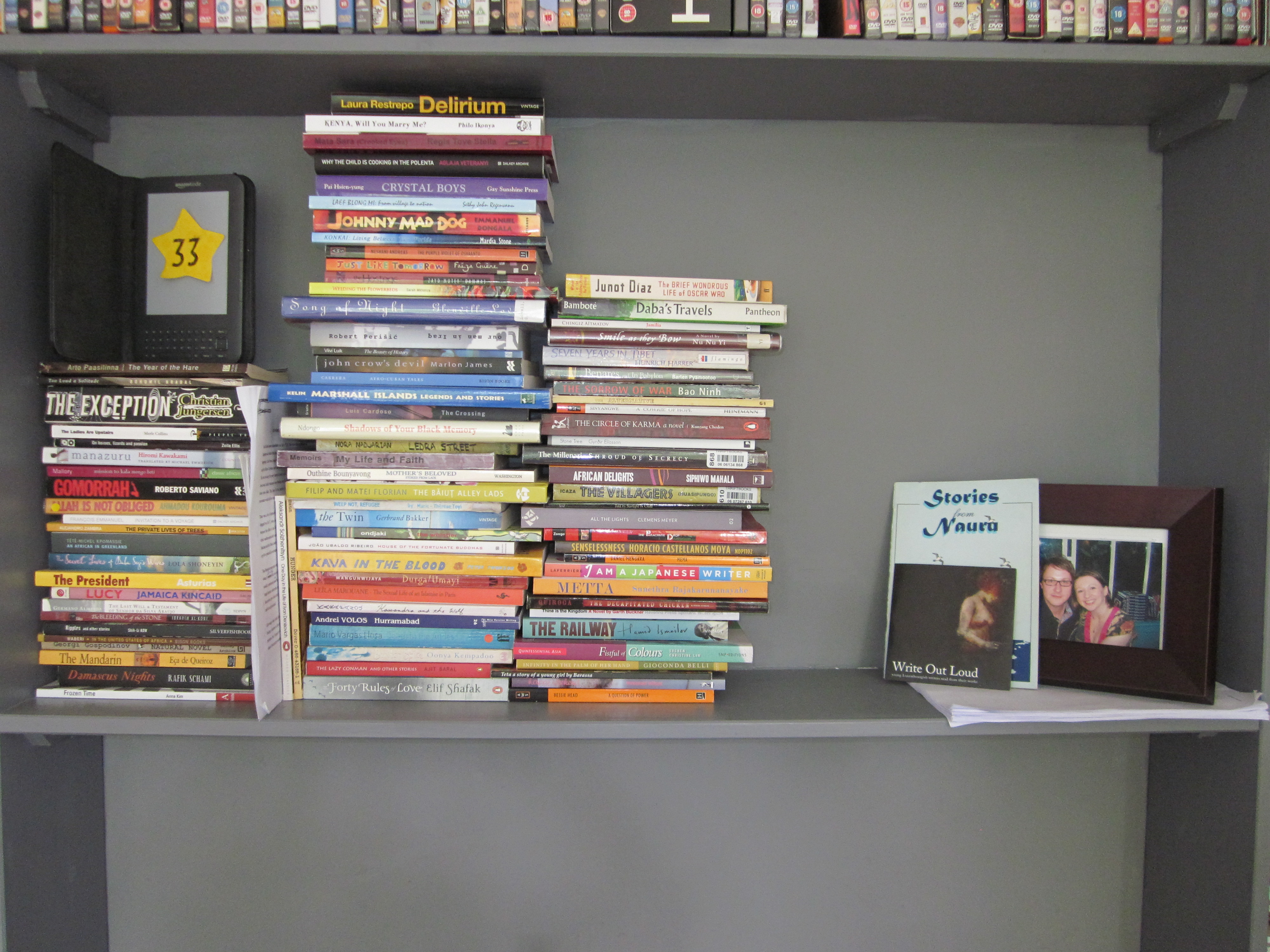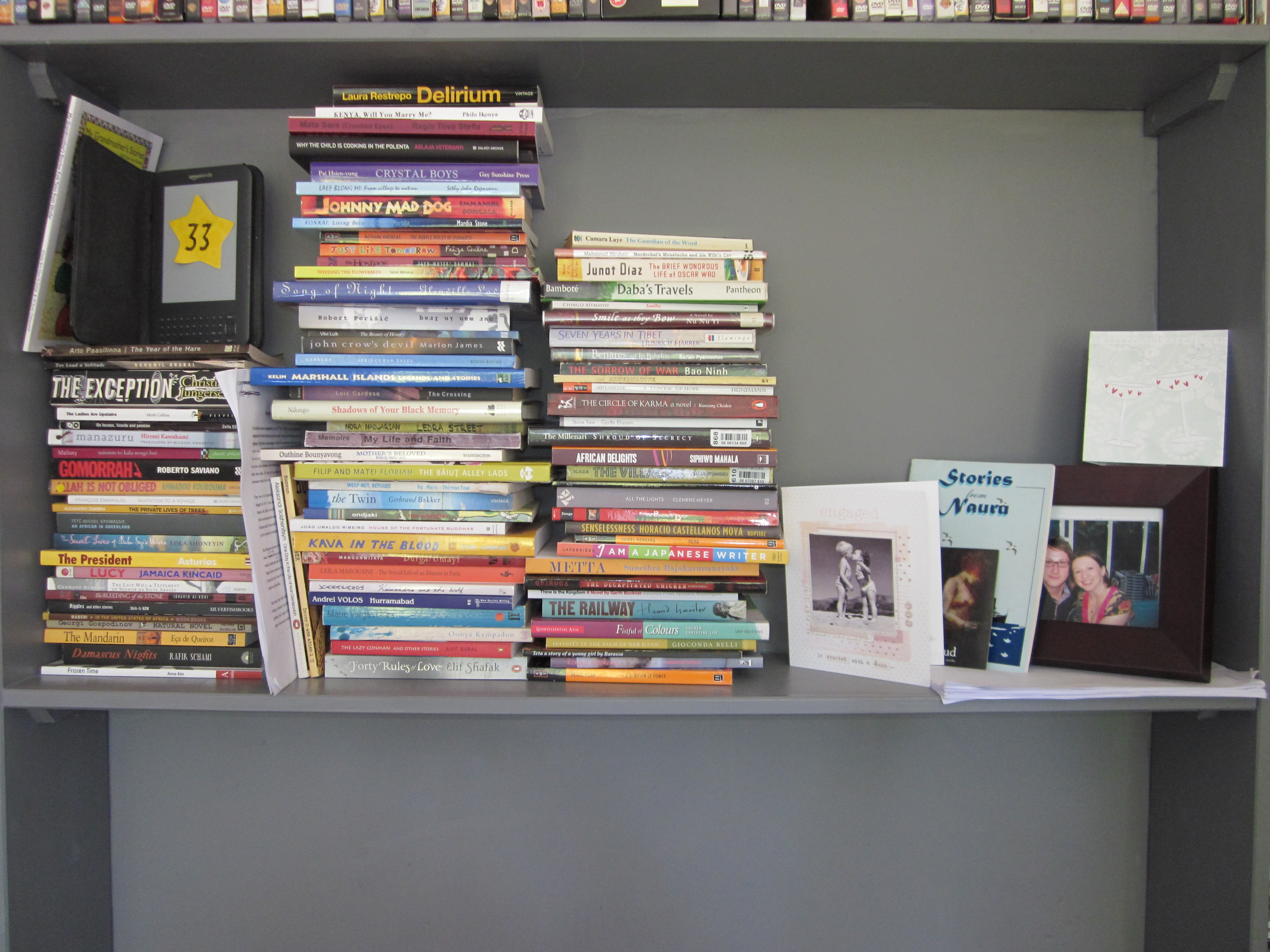
Oman: a rare treat

Last December, when Cairo-based blogger mlynxqualey wrote a post on her excellent Arabic Literature (in English) blog giving me her recommendations for books in translation, Oman proved to be a stumbling block:

‘Someone help me so Morgan doesn’t end up reading something dreadful like Behind the Veil in Oman. I am not saying there are no Omani writers; I’m just saying that, outside of stories published in Banipal, I don’t know of anything in English,’ she wrote.

In fact, it wasn’t until nearly nine months later that an alternative presented itself in the shape of a recommendation from the Sultan Qaboos Cultural Center in Washington. It had recently published a translation of a collection of Omani fairy tales and was happy to send me a copy if I was interested. I needed no second invitation to take a look.

Much like Camara Laye’s The Guardian of the Word (see the Guinea post below), My Grandmother’s Stories: folk tales from Dhofar is a work with big ambitions. As set out in a variety of introductions and prefatory materials, author Khadija bint Alawi Al-Dhahab intends the collection, which is dedicated to ‘His Majesty Sultan Qaboos bin Said al-Said and the people of Oman’, not only to preserve the tales that she has gathered and transcribed but also to convey the different lifestyles that were traditional across the Dhofar region. In addition, translator W Scott Chahanovich, who undertook the project as a Fullbright Scholar, regards the recording of such stories as essential to ‘cultivating a sense of Omani nationhood’ and hopes the book will help challenge the fact that ‘the contemporary Arab world is, by and large, still represented by mass media almost exclusively as a monolithic idea’.

If that wasn’t enough to take on in 90 pages, there is also the issue of explaining certain cultural traits that bear on the tales, such as the Omani aversion to bragging and the national admiration for astuteness, and the challenges the author faced transcribing stories told in dialects for which no written form exists. This is further complicated when it comes to translation, with even small metaphors proving challenging to convey, as Chahanovich found when he came to the phrase ‘a cut of your hand’:

‘Confused by the phrase, I consulted the Omani student translators [with whom I was working]. “A cut of the hand,” they explained, is a local colloquial adynaton – a figure of speech expressed in hyperbole that conveys an impossibility. At first, “when pigs fly” seemed most suitable for an English children’s fable; but this is both religiously inappropriate and culturally irrelevant. Islam, like Judaism, prohibits the consumption of pork. Also, there are no pigs in Oman. Choosing “when pigs fly” would be insulting to Omanis and would disregard the cultural particularity of this region, the setting represented in the tales.

‘Instead, I chose another popular adynaton in Arabic, the image of which is shared in other Western versions of the English “when pigs fly”: the cow. In Arabic, the expression is, “when cows go to Mecca to perform Hajj [the religious pilgrimage]”. This is too long and culturally dense to include in an English children’s story. […] Therefore I chose the phrase “when cows fly”.’

With so much going on behind the scenes, you might expect the stories to show signs of strain and awkwardness. Not a bit of it. Lively, witty and original, the tales flow as though they are being told as you read by a seasoned storyteller who combines a sound knowledge of Omani traditions with a gift for creative embellishments when the occasion demands. This is a world where foxes make deals with camel traders, wells produce magical rams, and genies transform puppets into living brides for princes.

The stories often have a dark side too. There is Princess Salma, who has her limbs amputated by a jealous genie ‘insistent that he would not leave her alone until she was in the worst pain imaginable’, and the foolish old couple Shaq and Shurambaq, who kill their grandchild because of their ignorance. Even suicidal thoughts make an appearance in ‘The Poor Woodcutter’.

The advantage of this is that the stakes are nearly always high, making for some gripping stories. It also gives rise to some intrepid women characters, who, while they might need to use disguise or ingenuity to overcome the limitations placed on them by society, nearly always carry the day. Hearteningly there is repeated emphasis on the value of women being clever and shrewd and the importance of marriage being a meeting of minds. Even the unfortunate Salma triumphs in the end, though she pays dearly and disturbingly for the privilege of keeping her chastity intact along the way.

Now and again the moral message seems a bit like an afterthought. You can almost feel the adult narrator reaching the end of a graphic tale of derring-do and adding on a neat little observation out of a sense of duty. In addition, some of the tales finish a little abruptly. The book is also not helped by a formatting glitch that means the contents list page numbers do not match up with the stories.

All in all, though, this is a strong, intriguing and welcome taste of a literature that has until now been off-limits to English-language readers. Let’s hope it’s the first of many to come.

My Grandmother’s Stories: folk tales from Dhofar collected and transcribed by Khadija bint Alawi al-Dhahab, translated by W Scott Chahanovich, Munira Al-Ojaili, Fatima Al-Mashani, Muna Al-Mashani, Muna Saffrar, illustrated by Fatima bint Alawi Muqaybil (Sultan Qaboos Cultural Center, 2012)
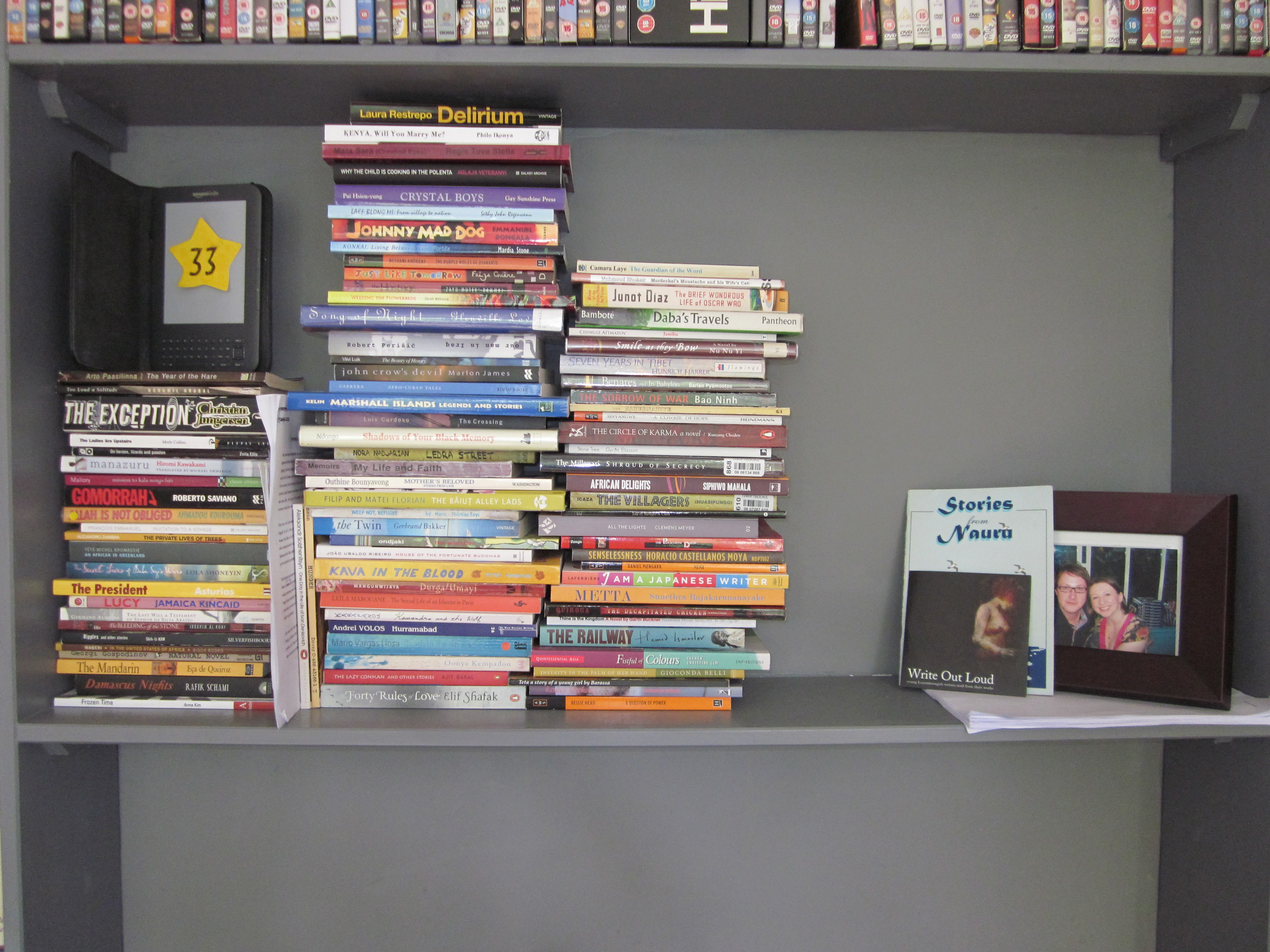
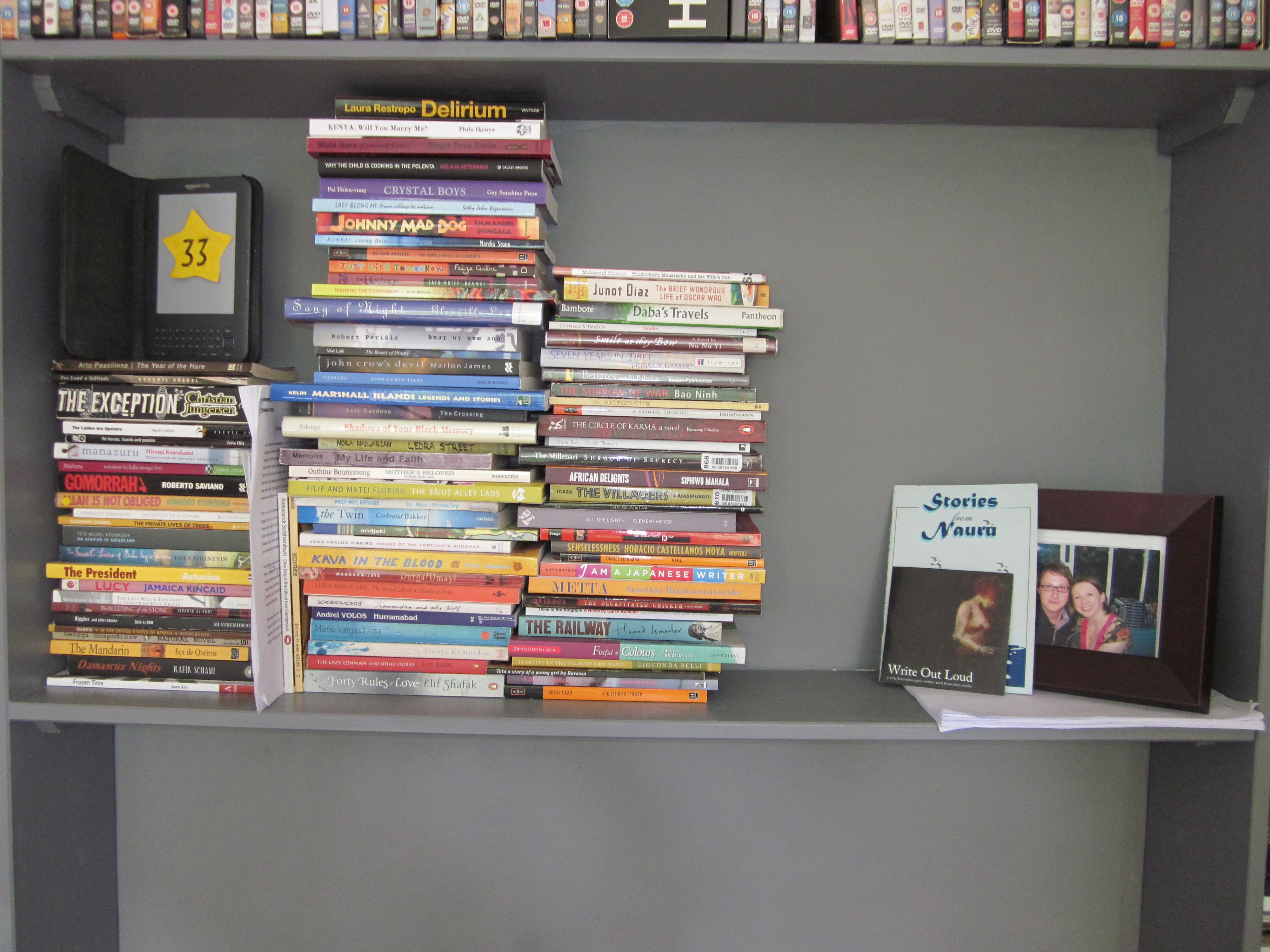
Guinea: history reclaimed

Guinean author Camara Laye is best known for his novel The Radiance of the King. In fact if you search for Guinean literature in English, you could be forgiven for thinking that this work is the only book from the Francophone African nation, which is made up of more than 24 ethnic groups, to have made it into the language of Milton, Shakespeare and Dan Brown.

I’ve certainly not been any able to find any other translated Guinean authors (although I’d love to hear about it if you have), so, in the interests of not making the most obvious choice, I decided to read one of Laye’s lesser known works: The Guardian of the Word.

Part anthropological account and part novel, with a dollop of sermonizing thrown in for good measure, the book focuses on the month Laye spent recording the stories of renowned Guinean griot (storyteller) Babu Condé in the village of Fadama in 1963. Beginning with the quest of brothers Moké Mussa and Moké Dantuman to hunt the fearsome Buffalo of Dô, the tales broaden out to bring in a huge cast of historical and mythic characters who contributed to the rise and eventual break up of the medieval Mali empire, and reveal a world of magic, mystery and rich heritage.

Laye makes clear from the start that he has high ambitions for the work. Through recording these stories, which to him ‘constitute the soul of ancient Africa’, he hopes not only to preserve the region’s history before development sweeps it away but also to prompt ‘the awakening of a new civilization’. As he explains at length in his opening his chapter, ‘Africa: Voices from the Depths’, Laye regards traditional stories as essential to his compatriots’ developing a sense of identity and a society that is more than a mere emulation of the European structures they had imposed on them until the mid-20th century:

‘Should not the wisdom of the Ancients and of their past serve as an example to our rising generations? In a continent where the heat in certain regions reaches 40° in the shade, should our African “emancipation” consist of the three-piece, all-wool suit and the bottle of scotch? Should it not rather have its source in our own deep roots in the distant past, and, at the same time, in the opening up of our new frontiers to universal values?’

However Laye’s impassioned appeals and his fascinating descriptions of the steps he had to take to win the privilege of recording the stories – from wearing certain garments to observing particular forms of etiquette – are just the prelude to Condé’s tales. Bristling with proverbs, rich imagery and bursts of humour, these accounts show storytelling at their best. As a Western reader, I found myself continually surprised by twists, turns and tropes that were like nothing I had come across before: where the hero would pick the wrong girl in the European fairy tale, he picks the right one and then comes to grief another way; where Western legends are usually content with mighty men having one formidable mother, here the tyrant Sosso is carried to term by three women, transferring between wombs every three months; and where marriage is usually a happily-ever-after scenario in the stories I grew up with, it is here the start of a battle of wits and (more often than not) sorcery between husband and wife.

Indeed the graphic nature of the storytelling, both sexually and in terms of the violence it involves, is often shocking. Maghan Kön Fatta’s eventual conquest of his wife Sogolon, who casts spells on him and refuses to sleep with him until he threatens to slit her throat ‘like a chicken’, makes for challenging reading, not least because the couple seem to get along very well after Fatta has his way.

Now and again, Laye’s passion for what he is doing threatens to overwhelm the narrative. At points in the stories where the rhetoric gets too grand or digressions with unnecessarily detailed cultural exposition and musings on the role of women creep in it’s tempting to wonder quite how much of the work is as Condé told it. More than once, Laye’s Uriah Heapish protest that ‘We are but the modest transcriber and translator’ seems to ring a little hollow.

But this does not take away from the book’s charm or how engrossing it is. If anything the subtle tug-of-war between oral storyteller and modern novelist adds to the richness of this fascinating text, which itself records a story that was shaped and embroidered over generations as the griots passed it down. I wonder what, if any, version of the saga is told in Fadama today.

The Guardian of the Word (Le Maitre de la Parole) by Camara Laye, translated from the French by James Kirkup (Fontana, 1980)


Palestine: shifting boundaries

When I started this project, I wasn’t expecting to read a book from Palestine. The list of 196 sovereign states I was working from did not include the Middle Eastern nation, which has received only partial international recognition since the declaration of the state of Israel in 1948.

However, in June I decided to change from my original Western-influenced list to a list of countries that have received some degree of acknowledgement from the United Nations as a more global measure of statehood. In practice, this simply meant swapping Kosovo for Palestine – although it is not a UN member, Palestine is recognised as a non-member entity by the UN and has permanent observer status at all UN meetings.

To this end, I got in touch with Naela Khalil, a leading Palestinian journalist and winner of the prestigious Samir Kassir Award for Freedom of the Press whom I was lucky enough to interview earlier this year. She very kindly contacted many writers on my behalf to find out who had work in translation. A lot of the people she wrote to did not have books available in English, but in July she emailed to tell me that she had had a reply from Mahmoud Shukair, whom she describes as ‘one of the best writers living in Jerusalem’, with information about his first major publication in English: a collection of short fiction entitled Mordechai’s Moustache and his Wife’s Cats.

Bustling with eccentrics, Shukair’s short stories – and the ‘Vignettes’, ‘And Vignettes’, ‘And More Vignettes’ that make up most of the second half of the book – reveal a world where joy and tragedy hinge on tiny details and casual remarks. There is the chancer who tries to exploit a distant family connection with the pop star Shakira to win special treatment at the Israeli Ministry of the Interior, the football-fanatic taxi driver whose tall stories about his friendship with Ronaldo get him beaten up for harbouring spies, and the Israeli border guard of the title who makes a line of people wait for hours because he is paranoid they are laughing at his moustache.

Politics and partition are everywhere, even in the words and images people use in conversation, yet Shukair puts the individuality and humanity of his characters first. He does this by filling his narratives with quirks, tics and details that bring home the personality of those he describes. Often the effect of this is very funny and even surreal, but it can be devastating too, as in ‘The Room’, where the mention of a child’s toys makes the actions of the killer brutally real:

‘He could have been a well-mannered murderer so that we could have found some excuse for him. He could have been a murderer with a good argument, so that we could have had a little admiration for him. But he was pathetic and ugly. Testimony to this was the child’s bedroom, which was ripped apart, his bed, which was burnt, the rabbit, the elephant, the giraffe, the duck and spatters everywhere of his blood. They posed a risk to that ugly murderer who did not have a good argument so that we could have had a little admiration for him.’

There is so much to say about the content of the stories and the window they provide on a world where everything, from getting an education to getting to work, is fraught with difficulty and danger that it is easy to forget the quality of the writing itself. Ranging from bald and stark statements, as in the extract above, to the absurdist and occasionally cryptic tropes of some of the vignettes, many of which read more as extended metaphors than as literal descriptions, Shukair’s prose is urgent and engrossing. He writes interestingly about the influence of Hemingway on his work in the final section, ‘Talking About Writing’, and it is possible to recognise something of that stripped-back style in this translation, although Shukair has many other techniques up his sleeve, not least a masterful sense of the role of humour in heightening poignancy.

He certainly had me enthralled. I hope it isn’t long before we see more of works coming out in English – I want to read on.

Mordechai’s Moustache and his Wife’s Cats by Mahmoud Shukair, translated from the Arabic by Issa J Boullata, Elizabeth Whitehouse, Elizabeth Winslow and Christina Phillips (Banipal Books, 2007)

Saint Lucia: a formidable legacy

Look up the words ‘Saint Lucia’ in any work on world literature and you’ll find the name Derek Walcott somewhere nearby. Celebrated as one of the Caribbean’s foremost literary figures, the Nobel prize-winning poet and playwright is the go-to writer for literature from and about his island home. For my purposes, Walcott’s epic poem Omeros would technically have fitted the bill – when I set out on this quest, I planned to allow myself to include narrative poetry if prose stories were hard to find, although I have not done so as yet.

But I was curious to see what else Saint Lucia had to offer. What other literary flowers flourished in Walcott’s formidable shadow? And what prose stories might this nation famed for its poetry have to offer me?

After a few fruitless searches, I was delighted to stoogle upon an article on the website of Jako Productions, an organisation seeking to promote the artistic expression of Saint Lucian culture. Written by Modestes Downes and Anderson Reynolds, ‘A Synthesis of Three St Lucian Novels: Neg Maron: Freedom Fighters, Season of Mist, Death by Fire is essentially a potted history of Saint Lucian novel-writing. The island’s prose works are by no means as numerous or celebrated as its poetry, the article’s authors acknowledge, but they do exist. Indeed, the early 21st century apparently saw a relative explosion in Saint Lucian prose publishing, with the three novels named in the piece’s title expanding the country’s prose canon to nine works.

Of these, I decided that Neg Maron: Freedom Fighter by Saint Lucia’s former director of culture Michael Aubertin was the book for me. Taking place in the space of a single trip to the cinema, the novel records 19-year-old history enthusiast James’s daydream vision of the events that rocked Saint Lucia more than two centuries ago. With the British and French battling over the island and slavery rife, the only hope for the nation’s black population lies in joining the Neg Maron, a community of escaped slaves in the heart of the rainforest. But when Golang runs away to live with them, he realises that existing in secret is not enough: if his people are ever to achieve real freedom they must take back  their independence by force and with it the pride, self-esteem and dignity that have been denied them for so long.

Aubertin’s writing is best when it is passionate. This comes across most strongly in the passages where Golang realises the danger of his fellow slaves internalising false assumptions about their own inferiority and sets out to rally them. In particular, a speech in which fellow revolutionary La Croix exposes the hypocrisy of their colonial masters in light of the French Revolution fizzes with rhetoric:

‘We must challenge the veracity of their watch-words. They cannot cry “Liberté!” and have us in chains. They cannot cry “Egalité!” and feel we are not equal. They cannot cry “Fraternité!” and not realise the truth about the brotherhood of all men. The true testing ground of the revolution is not France, but right here in the colonies! They have no option but to make us free!’

In addition to such stirring speeches, Aubertin engineers several moments of great tension in the narrative. The sections where Golang hides and protects a British deserter and where the Neg Maron set out to capture the governor’s canoe are gripping.

The plotting isn’t consistently taut, however. The time shifts are awkward and Aubertin neglects to round out some of the lesser characters in his impatience to tell the story. There is also a degree of self-consciousness in the writing, which makes some of the exchanges, particularly those involving the British soldiers, rather stilted.

All in all, though, I was glad I read it. As one of nine published novels produced by this nation of fewer than 180,000 people, at least up until 2005 (if you know of any more, I’d love to hear about them), it provides a thought-provoking insight into the island’s past and how it might inform its society today. I’d be intrigued to see how the other works compare. Ah well, maybe next year…

Neg Maron: Freedom Fighter by Michael Aubertin (Caribbean Diaspora Press, 2000)